Andhra Pradesh is a southern coastal state of India which is bordered by Chhattisgarh state in north, Odisha state in northeast, Telangana & Karnataka states in west, Tamil Nadu state in south and about 975 Kms coastline of Bay of Bengal in east. Hills of Eastern Ghats and its long coastline has blessed this state with hill stations, several rivers, waterfalls, beaches, wildlife sanctuaries & national park, exotic flora and fauna and pleasant & tropical climate. There are many forts, palaces, monuments, ancient historical sites, ancient & most revered temples/pilgrimage centers/religious places which are the witness of glorious past of this region of India. There are six airports (three International and three domestic) in Andhra Pradesh along with well connectivity by roads and railways and ports. Tirupati Balaji temple, the most popular temple of world, dedicated to Lord Vishnu is also located in this state where a massive number of pilgrims are visiting daily. Hence this state has attractions for all types of tourists and travelers with all types of accommodation facilities.
Famous Hill Stations and Waterfalls in Andhra Pradesh
The hills of Eastern Ghats have blessed with the Andhra Pradesh with many famous hill stations and waterfalls as under:
Famous hill stations in Andhra Pradesh are:
Araku valley (this valley is located in Alluri Sitharama Raju district and its tourist attractions are Borra caves, Dubriguda waterfalls, Aruka valley coffee museum, Ananthagiri hill station, Tribal museum, Katiki waterfalls, trekking & camping facilities), Horsley Hills (are beautiful series of hills in Chittoor district, tourist attractions are Horsley Hills Zoo, Chennakesava Temple, Kaigal Falls, trekking etc), Nagari Hills (Located in Chittoor district is best picnic spots, tourist attractions are Nagari Nose, Gurramkonda fort, Kailasakona falls, trekking alongside the Kushasthali river etc), Maredumilli (this famous tourist spot is village in East Godavari district and tourist attraction are Jalatharangini falls, Amruthadhara Falls, Rampa waterfalls, Sokuleru Vagu, Manyam Viewpoint etc), Tirumala (This town located in Chittoor district is famous Hindu pilgrimage center as Devsthana Tirupati at about 20 Kms and tourist attractions are trek sites, Akasa Ganga waterfall and Venkateshwara temple), Nallamala Hills (Located in Kurnool, Guntur, YSR Kadapa & Prakasam districts of Andhra Pradesh state & Mahabubnagar district of Telangana state, here tourist attractions are Nagarjunasagar Srisailam Sanctuary, Cumbum Lake, Srisailam Temple and eye-catching view of nature by Kaveri and Pennar rivers), Lambasingi (This famous hill station also called as the ‘Kashmir of Andhra Pradesh’ is a small village in the Visakhapatnam district at about 1000 meters above sea level, tourist attractions are Kothapalli waterfall, Thajangi Reservoir), Papikondalu (a hill station located in Eluru district on the bank of Godavari river is an ideal place for trekking and tourist attraction are Bhadrachalam temple, Papikonda Wildlife Sanctuary, Kinnerasani Wildlife Sanctuary, Pattisam island),Nagalapuram or the Nagala Hills (this hill station located in Chittoor district is the part of Eastern Ghats and its tourist attractions are Veda Narayanaswami temple, Mini Courtallam, Shiva Temple falls, Ubbalamadugu waterfalls) etc.
Famous water falls in Andhra Pradesh are:
Kothapally waterfalls (located near Paderu in the Alluri Seethamaraju district), Kailasakona Falls (This waterfall believed to have medicinal powers is located near Tirupati, a holy place, in Chittoor district), Ethipothala Falls (This waterfall is located at about 12 Kms from Nagarjuna Sagar Dam in Palnadu district and has a crocodile breeding centre in ponds formed by it), Talakona Falls (Located near the Sri Venkateswara National Park at about 40 Kms from Tirupati, a holy town, in Chittoor District), Ubbalamadugu Falls or Tada Falls (Located in the forest Kambakam in Chittoor district at about 80 Kms from Chennai can be reached by trekking and get crowded during Mahasivarathri due to a myth associated with Lord Shiva), Katiki waterfalls (This much attractive waterfall is located at about 4 Kms from the Borra Caves in Arraku Valleys in Alluri Sitharama Raju district can be reached after 2 Kms trekking and has its origin from Ghostani River), Thatiguda Falls (Located in Ananthagiri hills in Vishakhapatnam district is a stream of Ghostani River), Kaigal Waterfalls (also known as Dumukurallu Waterfalls is located near Koundinya Wildlife Sanctuary in Chittoor District), Nagalapuram Waterfalls (Located near Arai, a village near Nagalapuram town, in Chittoor district), Maredumilli Amruthadhara Falls (Located in Alluri Sitharama Raju district near Rajahmundry is a must visit place), Rampa waterfall (Located near Rampachodavaram village in East Godavari district can be reached after small trek), Kothapally waterfalls ( Located in Visakhapatnam district), Papavinasam Thirtham ( Located at about 4 Kms from Tirupati, a holy town, in Chittoor district is one of seven holy theerthams in Seshagiri hills and it is believed that its holy water releases the devotees from his all sins), Veyilingakona waterfalls (located near Sahasralinga temple near Tirupati, a holy town, in Chittoor district, Veyilingakona literly means ‘valley of the thousand lingas’ ) etc.
Famous Beaches in Andhra Pradesh
About 970 Kms long coastline of Andhra Pradesh has blessed this state with number of famous beaches like Rishikonda Beach (This exotic beach is located in Vishakhapatnam), Yarada Beach (Located near Dolphin’s Nose and Gangavaram Port at about 15 kms from Vishakapatnam), Mypad Beach (Located at about 20 Kms from Nellore city near Nelaputtu Bird Sanctuary, it is calm beach to spend some lonely time with nature), Ramakrishna Beach (Located near Ramakrishna mission ashram & INS Kursura submarine museum in Vishakapatnam district, it is much liked beach among youths due to various entertainment facilities nearby, also called R K beach), Bheemunipantan Beach (located in Visakhapatnam near Sri Kanka Mahalakshmi Temple, a famous temple dedicated to Goddess Sri Lakshmi, old churches & large Buddha head statue are other attractions), Kalingapatnam Beach (This beach located in Kalingapatnam village in Srikakulam district on the delta of Vamsadhara River is a famous tourism destination), Perupalem Beach (This beach located at about 20 km from Naraspur town in West Godavari district is a famous tourism destination),Motupalle Beach (This calm beach located in Prakasam District at about 150 Kms from Guntur and about 180 Kms from Vijayawada is a beautiful beach), Manginapudi Beach (This beach located at about 12 Kms from Machilipatnam city, the district headquarter of Krishna district, is an important tourism spot and excellent seafood available here is famous), Vodarevu Beach (This beach located at about 6 Kms from Chirala town in Bapatla district is a sightseeing place to relax), Bhavani island(It is the largest island in the Krishna River located at about 7 Kms from Vijaywara city of Krishna district is an ideal holiday destination), Gangavaram beach(This scenic beach located in Visakhapatnam city remains the attraction for film and TV serial makers ), Uppada beach (This is a most beautiful beach at about 5 Kms from Kakinada city which is ideal for sunbathing and swimming) etc.
Famous Forts and Monuments in Andhra Pradesh
There are many forts and monuments in Andhra Pradesh reflecting the glorious history of this state as under:
Famous Forts in Andhra Pradesh are :
Chandragiri Fort (it is 11th century fort of Chalukya dynasty located near Tirupati in Chittoor district was annexed to Golkonda, Its exciting part is Raja Mahal or Palace which is now a museum), Kondapalli Fort (known as Kondapalli Quilla is 14th century fort constructed by King Prolaya Vema Reddy of Kondavidu is a pleasure place located near Vijayawara city in NTR district), Gurramkonda Fort(This hill fort located in Gurramkonda village in Annamayya district was built by Vijayanagara dynasty), Kondavidu Fort(Located at Kondavidu village near Guntur city was built in 14th century by Reddy dynasty), Gooty Forts (It is an ancient hill fort which is actually having about 15 small forts with separate entrance located at Gooty town in Anantapur district), Penukonda fort (This fort having many Jain temples inside it and built in Jainism style by Krishna Deva Raya to protect Jain temples from Muslim invaders is located Anantapur), Madakasira Fort (This is a hill fort in a horse shoe shape built by Marathas in 18th century), Bandar Fort or Dutch Fort (Located in Machilipatnam in Krishna district, Built by the Dutch East India Company in 16th century) etc.
Famous Monuments in Andhra Pradesh are:
Nagarjunasagar Dam (one of the biggest dams in world is a wonderful sight with water related actives near it, which islocated on the border of Palnadu district of Andhra Pardesh & Nalgonda district of Telangana),Hemavathi (it is a historic village having group of ancient Hindu temples and a Jain temple built in 8th century during Nolamba Dynasty), Dolmen at Kalyandurg (Kalyandurg is a town in Anantapur district and Dolmen, a rectangular shaped three sided room, is a pre-historic place of sacrifice used for religious purposes), Lamp pillar (Located in Penukonda town in Sri Sathya Sai district, it is a long monolithic pillar with a cubical on top having an iron lamp for lighting the street used in past), Manchikallu Buddhist remains (These are the remains of Buddhist monasteries at Manchikallu in Palnadu district), Nagarjunakonda ancient remains (These are the remains of Buddhist monasteries at Nagarjunakonda hill, a historic town, in Guntur district), Jonnagiri inscription (These are the oldest discovered inscriptions in Prakrit & Brahmi language in India located at Jonnagiri village in Kurnool district related to King Ashoka ),Tomb of Abdul Wahab ( a 17th century tomb of 1st Nawab of Kurnool, Abdul Wahab Khan, on the banks of River Handri in Kurnool city is elaborate architecture), Mogalarajapuram caves (These are ancient five rock-cut cave temples located near Vijayawada in Krishna district) etc.
Famous Museum in Andhara Pardesh
Some famous museums in Andhara Pardesh state are:
Vishaka Museum (located at Beach Road in Visakhapatnam it is the collection of artefacts related to Kalingandhra dynasty), INS Kurusura Museum (INS Kursurasubmarin converted in a museum at port of Vishakapatnam is a must visit place), TU 142 Air Craft Museum (It is a preserved Tupolev Tu-142 located in Visakhapatnam),Naval Museum or Swarna Jyoti Museum (Located in Naval area of Vishakhapatnam city houses the models naval ships, guns and weapons), Chaitanya Jyoti Museum (This museum in Ashram of Sai Baba in Puttaparthi town in Sri Sathya Sai district houses all stories and incidents of the life of Sai Baba), Amaravathi Archaeological Museum (It houses the records of Satavahana era, ruins of Buddhist & Jataka, Drum slabs etc located in Amaravati city in Guntur district), Sri Venkatesvara Museum (Located in the complex of Lord Sri Venkatesvara temple on Tirumala hills near Tirupati town in Chittoor district is a must visit place), Sri Vari Museum (Located in Tirupati town in Chittoor district houses the collection of artefacts to get a glimpse into the religious history of the region), Regional Science Centre (Located at foot hills of Tirumala near Tirupati town in Chittoor district), Seshachala Vanadarshini Forest Museum (It is a forest museum located in Tirumala hills near Tirupati town in Chittoor district), Rural Handicrafts Centre (Located in Srikalahasti town in Chittoor District which is famous for handicrafts), Araku Tribal Museum (This museum having collections related to indigenous tribal culture of various tribal communities located in Araku hill town in Alluri Sitharama Raju district is the most popular tourist site), Coffee Museum (Located in Araku hill town near tribal museum in Alluri Sitharama Raju district is tourist attraction and much liked place to enjoy coffee drinking), Rallabandi Subbarao Government Museum (This museum is collection of sculptures & inscriptions related to true history of Andhra pardesh, which is located in Rajamahendravaram Town in East Godavari district), Victoria Museum (This museum located in Vijayawada in Krishna District houses the collections of ancient inscriptions, sculptures, manuscripts, Neolithic & Microlithic implements, paintings, idols, ancient stone tools, arms, coins, pottery etc), Chenchu Lakshmi Tribal Museum (This museum located in Srisailam town in Kurnool district is place to understand the practices and culture of tribes of Nallamala Hills), Bhagavan Mahavir Government Museum (It is an archaeological museum located in Kadapa and having collections of 5th century antique sculpture of Hindu deities evacuated from nearby areas) etc.
Wildlife Sanctuaries and National Park in Andhra Pradesh
The geographical situation and Eastern Ghats hills have blessed the Andhra Pradesh state with enormous flora & fauna due to which there are number of wildlife sanctuaries, national parks & brackish-water eco-system, some famous are:
Coringa Wildlife Sanctuary (famous Wildlife Sanctuary located in Coringa, East Godavari Dist, Kakinada), Kambalakonda Wildlife Sanctuary (famous Wildlife Sanctuary located in Visakhapatnam district), Rollapadu Wildlife Sanctuary (a popular wildlife sanctuaries located at in Nandyal district ), Sri Venkateswara Wildlife Sanctuary (Located near Tirumala near Tirupati,pilgrimage city, in Chittoor district), Krishna Wildlife Sanctuary (Located in Krishna delta in Krishana and Guntur districts),Koundinya Wildlife Sanctuary (This Wildlife Sanctuary located in Chittoor district is also an elephant reserve), Gundla Brahmeswaram Wildlife Sanctuary (a must visit sanctuary located in Prakasam & Kurnool districts in serene forests of Nallamala ), Nagarjunsagar-Srisailam Tiger Reserve (it is the largest Tiger Reserve in India located in Nallamala Hills along Krishna River & Srisailam reservoir and Nagarjunasagar reservoir are in it), Papikonda National Park (located in the Papi Hills of Eastern Ghats in Alluri Sitharama Raju and Eluru districts), Rajiv Gandhi (Rameswaram) National Park (located on the north bank of the Penna River in Rameswaram of Kadapa district), Pulicat Lake Wildlife Sanctuary (It is a brackish-water eco-system located in Andhra Pradesh and Tamil Nadu), Sri Lankamalleswara Wildlife Sanctuary (known for Jerdon’s courser bird & located in the southern part of the Nallamala Hills of Kadapa district), Sri Penusila Narasimha Wildlife Sanctuary (a forest area in Tamil Nadu, Puducherry and Andhra Pradesh), Kambalakonda Wildlife Sanctuary (Located in Vishakhapatnam district), Nellapattu Wildlife Sanctuary (Located in Nellore district) etc.
Famous Religious Places in Andhra Pradesh
Famous Hindu Temples in Andhra Pradesh are: Tirupati Balaji or Shree Venkateshwara Swami temple (This most popular temple on the earth dedicated to Lord Vishnu is located on Tirumala hills near Tirupati town in Chittoor district. It is believed that Lord Vishnu is residing during Kali Yuga here), Padmavathi Temple(This famous temple also called Alamelumangapuram dedicated to Goddess Padmavati companion of Lord Venkateshwara /Balaji is located at about 5 Kms from Tirupati, a holly town, in Chittoor District, it is believed that Tirumala is only benefited if devotee visits this temple too),Govindaraja Swami Temple(This famous temple built by Saint Ramanujacharya in 12th century and dedicated to Sri Govindaraja Swami is located in Tirupati, a holy town, in Chittor district), Gudimallam temple (this ancient temple built by Pallavas dedicated to Lord Shiva and known as Parasurameswara temple is located in Gudimallam village about 30 Kms from Tirupati, a holy city, in Chittoor district), Mallikarjuna Swamy Temple(This temple dedicated Malleswara Swami, a form of Lord Shiva, is one of 12 Jyotirlingas located at the banks of the Krishna River on the Shri Shaila Mountain in Srisailam town in Kurnool district), Ramalingeshwara Temple(This temple dedicated to Lord Shiva located in Tadipatri in Anantapur District. It is believed that Linga in this temple is ‘Swayambhu’, means formed itself as not made by any human beings), Lakshmi Narasimha Swamy temple( this temple dedicated to Lord Narasimhaswamy who is belived as one of the ten avatars of Lord Vishnu is located in Kadiri town in Anantapur District), Chennakesava Temple(This ancient temple located in Pattikonda in Anantapur district is an amazing architecture, which is having massively beautiful photo of ‘Mulavirat Channakesavaswami’ of black granite), Mallikarjuna Temple, Kambaduru (It is 8th century temple dedicated to Lord shiva located in Kambaduru village in Anantpur district), Venkata Ramana Temple(This beautiful temple of architectural importance dedicated to Lord Vishnu built in 16th century is located in Tadipatri in the Anantapur District), Thimmamma Marrimanu(This pilgrimage is about 35 Kms from Kadiri in Anantapur district, here a much old banyan tree is known as Thimmamma Marrimanu which is said to be grown on the spot where Setti Balijia performed Setti in funeral pyre of her husband. It is believed that pray in this tiny shrine below this tree can blessed a lady by son), Umakamandeleshwara or Sri Jagan Mohini Keshava Swamy Temple(Located in Ryali village at about 25 Kms from Rajamundry town in East Godavari District, this ancient temple associated with a myth is dedicated to Lord Umakamandeleshwara a form of Lord Shiva), Saneeshwara Temple(This temple dedicated to Lord Shiva and also known as Sri Madeswara Swami or Someshwar temple is located in Mandapalli village in East Godavari District which is visited by large number of devotees due to a myth associated with it), Chennakesavaswami Temple(This temple located in Pushpagiri city in YSR Kadapa District and dedicated to Chennakesavaswami is an antique & beautiful architecture and there are many other ancient temples near it which are mostly in ruins condition), Gunupudi Someshwara Temple(This temple dedicated to Lord Shiva is located in Bhimavaram city which is headquarter of West Godavari District, It is believed that Linga in this temple is ‘Swayambhu’, means formed itself as not made by any human beings),
Buddhist Centers in Andhra Pradesh are:Dubaraju Gudi Buddhist site (This site located in Adurru village near Nagaram in East Godavari district is the remnants of ancient Buddhist monestaries on the bank of Vainetaya branch of Godavari River), Kodavali Buddhist sites (This ancient site is located near Kodavali village in Gollaprolu mandal of East Godavari district), Chandavaram Buddhist site (This site located on the bank of Gundla Kamma River in Chandavaram village near Singarayakonda town in the Prakasam district is ruins of a monastic complex of period 2nd BC to 2nd AD in hillock of Nallamala range), Salihundam Buddhist site (There is a Buddhist monument of ancient Kalinga period at hilltop in Salihundam village in Srikakulam district which is a major tourist attraction), Guntupalli Buddhist Caves (These are ancient rock-cut caves believed to be older than Ajanta and Ellora caves located near Kamavarapukota town at about 40 Kms from Eluru), Dhanadibbalu and Pandavula Guha (These are important ancient Buddhist sites located near Kotturu village in Vishakhapatnam district), Amaravati Buddhist sites (This site having the stupa and monastery built during the sovereignty of Great Ashoka is located on the bank of the Krishna river near Amaravati city in Guntur district).
Famous Jain Temple in Andhra Pradesh: Shree Shankheshwar Parshwanath Jain Temple (Located in Gummileru village in East Godavari district, this temple has been built on unearthed statues of Lord Parshwanath in the mudra of ‘Ardha-Padmasana’ belonging to Mauryan Dynasty period ).
Famous Mosque in Andhra:Jumma Masjid (This mosques built in 17th century during kingdom of Adil Shahi is a beautiful marvelous Muslim architectural located in Adoni town in Kurnool District).
Famous Churches in Andhra Pradesh:
St. Mary’s Church (also called Taj Mahal of south is located in Machilipatnam town in Krishna district of Andhra Pradesh), St. Stephens Orthodox Church (Located in Vishakhapatnam ).
There are six airports (three International and three domestic) in Andhra Pradesh along with other small airports as under:
Visakhapatnam Airport (International Airport located in Visakhapatnam city), Vijayawada Airport (International Airport located at Gannavaram at about Kms from Vijayawada city), Tirupati (Renigunta) Airport (It is an international Airport located at Renigunta at about 16 kms from Tirupati and 40 kms from Venkateswara Temple), Rajahmundry Airport (Domestic airport located at Madhurapudi, 16 km from Rajamahendravaram), Kurnool Airport (It is domestic airport named as Uyyalawada Narasimha Reddy Airportand also known asOrvakal Airport which is located at Orvakal at about 15 Kms from Kurnool and 55 Kms from Nandyal), Kadapa Airport (Domestic airport located at about 10 Kms from city), Sri Sathya Sai Airport (It is small airport at Puttaparthi for chartered flights), Nagarjuna Sagar Airport (a private airport located in Guntur District for private and chartered flights)
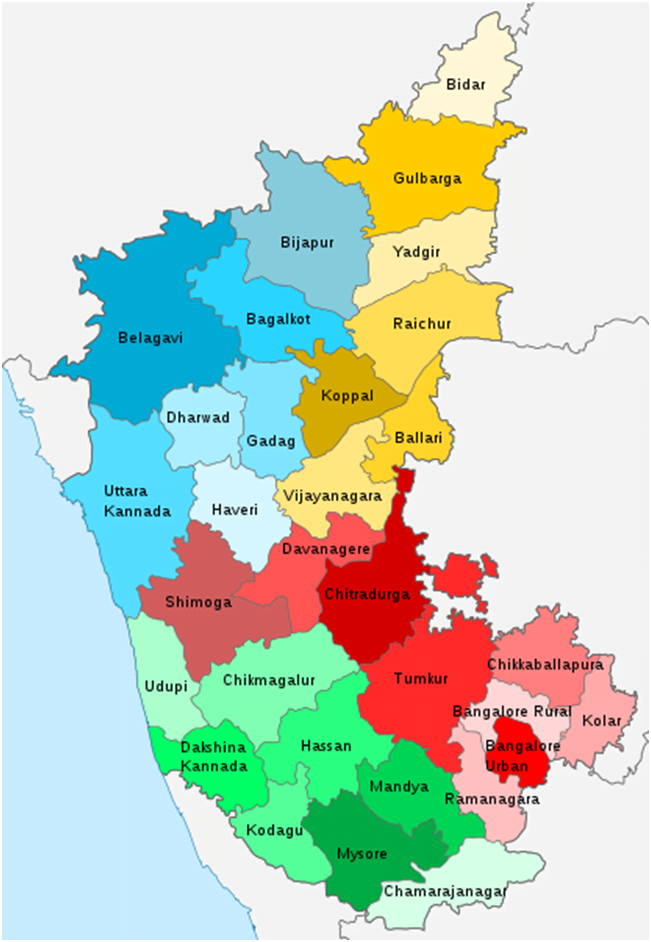
Karnataka is a southern state of India which is bounded by Goa, and Maharashtra in north, by Tamil Nadu in southeast by Kerala in south, by Telangana in east and by Arabian Sea in west. Karnataka state has 31 districts and Bengaluru (formerly known as Bangalore), a metropolitan city, is its capital which is also known as ‘Garden City’ and ‘Silicon Vallley of India’. The geographical situation and glorious past has blessed this state with all types of tourist locations like beaches, hill stations, trekking facilities, forts & places, pilgrimage centers, wildlife sanctuaries, famous parks, museums, industries, modern educational centers etc. Tourists can enjoy adventurous activities in Karnataka like Scuba diving & parasailing in its beaches, white water rafting & battling the rapids in its rivers, rock climbing, trekking & skydiving in hills of Western Ghats, in Mysore. The two international & seven domestic airports along with good road & railway facility and all types of hotels & resorts makes the travel & stay in this state easy to tourist & travelers.
Forts, Palaces and monuments in Karnataka
There are many famous forts and places in Karnataka state which are the witness of its glorious past and powerful dynasties and empires. The famous palaces are Mysore Palace (also known as Amba Vilas palace located in Mysore belongs to wadiyar dynasty of Mysore Empire), Bangalore Palace (center of attraction for tourists in Banglaore built in the year 1878) & Tipu Sultan’s Summer Palace (located in Bangalore was residence of Musore ruler Tipu Sultan is an Indo-Islamic architecture) and famous forts are Gulbarg Fort (Located in Kalaburagi and initially constructed by Raja Gulchand and later on enlarged in the year 1347 during Bahmani dynasty), Raichur Fort (ancient fort on hilltop in Riachur city), Mirjan Fort (Located on coast line in uttara Kannada district) & Bidar fort (Located in old Bidar city constructed during Bahmani dynasty),Chitradurga Fort(It is a hidden gem in about 1500 acres in Chitradurga District built by Chalukyas between 11th to 13th century),Gajendragad Fort(a massive fort built by famous Maratha ruler Chatrapati Shivaji Maharaj located on hilltop in Gadag district),Bellary Fort( Located on hilltop in Ballari city),Malkheda Fort (ancient fort located in Manyakheta town in Kalaburagi district also called Manyakheta Fort), Kavaledurga Fort(a hidden gem in Western Ghats of Shivamogga district),Nagara Fort(Located in Nagara village in the Shivamogga district has historic importance),Basavakalyana Fort(Located in Bidar district has historic importance, also known as Kalyana fort), Kittur Fort (Located in Kittur town in Belagavi district and connected with Rani Chennamma, a brave ruler, is major historical monument), Manjarabad Fort(a large star shaped fort on hilltop, at a height of about 985 meters above sea level, constructed by Tipu Sultan is a heritage site at about 5 kms from Sakaleshpur, a hill station, in Hassan district). Hampi (a UNESCO Word Heritage Site, is the jewel of the glorious Vijayanagara Empire where visiting temples, streets and its bazzars is a wonderful experience of feeling the old past time) etc.
Beaches in Karnataka
There are about 40 beaches on about 320 Kms coastline of Karnataka, which are located in its three coastal districts i.e. Uttara Kannada, Udupi and Dakshina Kannada. The beaches in Karnataka state are quiet and calm to enjoy a quiet day, so these are different than those in Goa.
Beaches in Uttara (North) Kannada district of Karnataka are:
Om beach (located in Hindu pilgrimage destination town Gokarna city is most famous beach with water sports facilities),Kudle Beach(one of many beaches in Hindu pilgrimage destination town Gokarna in Uttara Kannada district near famous Om breach), Gokarna Beach (about 10 Kms long beach in Hindu pilgrimage destination town Gokarna), Paradise Beach (another beach in Hindu pilgrimage destination town Gokarna also called ‘Full Moon Beach’), Half Moon Beach (a small beach in Gokarna town adjacent the Om Beach), Devbagh beach (Located in Karwar town where nature lover tourist can enjoy untouched beauty of surrounding mountains of Western Ghats & adventure sports), Tagore Beach (a beach of shining golden sand located on serene coastline of Karwar town, administrative headquarter of Uttara Kannada district, where a famous event called Karavali festival is organized every year in December-January),Majali Beach (a peaceful beach of scenic beauty in Karwar town just few kilometres from South Goa with many resorts to experience a private beach, also a place for bird watching and fishing), Koodi bagh Beach (Located at the delta of Kali river in near Karwar town), Murudeshwar Beach (Located in Murudeshwar town famous for its Murudeshwar Temple and 2nd tallest Lord Shiva statue of word where tourist can enjoy the beauty of mountains of Western Ghats & coconut trees),Bhatkal Beach (Located in Bhatkal town an old town of historical significance near Murudeshwar town famous for its Murudeshwar Temple & other beaches around it), Alvekodi Beach (an immaculate crystal clear white sand beach in Alvekodi village near Kumta town is an ideal picnic spot), Baada Beach (a beautiful & clean beach in hills near Kumta town on trek route from Kirki to Gokarna), Kasarkod Beach (a famous beach of about 5 Kms length in Kasarkod village near Honavar town) etc.
Beaches in Udupi district of Karnataka are:
Malpe Beach (a beautiful beach at 6 Kms from Udupi city situated on the delta of Udyavara River), Kodi Beach (It is located on the delta of Suvarna River in Kodi Bengre village at about 18km from Udupi city & Manipal University and is surrounded by water on three sides), Trasi Maravanthe beach (Located in Maravanthe village of Udupi district), Kaup Beach (Located between Mangalore and Udupi cities from where panoramic view of the sea can be experienced from the top of lighthouse), Maravanthe Beach(a very beautiful beach at 12 Kms from Kundapur city), Ottinene (Scenic beach & backwater located at about 40 kms north to Kundapur coastal town), Uppinakudru (It is a small beautiful island village also known as Salt Island near Kundapura town, once served as the center of salt trading, also houses many famous temples and Mutts), Padubidri beach(a beach having water sports activity located in a small town named Padubidri where Dakkebali ritual held once in two years) etc.
Beaches in Dakshina (South) Kannada district of Karnataka are:
Panambur Beach (Located at about 13 km from Mangalore city it is a wholly owned by a private enterprise and is one of the safest and well-maintained beaches, hence have massive footfall), Tannirbhavi breach (another popular beach located in Manglore city), Surathkal beach(Located at about 13 km from Mangalore city, a charming lighthouse is addition in its beauty), Ullal Beach(This beach located in Ullal town at about 12 Kms from Mangalore city, district head quarters of Dakshina Kannada district, is a prime tourist attraction having facilities of water activities), Someshwara Breach (This beach located in Someshwara village near Manglore city also houses the famous Someshwara Temple dedicated to Lord Shiva and ‘Ottinene Hill’ is also adjacent to it) etc.
Backwaters/Lakes in Karnataka
Honnemaradu(back waters of Sharavathi river at about 30 Kms from Sagara town, famous for ‘ Golden Lake’, in Shimoga district in Sahyadri Mountain range), Sigandur (it is a village bordered by the backwaters of Linganamakki Dam and famous for Choudeshwari Temple in Shimoga district), Navilathirtha or Navilthirtha(It is the backwaters of Malaprabha River near Saudatti town in Belgaum district), Lakkavalli (This is a scenic town known for reservoir of Bhadra River in Western Ghats in Chikkamagaluru district), Manchanabele Backwater (a reservoir of Manchanabele Dam located at about 45 kms from Bangalore city and about 22 kms from Mysore city is a famous picnic spot),Sharavathi Backwaters(a must visit wonderful picnic spot on Sharavathi river on Linganamakki Dam in Shimoga district) etc.
Hill Stations, Waterfalls, trekking trails in Karnataka
The large area of Western Ghats hills located in Karnataka has blessed this state with beautiful hill stations, waterfalls, trekking trails, flora & fauna and coffee plantations.
Some famous hill stations are Chikmagalur (city is district headquarter), Agumbe (located in Shivamogga district), Madikeri (a town in Kodagu district), Kodachadri (located in Shivamogga district), Nandi Hills (an ancient hill station in Chikkaballapur district), Kogadu(city is district headquarter) etc.
Some famous trekking trails are Narasimha Parvata (in Agumbe), Kudremukh (a mountain range in Chikmagalur district), Kumara Parvatha (also called Pushpagiri trek located in Pushpagiri Wildlife Sanctuary in Kodgu district), Kanoor trek (located in Shivamogga district), Kodachadri (also located in Shivamogga district), Coorg Plantations (trekking though coffee plantation) etc.
Some famous waterfalls are Jog Falls(on Sharavati river near Siddapura in Uttara Kannada district), Hebbe Falls(must visit waterfall at about 2 km trek near Chikmanglur), Shivanasamudra Falls (near Bangalore), Abbey or Jessy Falls(near Coorg), Kalhatti Falls(About 400 feet falling in front of Veerabhadreshwara Temple at Chandra Drona hills at 82 kms from Chikmanglur), Sathodi Falls(near Dandeli also called mini Niagra), Arasina Makki or Arisina Guni Falls(within Mookambika Wildlife Sanctuary at Kodachadri Hills), Kudlu Theertha waterfalls (near Agumbe), Burude/Dodmanewaterfalls(near Kyadgi in Uttara Kannada district) etc.
Museums in Karnataka
Some famous museums in Karnataka state are Folklore Museum(located in the University of Mysore and having the collection of art & craft from all over Karnataka), Government Museum (located in Bangalore having amazing collection of archaeological items), HAL Heritage Center and Aerospace Museum (located in Bangalore having collection aircraft models), Manipal Museum of Anatomy and Pathology (located in Manipal in Udupi district having large collection of specimens & samples related to anotmy), Archeological Museum,Hampi (located at Kamalapura village in Vijaypura district dedicated to ruins of Hampi & Vijayanagara empires),Visvesvaraya Industrial & Technological Museum (Located in Bangalore related to science and technology), Jayachamarajendera Art Gallery (Located in Mysore as part of Jaganmohan Place), Railway Museum (Located in Mysore illustrating the development of railway in India) etc.
Pilgrimage centers in Karnataka
All famous religions have grown in this region and glorious past has given famous pilgrimage centers related to Hindus, Jain, Buddhists, Muslim, Christians, Sikhs etc. It is mind blowing fact that there are more than 34000 temples in Karnataka and large number of them are ancient temples which were built by the rulers of glorious dynasties of past as Hinduism is the oldest religion of this region.
Hindu Temples :
Some famous temples in Karnataka are Virupaksha Temple(This temple dedicated to Lord Sri Virupaksha, a form of Lord Shiva, is the part of UNESCO Word Heritage Site located in Hampi, an ancient village, in Vijayanagra district), Vitthala Temple(This temple dedicated to Lord Vishnu is the part of UNESCO Word Heritage Site located in Hampi, an ancient village, in Vijayanagra district and is famous for Stone Chariot & Musical Pillars, it is a must liked structure due to its excellent architecture & matchless craftsmanship), Sri Kadri ManjunathaTemple (Located at hill top at 4 Kms from Mangalore railway station and dedicated to Lord Manjunathaswamy, built in 10th or 11th century & Buddhism had been practiced here till 10th century),Sri Marikamba Temple(a famous temple dedicated to Goddess Durga located in Sirsi town of Uttara Kannada district built in the year 1688), Kukke Subramanya Temple(this pilgrim center said to be 5000 years old is located in Subramanya village of Dakshina Kannada district, here Subramanya is worshiped as lord of all serpents), Chennakeshava Temple(It is 12th century temple located at Belur in Hassan district), Hoysaleswara Temple (12th century temple dedicated to Lord Shiva at Halebidu town of Hassan district), Murudeshwar Temple(a famous temple dedicated to Lord Shiva in Murdeshwar town of Uttara Kannada district, Gopuram of temple is 237 feet tall, said to be tallest in India, and this place also have a 123 feet tall idol of Lord Shiva said to be 2nd largest in world), Udupi Shri Krishna Temple (most revered temple dedicated to Lord Krishna located in Udupi city a district head quarter),Mahabaleshwar Temple(a dravidian architectural style temple of 4th century at Gokarna beach of Uttara Kannada district dedicated to Lord Shiva), Chennakesava Temple(a 12th century temple dedicated to Lord Chennakeshava, a form of Lord Vishnu, at Somanathapura town in Mysore district), Vidyashankara Temple (14th century temple dedicated to Guru Vidhyashankara is a wonderful monument located in Sringeri, a hill town, in Chikkamagaluru district), Kotilingeshwara Temple (a famous temple having Asia’s largest Shiva Lingam locared in Kolar city a district head quarter), Mallikarjuna Temple(an ancient temple dedicated to Lord Shiva at Pattadakal town, a UNESCO World Heritage Site, having many Hindu and Jain temples in Bagalkot district), Durga Gudi Temple (a rock-cut temple dedicated to Goddess Durga located at Aihole village, home of more than 125 unique temples, in Bagalkot district), Annapoorneshwari Temple (a exciting temple dedicated to Goddess Annapoorna, surrounded by dense forests and valleys of the Western Ghats, located in Horanadu town of Chikmagalur district) etc.
Jain Temples :
Some famous Jain temples in Karnataka are Jain monuments in Shravanabelagola (106 Jain monuments in Shravanabelagola town of Hassan district, out of which 92 are located on Chandragiri Hill named after King Chandragupta Maurya as he visited this hill with his teacher in 300BC), Kundadri Temple (dedicated to the 23rd Tirthankara, Parshvanatha located on Kundadri hill in Shimoga district is famous Jain monument believed to be about 2000 years old), Navagraha Jain Temple(located in Hubli town of Dharwad district and dedicated to the 23rd Tirthankara, Parshvanatha with smaller sculptures of 8 other Tirthankaras, devotees believe that their worshiping can remove graha dhoshas of nine planets),Badami Cave Temples (a complex of four Jain, Hindu and Buddhist cave temples), Chandranatha Temple (dedicated to the 8th Tirthankara, Chandraprabha located at Moodbidri town in Dakshina Kannada district). Chaturmukha Basadi Jain temple (16th century Jain temple in Karkala town of Udupi district), Jain Basadi Complex, Halebidu (Located in Halebidu town of Hassan district), Sri Humcha Padmavati Temple (dedicated to Ma Padmavati, the protective Goddess of the twenty-third Jain Tirthankara, located in Humcha village of Shimoga district), Jain Narayana Temple(Located in Pattadakal town, a UNESCO World Heritage sites, of bagalkot district),Gommateshwara Statue(a huge statue of Lord Bahubli built in 983 BC on Vindyagiri Hill in Shravanbelagola town in Hassan district also called Gomateshwara Temple or Bahubali Temple where Mahamastakabhisheka , a festival, is celebrated once in twelve years) etc.
Buddhist Pilgrimage Centers :
Famous Buddhist pilgrimage centers in Karnataka are Namdroling Monastery (this monastery also called Golden temple is located in Bylakuppe town of Mysure district at 34 kms from Coorg) and Sri Kadri Manjunatha Temple (Located at hill top at 4 Kms from Mangalore railway station and dedicated to Lord Manjunathaswamy, built in 10th or 11th century & Buddhism had been practiced here till 10th century)
Mosques :
Some famous mosques in Karnataka are: Jama Masjid (also known as Jamiya Masjid or Jumma Masjid is located at Vijayapura also called Bijapur is a large mosque initiated in the year 1578 by Adil shah I after his victory against the Vijayanagara Empire ), Ek Minar Mosque (built during the Bahmani rule with a Persian polish of architecture is located in Raichur city of district ), Masjid Zeenath Baksh (located in Mangaluru, built by Arab Muslim traders during 644 AD which portrays the life stories of Prophet Mohamed) etc.
Churches :
Some famous Churches in Karnataka areSt. Mary’s Basilica(oldest church in Bangalore is famous for its solemn service and the beautiful decorations),Infant Jesus Church(dedicated to Infant Jesus and located at Bangalore, it is claimed that many miracles have happened here),Sacred Heart Church(Located in Banglore, its Christmas Carol is very popular),Holy Trinity Church (a must visit Church in Banglore at MG road, built in 1851 in English Renaissance style of architecture), St. Philomena’s Church(Beautiful & large church in the Neo-Gothic architectural style located in Mysore is a must visit destination),Antony’s Shrine(Located in Mysore known for miraculous powers),St. Bartholomew’s Church(It is oldest church in Mysore),Infant Jesus Cathedral(a church of Syro-Malabar Community located in Mysore),CSI Wesley Cathedral(built by Wesleyan Missionaries Society & located in Mysore), Milagres Church or the Church of Our Lady of Miracles(a beautiful church buit in 1680 in Manglore),
Gurudwaras :
The famous Gurudwaras in Karnataka are Gurudwara Nanak Jhira (This Gurudwara dedicated to 1st Sikh Guru Nanak Dev ji is located in the Bidar city, the district head quarter. The Jhira means a spring of water, it is believed that on hearing the trouble of locals during his visit, Guru Nanak Dev ji rolled a stone by his foot and a spring of clean water started flowing here which serves the Bidar till now from about 500 years) and Gurudwara Guru Nanak Prachar Sabha(Located at Hospet town in Bellary district).
Wildlife sanctuaries in Karnataka
The geographical situation and Western Ghats hills have blessed the Karnataka state with enormous flora & fauna due to which there are number of national parks & wildlife sanctuaries, some famous are:
Bhadra Wildlife Sanctuary (Located near Bhadravati town in Chikkamangaluru district is a tiger reserve having facilities of trekking, jeep safari, boat safari, bird watching etc), Bandipur National Park ( Located in Chamarajanagar district), Nagarhole or Rajiv Gandhi National Park (located in the Kogadu district), Anshi National Park (Located in Uttara Kannada district), Mudumalai National Park (Located in Nilgiri district), Bannerghatta National Park (Located near Bangalore), Bhimgad Wildlife Sanctuary (Located in Belgaum district), Dandeli Wildlife Sanctuary (located in Uttara Kannada district & borders with Goa), Daroji Sloth Bear Sanctuary (near World Heritage site of Hampi), Sharavathi Valley Wildlife Sanctuary (Located in Shimoga District), Jayamangali Blackbuck Reserve (Located in Tumkur district), Kali Tiger Reserve (Located in the Uttar Kannada district), Pushpagiri Wildlife Sanctuary (located in the Kogadu district),Talakaveri wildlife sanctuary (Located in the Kogadu district), Ranganathittu Sanctuary (a bird sanctuary located in Mandya district), Someshwara Wildlife Sanctuary (Located in Udupi & Shivamogga districts) etc.
Airports in Karnataka
There are two international and seven domestic airports in Karnataka as under:
Kempegowda International Airport(Located in Devanhalli town near Bengaluru also called Banglore), Mangalore International Airport(Located in Mangalore, coastal city), Mysuru Airportalso known asMandakalli Airport(Domestic airport located near village Mandakalli at about 10 kms from Mysore city), Kuvempu Airport also known as Shivamogga Airport (Domestic airport located at about 9 kms from Shivamogga city & at about 8 kms from Bhadravathi city), Bidar Airport (Domestic airport located in Bidar on Air Force station), Belgaum Airport (Domestic airport located in Belgaum), Kalaburagi Airport (Domestic airport located at about 12 kms from Kalaburagi city), Hubli Airport (Domestic airport located in Gandhi Nagar at about 8 kms from Hubballi city & at about 20 kms from Dharwad city),Some other small airports are Baldota Koppal Aerodrome (Koppal), Jindal Vijaynagar Airport (Vidyanagar), Hassan Airport (Hassan), HAL Airport (Bangalore) etc.
Districts in Karnataka
The Karnataka state has 31 districts named as under:
The 51 Shakti Peethas are the most respected holy temples dedicated to Goddess Shakti also called Sati which is believe to be the original form of Goddess Parvati and Godess Durga as per Hindu mythology. Before knowing the story or legend of formation of these 51 Shakti Peethas, it will be better to understand the Hindu mythology about formation, continuance and destruction of universe and ultimate power or form of universe.
As per Hindu mythology the ultimate power or reality of universe is called as ‘Braham’ also called ‘Trimurti’, the ‘Trimurti’ means ‘three forms. The three main Gods in Hindu mythology are Brahma, Vishnu and Mahesh (Shiva) and these three are collectively known as ‘Trimurti’ means these are three forms of ‘Braham’ to perform separate duties in formation, continuance and destruction of universe. It is believed that Lord Brahma is responsible for the create the universe, Lord Vishnu is responsible for the organization & preservation of the universe and Lord Shiva (Mahesh or Maheshwar) is responsible for the demolition of the universe at end. This arrangement of ‘Braham’ may be considered as different departments with its authorities in any organization to create and play it successfully. Further per Hindu mythology there are also ‘Tridevi’ which is the collective name of the three main Goddess named as Saraswati associated with Lord Brahma, Lakshmi associated with Lord Vishnu and Parvati associated with Lord Shiva (Mahesh). Goddess Parvati is the wife of Lord Shiva (Mahesh) and she is the reincarnation (rebirth) of Godess Sati (Shakti) who was the first wife of Lord Shiva (Mahesh).
The legend of Hindu mythology says that Lord Brahma performed a yagna (Vedic ceremony by sacrifice in fire) to get the blessing of Goddess Shakti and Lord Shiva vide which Goddess Shakti get separated from Lord Shiva to help Lord Brahma in creation of universe. As per plan Goddess Shakti(Sati) had to return to Lord Shiva after creation of universe, but before so happened Lord Brahma’s son Prajapati Daksha (King of Kankhal) performed yagnas to get Goddess Shakti as his daughter with motive of marrying her with Lord Shiva.
Goddess Shakti take birth as daughter of Prajapati Daksha and named as Sati. But Prajapati Daksha later on changed his decision to get married her with Lord Shiva as he started hating him due to Lord Shiva’s curse to his father that fifth head of Lord Barhma was cut off in front of Shiva due to his lie (a separate story as a myth of Hindu mythology). However Sati ultimately got married with Lord Shiva due to her attraction with him but hating of Daksha increased for Shiva despite their marriage.
Daksha organized a yajna and invited all deities of universe except Lord Shiva and Sati. Goddess Sati expressed her desire to Lord Shiva to attend the yajna. Lord Shiva advised her not to attend the yajna without being invited and tried his best to discourage her from going there. Despite this Goddess Sati decided to attend the yajna but she did not get due respect at yajna and Daksha insulted Lord Shiva when she asked the reason for not inviting them. Due to this distressed Sati cursed her father and got self immolated by jumping in yajna.
This instance annoyed Lord Shiva who destroyed the yajna and cut off the head of Daksha, but this did not declined the anger of Lord Shiva who picked up the remains of sati’s body and performed the Tandava (space dance of demolition). When all deities requested Lord Vishnu to save the universe from demolition, Lord Vishnu cut up the body of Sati in 108 parts by using his Sudarshana Chakra ( a divine weapon ) to get Lord Shiva came out from his this situation and to stop Tandava. It is beloved that 51 parts of Sati’s body fell on earth and other parts fell on other planets of universe. The places where these 51 parts of Sati’s body fell on earth became the Shakti Peethas and deity in these temples are the form of Goddess Sati(Shakti). Out of these 51 Shakti Peethas 38 are in India, 5 are in Bangladesh, 2 are in Pakistan, 3 are in Nepal , 1 in Tibet (China), 1 in Shiri Lanka and 1 in Bhutan .
These 51 Shakti Peeth, important pilgrimage centers of Hindus, are believed to be holy dwellings of the divine energy of Goddess Shaki which brings enormous spiritual benefits to visitors.
As per Hindu mythology Goddess Sati take rebirth as Parvati, wife of Lord Shiva, who was daughter of King Himavan (of Himalaya kingdom) and Queen Mena. Further as per Hindu mythology Goddess Durga is an incarnation of Goddess Parvati, who took this avatar as Devi Durga to destroy Mahishasur a demon. There are nine avatars of Goddess Maa Durga named as Shailputri, Brahmcharini, Chandraghanta, Kushmanda, Skandmata, Katyani, Mahagauri and Siddhidatri worshiped during Navratri Pooja, an important nine days festival of Hindus, from first day to ninth day respectively.
List of 51 Shakti Peethas with their location is as under:
S. No
Name of Shakti Peeth
Part or Ornament of Goddess Maa Sati(Shakti) associated with Shakti Peeth
Location
State & Country
Some additional Information
1
Godavari Tir or Sarvashail Shakti Peeth
Maa Sati’s left cheek
in the Rajahmundry region
Andhra Pradesh (India)
2
Kamakhya or Kamrup-Kamakhya temple or Kamakhya Devalaya
Maa Sati’s Yoni (genital organ)
Guwahati
Assam (India)
This Shakti Peeth is also Adi Shakti Peeth and Maha Shakti Peeth
3
Yashore or Yashoreswari or Jassoreshwari
Maa Sati’s palm
At Yashore in Ishwaripur, in the Khulna district
4
Bhavanipur Shakti Peeth or Aparna Devi Temple
Maa Sati’s left anklet (ornament)
Bhawanipur village
Bangladesh
5
Shakti Bhawani at Chandranath Temple
Maa Sati’s right hand
on Chandranath hill near Sitakunda
Bangladesh
6
Sugandha Shaktipeeth dedicated to Goddess Sunanda
Maa Sati’s nose
located in Shikharpur district
Bangladesh
7
Shri Shail Mahalakshmi Shakti Peeth
Maa Sati’s neck
Shail village ( in Silhat district) near Dhaka
Bangladesh
8
Paropit Shakti Peeth Temple
Maa Sati’s Bamonbonsham
Paro
Bhutan
9
Mithila Shakti Peeth
Maa Sati’s left shoulder
Janakpur (Darbhanga)
Bihar (India)
10
MansaShakti Peeth dedicated to Goddess Dakshayani (Durga)
Maa Sati’s right hand
Mansarovar (Tibet)
Tibat (China)
11
Prabhas Shakti Peeth dedicated to Goddess Maa Chandrabhaga Devi
Maa Sati’s abdomen
Prabhas area of the Somnath temple ( in Junagadh distric)
Gujarat (India)
This Shakti Peeth is collocated with Somnath Jyotir Linga
12
Shakti Peeth Shri Devikoop Bhadrakali Temple also called ‘Savitri or Devi or Kalika or Aadi Peeth’
Maa Sati’s ankle fell
Kurukshetra
Haryana (India)
13
Maa Chintpurni Devi or Maa Chhinnamast or maa ChhinnamastikaTemple
Maa Sati’s feet
in Una district
Himachal Pradesh (India)
14
Brajeshwari or Vrajeshwar Devi Temple also called Kangra Mandir
Maa Sati’s ears
Kangra
Himachal Pradesh (India)
15
Jwala Ji Shaktee peeth dedicated to Goddess Maa Siddhida (Ambika)
Maa Sati’s tongue
Jawala ji (in Kangra District)
Himachal Pradesh (India)
16
Baidyanath ( Vaidyanath) Jaya Durga Shakti Peeth
Maa Sati’s heart
Baidyanath Dham
Jharkhand (India)
This Shakti Peeth is collocated with Baidynath Dham Jyotir Linga
17
Mahamaya Shaktipeeth
Maa Sati’s ornaments
At Amarnath cave In Pahalgam district
Kashmir (India)
18
Shri Parvat Shaktipeeth dedicated to Goddess Shiri Sunderi
Maa Sati’s right foot
in Ladakh
Ladakh (India)
Some devotees believe that the Bhramarabha Devi temple in the complex of Mallikarjuna jyotir Linga at Srisailam in Kurnool district of Andhra Pardesh is Shiri Sunderi Shakti Peeth
19
Avanti Shakti Peeth dedicated to Goddess Shri Mahakali
Maa Sati’s Upper Lips
Ujjain
Madhya Pradesh (India)
This Shakti Peeth is also Maha Shakti Peeth and collocated with Mahakaleshwar Jyotir Linga
20
Kalmadhav Shakti Peeth dedicated to Goddess Kali
Maa Sati’s left buttock
Amarkantak
Madhya Pradesh (India)
21
Shondesh Shakti Peeth (Maa Narmada Devi Temple)
Maa Sati’s right buttock
in Amarkantak district
Madhya Pradesh (India)
This Shakti Peeth is collocated with Omkareshwar (Mamleshwar) Jyotir Linga
22
Janasthaan Shakti Peeth dedicated to Goddes Bhramari
Maa Sati’s chin
Nashik
Maharashtra (India)
This Shakti Peeth is collocated with Trimbakeshawar (Nasik) Jyotir Linga
23
Jayanti Shakti Peeth dedicated to Goddess Nartiang Durga Temple
Maa Sati’s left thigh
Jaintia hill
Meghalaya (India)
24
Muktinath Shakti Peert Temple
Maa Sati’s forehead
Pokhara
Nepal
25
Guhyeshwari Temple (Mahashira Shakti Peeth) dedicated to Goddess ‘Guhekali’
Maa Sati’s knees
Pashupatinath Nath, Kathmandu
Nepal
26
Hinglaj Shakti Peeth
Maa Sati’s head
Located in Balochistan, Pakistan
Pakistan
27
Mahishamardini Shivaharkaray or Karavipur Shakti Peeth
Maa Sati’s Eyes
Karachi
Pakistan
28
Tripurmalini Shakti Peeth ( Shri Devi Talab Mandir)
Maa Sati’s left breast
Jalandhar
Punjab (India)
29
Manivedika Shakti Peeth Temple dedicated to Goddess Gayatri(Saraswati)
Maa Sati’s two bracelets
Near Pushkar ( in Ajmer District)
Rajasthan (India)
30
Shri Ambika Shakti Peeth
Maa Sati’s left feet
Biraat Nagar (in Bharatpur district)
Rajasthan (India)
31
Indrakshi (Nagapooshani or Bhuvaneswari) Shakti Peeth
Maa Sati’s anklet
Trincomalee
Sri Lanka
32
Suchindram Shakti Peeth Temple dedicated to Goddess Maa Narayani
Maa Sati’s upper tooth
Between Kanyakumari and Thiruvananthapuram
Tamil Nadu (India)
33
Kanyashram Shakti Peeth Temple dedicated to Goddess Durga
Maa Sati’s Back
Kanyashram
Tamil Nadu (India)
34
Tripura Sundari or Tripureshwari Shakti Peeth Temple
Tamil Nadu is a southern state of India which is bounded by two oceans i.e. Bay of Bengal in east and Indian Ocean in south; it is bounded by Indian state Kerala in west and Andhra Pradesh in north. Tamil Nadu state has large number of various kinds of destinations to satisfy all type of tourists.
Tamil Nadu is full of ancient dravidian style temples which gives the glimpse of the Cholas, the Cheras , Pandyas and Pallavas dynasties rule in this area.
There are also large number of museums giving the glimpse of history of this are from Pallavas, Cholas, Cheras , Pandyas, Chalukyas, Pandyas to Bahamani Sultanate, Vijayanagar Kingdom and then it collapsed in the battle of Talikota in 1564 to Muslims, further glimpse that how the Portuguese, the Dutch, the French and the English came established their ‘ factories’ to control the trade and gradually British’s settled and established ‘the old Madras Presidency’ which is present Tamil Nadu. There are also many museums giving glimpse of freedom fighters & battle of independence, modern development of India and heroes of India like Dr. APJ Abdul Kalam (Former President and Great Scientist of India). There four international airports as at Chennai, Coimbatore, Tiruchirapalli and Madurai and three domestic airport as at Salem, Tuticorin and Puducherry in Tamil Nadu state of India.
Famous tourist destinations in Tamil Nadu state of India are as under:
Chennai, Tamil Nadu, India :
Chennai city, previously known as Madras, is the capital od Tamil Nadu state of India and district headquarter of Chennai district of this state. This coastal city houses the to Fort St. George or White town as first English fortress settlement in the country of East India Company, this building is a museum now. Chennai is must visit place to experience Tamil culture, to see ancient temples and old Churches built by Europeans, having longest beach of Asia and other historical evidences. This metropolitan city has its own international airport and railway station.
Famous attractions in and around Chennai are:
St. George Fort and Museum (This heritage site is witness of establishment of British rule & 1st office of Madras Bank), Marina Beach (This famous tourist attraction is one of the longest beaches), Elliot’s Beach (This famous tourist attraction is one of cleanest beach), Kapaleshwarar Temple (Ancient temple of Dravidian architecture dedicated to Lord Shiva) , Tirumala Tirupathi Devasthanam (Ancient temple of Dravidian architecture dedicated to Lord Vishnu), Sri Bhaktha Anjaneyaswami Temple (dedicated to Lord Hannuman & located at Nanganallur), Shirdi Sai Baba Temple, Anantha Padmanabha Swamy Temple (built in 1962 & dedicated to Lord Vishnu), Thousand Lights Mosque (beautiful shrine of Shia Community), Ramkrishna Temple (dedicated to famous saint Ramakrishna Paramhansa), Sri Parthasarathy Temple (A dravidian architecture built during the Pallava Dynasty), San Thome Cathedral (Holy shrine of Christianity having 180 feet tall spire) ,Vivekananda House and Museum (Swami Vivekananda stayed here for some time after returned from USA), Government Museum (Housing objects related to empires of Cholas, Chalukyas, Hoysalas and Pallavas), Guindy National Park and Snake Park etc.
Kanchipuram, Tamil Nadu, India :
Kanchipuram, known as Kanchi or the city of thousand temples, is the headquarter of Kanchipuram district of Tamil Nadu state of India. The Kailasanathar temple dedicated to Lord Shiva, built during Pallava-era, is a large Complex having 1000 pillars halls. This oldest monument in this city is center of attraction for tourists not only from India but from all over the world along with a famous pilgrimage center for Hindus. There are also other ancient temples and this city is also famous for Silk Saris made in this area. This city having attraction for all types of tourist is about 75 Kms from Chennai international airport, has own railway station and well connected by roadways from Chennai, Madurai & Coimbatore.
Famous attractions in and around Kanchipuram are:
Kailasnatha Temple (Must visit ancient temple dedicated to lord Kailashnathar a form of Lord Shiva), Varadharaja Perumal Temple (Ancient temple dedicated to Lord Vishnu built during Vijaynagar Empire is famous for its 1000 pillared hall known as Kalyanamandapam), Kamakshi Amman temple (Ancient temple dedicated to Goddess Kamakshi and associated with Adi sankaracharya), Sri Ekambareswar Temple ( Ancient temple dedicated to Lord Prithvilingam considered a form of Lord Shiva), Shri Kanchi Kamakoti Peetham (Ancient Hindu monastic institution dedicated to Goddess Kamakshi), Shri Ulagalandar Temple (Ancient temple dedicated to Lord Vishnu’s Vamana avatar having huge statue of Lord), Vaikuntha Perumal Temple (Ancient temple dedicated to Lord Vishnu built by Pallava King Nandivarman), Chitragupta Swami Temple {Ancient temple dedicated to Chitragupta (chief accountant of Lord Yama) built during the Chola Dynasty}, Thennangur Panduranga Temple (Ancient temple dedicated to Lord Vishnu built in architecture resembling to the Lord Jagannath Temple in Puri), Devarajaswami Temple (Ancient temple dedicated to Lord Varadaraja, a form of Lord Vishnu, built during the Vijaynagar Empire), Kachapeshwarar Temple, Sri Subramaniya Swami Temple, Alamparai Fort (built during mugal era), Vedanthangal bird sanctuary.
Kanyakumari,Tamil Nadu, India :
Kanyakumari , the headquarter of Kanyakumari district of Tamil Nadu state, is a coastal town at southern tip of India and is the meeting point of three seas (Indian Ocean, arabian Sea & Bay of Bangal) surrounding the India. This town is famous destination for tourists due to Vivekananda Rock Memorial, famous pilgrimage site of Hindus as Bagavathi Amman Temple, Our Lady of Ransom Church, sunrise and sunset points and beaches. This city having attraction for all types of tourist is about 70 Kms from Thiruvananthapuram international airport (Kerala) and has own railway station connected with main trains.
Famous attractions in and around Kanyakumari are:
Vivekananda Rock Memorial, Bhagavathy Amman temple (ancient most respected temple dedicated to dedicated to Goddess Devi Kanyakumari), Thiruvalluvar statue (huge statue of Tamil poet) , Kanyakumari Beach, Padmanabhapuram Palace (16th century beautiful architecture at the foothills of the Veli Hills), Thanumalayan Temple ( ancient temple in dravidian style of architecture), Sunset View Point (must visit place of awesome experience), Bhagavathy Amman temple (ancient temple dedicated to Goddess Kanyakumari), Vattakotai Fort ( coastal fort built by during Travancore Kingdom in 18th century), Thirparappu Falls (at 65 kms from city), Our Lady of the Ransom Church (religious shrine of Christians), Gandhi Memorial, Mathur Aqueduct, Kanyakumari Wax Museum, Sothavilai Beach, Sanguthurai Beach, Courtallam Falls (at 125 Kms from city), Adi Keshava Perumal Temple (Dravidian style ancient temple), Kanyakumari’s Jain temple (rock-cut sculptures of the Jain Tirthankaras), Tsunami Monument, Vattakottai Beach , Thengapattinam Beach, Observation Tower.
Kodaikanal, Tamil Nadu, India :
Kodaikanal located in Dindigul district of Tamil Nadu state of India is famous hill station at about 2000 meters above sea levels which is an area of granite rocks, green valleys, waterfalls, lake, & scenic hills. This hill station is about 80 Kms from Madurai international airport and railway station.
Famous attractions in and around Kodaikanal are:
Kodaikanal Lake (a popular destination in Tamil Nadu), Upper Lake View Point (this point gives the view of Kodaikanal Lake), Chettiar Park { rare species of flowers & Kurunji flowers (once blooming in 12 years) are attractions} , Silent Valley View Point (wonderful place to view natural and scenic mountains at morning & evening ), Moir point (main view point named after a European engineer Sir Thomas Moir ), Mannavanur Lake (a cool & peaceful water body), Berijam lake ( surrounded by forest & source of water supply to nearby area) , Coaker’s Walk (a man made walking area for evening walk), Bear Shola Falls , Fairy Falls, Astrophysical Observatory (an amazing place for astrophysics fans and tourists, which is the part of Indian Institute of Astrophysics), Pine Forest, Pillar Rocks (natural strange sight of rocks in hills), Kurinji Andavar temple {dedicated to Kurinji Avtar(Lord Murugan) and linked with Kurinji flowers that bloom once in 12 years}, Poombarai Village View point (offers charming views of the surrounding panorama & village is famous for garlic production), Bryant Park ( a beautiful botanical garden), Guna Caves, Shembaganur Museum of Natural History ( collections of belongings to the Palayiar tribes), La Saleth Church, Vattakanal Falls (located in dense forests), Christ the King Church , Subrahmanya Temple (at about 65 Kms on scenic location).
Madurai, Tamil Nadu, India :
Madurai, the headquarter of Madurai district of Tamil Nadu state, is an ancient city which is must visit destination due to famous Meenakshi temple Complex. Madurai has its own airport and railway station.
Famous attractions in and around Kodaikanal are:
Sri Meenakshi Temple {This about 2500 years old ancient temple dedicated to Goddess Meenakshi (an avatar of Goddess Parvati) built in Dravidian architecture, once included in the ‘ Seven Wonders of the World’, is a vast & must visit complex}, Pazhamudhir Solai Temple (Ancient temple dedicated to Lord Murugan at about 20 kms near natural spring is popular shrine of area), Aayiram Kaal Mandapam (with in Meenakshi Temple),Sri Ramana Mandiram (very close to the Meenakshi temple),ISKCON Madurai Temple, Koodal Azhagar Temple (Ancient temple dedicated to Lord Lord Vishnu, built during the Vijaynagar Empire), Alagarkoil Temple and shrine (Ancient temple at the top of a hill at about 20 Kms in the ruins a Fort believed to be built during the Pandya Kingdom), Gandhi Sangrahalaya (Collections of belonging of Mahatma Gandhi & housed in 17th century Tamukkam Palace of Nayak Dynasty), Tirupparankunram (Ancient temple of rock cut & Dravidian architecture dedicated to Lord Murugan), Thirumalai Nayakar Mahal (This historical sites built in Italian architect during Nayak Dynasty is the amalgamation of Dravidian and European architecture), St. Mary’s Cathedral Church (This Church built in Roman style of architecture is main religious shrine) , Vandiyur Mariamman Teppakulam (This is a tank in 16 acres, built during Nayak Dynasty, used for devotional festivals), Kalamegaperumal Temple (About 2000 years old ancient temple dedicated to Lord Vishnu is located in Melur ), Idaikuttur Church (located on Madurai to Rameshwarm highway at about 40Kms), Puthu Mandapam (Shopping complex of city built during Nayak Dynasty), Samanar Hills in Keelakuyilkudi village (A historical site preserved by ASI at about 12 Kms), Villacherry Pottery Village.
Ooty,Tamil Nadu, India :
Ooty known as ‘Queen of hill stations’ located in Nilgiris district of Tamil Nadu state of India is famous hill station at about 2400 meters above sea levels, its nearby other hill stations are ‘Coonoor’ and ‘kotagiri’. This hill station is about 90 Kms from Coimbatore international airport and railway station.
Famous attractions in and around Ooty are:
Nilgiri Mountain Railways (a narrow-gauge railway journey on line through tunnels and bridges of UNESCO World Heritage Site is an wonderful experience), Shooting Point (Beautiful green field surrounded by trees has been much liked by film directors), Doddabetta peak (highest point of Nilgiri mountains), Ketty Valley View (A valley offering eye-catching views also called as mini Switzerland) , Pykara Falls (a wonderful sight for adventure hunters and nature fans), Rose Garden ( an orchard in 10 acres), Thunder World (also called Dinosaur Park, houses the models of many species of Dinosaurs), Botanical Garden (Garden in 22 acres maintained by Horticulture Department), Ooty Lake ( a popular lake in 65 acres with boating facilities), Upper Bhavani Lake (located in the deep forests of Nilgiri mountains), Emerald Lake ( at 20 Kms in the Silent Valley National Park), Avalanche Lake (a camping site near Oaty), Pykara Lake (at Pykara Dam with boat house, rest house & restaurant facility) , St. Stephen’s Church (main religious shrine in Ooty) , Sanctuary Avalanche (A wildlife reserve in the Nilgiri Mountains with some trekking opportunities), Murugan Temple (located at Elk Hill & providing the amazing views of surrounding), Mudumalai National Park (Tiger reserve bounded by Karnataka & Kerala state), Thread Garden (an artificial garden where flowers and plants are woven by threads without the use of needles), Cairn Hills (liked for its good resorts facilities), Elk Hills (Famous for its hotels and resorts with good facilities).
Chidambaram, Tamil Nadu, India :
Chidambaram town is located on the bank of velar river in Cuddalore district of Tamil Nadu state of India. The ancient Nataraj Temple temple complex is its center of attraction. Mangrove forest surrounding this town makes it place to enjoy nature with spirituality. Chidambaram town has its own railway station and its nearest airport is Tiruchirappalli at about 200 Kms.
Famous attractions in and around Chidambaram are:
Thillai Nataraja Temple (a huge ancient temple complex dedicated to Lord Shiva), Thillai kali Amman Temple (an ancient famous temple within the Thillai Nataraja Temple complex), Tirunallurpperumanam Temple (This ancient temple having 2 prikarams is a wonderful engineering and main tourist attraction in city), Tiruvetkalam Temple (another ancient temple located in the area of Annamalai University & inscriptions since Nayaka dynasty period), Pichavaram Mangrove Forest (a wood forest in about 110 hectares with vast varieties of trees, birds, prawns, crabs ,turtles, others etc along the Bay of Bangal), Pichavaram Backwaters (to get wonderful experience of going through forests in a boat), Annamalai University (a renowned university of India founded in 1929).
Courtallam, Tamil Nadu, India :
Courtallam, also known as ‘the Spa of South’ due medicinal value of its waterfalls, is located in the Western Ghats is the part of Tenkasi District of Tamil Nadu state of India. The nearest airport is Tuticorin at about 100 Kms and nearest railway stations are Deboard at about 6 Kms & Sengottai at about 10 kms.
Famous attractions in and around Courtallam are:
Courtallam Waterfalls (five falls at one place) , old Courtallam Waterfalls (main attraction), Palaruvi Waterfalls (means stream of milk), Kumbhavurutty Waterfall, Agathiyar Waterfalls, Chitra Sabhai Temple, Folk Arts Site Museum, Tiger Falls(Puli Aruvi), Manjolai Estate Hill Station (famous for aromatic tea gardens in hills), Karaiyar dam, Courtallam Eco Park ( biggest Eco Park in Tamil Nadu in 37 acres), Gundar Dam, Adavi Nainar Dam, Thirumalai Kovil ( temple dedicated to Lord Murugan), Kasi viswanathar temple (This 14th century ancient temple is the tallest shrine of Tamil Nadu which is carved by Parakrama Pandyan) , Nellaiappar Temple (This ancient temple built by King Rama Pandian in 7th Century is dedicated to Lord Shiva), Tiruchendur Temple and Beach (This ancient temple dedicated to Lord Murugan is must visit site), Krishnapuram temple(This ancient temple of dravidian architecture dedicated to Lord Vishnu and the ten days festival on Vaikunta Ekadasi during December-January is the beautiful time to visit), Thenmala Eco Tourism Center(The activities available are adventure park, musical dancing fountain, children’s park, butterfly safari trekking, boating, , mountaineering, night camping etc), Manimuthar Dam and Waterfalls.
Dharmapuri, Tamil Nadu, India :
Dharmapuri, the headquarter of Dharmapuri district of Tamil Nadu state, is major producers of mango. The nearest airport and railway station is Bengaluru (Karnataka state ) at about 140 Kms.
Famous attractions in and around Dharmapuri are:
Hogenakkal Falls (This popular waterfall located in Melagiri Hills, also called as Niagara of India, provides an eye-catching view), Subramanya Shiva Memoria (a memorial dedicated to a well-known freedom fighter, Subramanya Shiva) , Theerthamalai Temple (ancient temple of 7th century located on hill & dedicated to Lord Shiva), Kottai Kovil (also called Mallikarjuneswara Temple is another ancient temple dedicated to Lord Shiva, its architecture known as ‘hanging pillar’ is its main attraction), Chenraya Perumal Temple (This ancient temple is holy shrine built in Tulavu dynasty), Adiyamankottai village (Located at about 8 Kms is famous for its ancient reverted Kalavairavar Temple).
Erode, Tamil Nadu, India :
Erode city known as ‘Loom City” or “Textile City” is the headquarter of Erode district of Tamil Nadu state of India and is major producers of Turmeric & Textile products. Tourist attractions in this district are ancient Hindu & Jain Temple, churches and wildlife sanctuaries. The nearest airport and railway station is Coimbatore at about 100 Kms.
Famous attractions in and around Erode are:
Vellode Bird Sanctuary (Famous for migrated birds and attraction of bird watchers), Government Museum, Thindal Murugan Temple, Chennimalai Murugan Temple (ancient temple on the top of hill built during Chola dynasty), Sathyamangalam Tiger Reserve, Sri Peria Mariamman Temple (ancient temple built during Chola dynasty dedicated to Mariamman, a form of Goddess Durga), Sri Kongalamman Temple, Brough Church, Arudra Kabalishwarar Temple, Jain Temple, Bannari Amman temple, Bhavanisagar Dam.
Krishnagiri, Tamil Nadu, India :
Krishnagiri city is the headquarter of Krishnagiri district of Tamil Nadu state of India and is famous for mangoes cultivation and granite industry. Krishnagiri is the amalgamation of two words ‘Krishna’ means ‘black’ and ‘giri’ means ‘hill’. The nearest airport is Bengaluru (Karnataka state) at about 90 Kms.
Famous attractions in and around Krishnagiri are:
Shree Parshwa Padmavathi Shaktipeet Tirth Dham (dedicated to Parshawanath Bhagwan at bout 7 Kms ), Sri Kattu Veera Anjaneya Temple (a temple dedicated to Lord Hannuman), Venugopala Swami Temple (temple dedicated to Lord Krishana), Government Museum, Rajaji Memorial (Chakravarthy Rajagopalchari), Arulmigu Maragathambigai Chandra Choodeswara Temple (famous temple dedicated to Lord Shiva), Hanumanthathirtham (a temple dedicated to Lord Hannuman), Krishnagiri Reservoir Dam (KRP Dam), Krishnagiri Fort (16th century fort of Vijaynagar Empire), Rayakottah Fort (ruins of fort are witness of historic battles ).
Mahabalipuram, Tamil Nadu, India :
Mamallapuram, also known as Mahabalipuram town located on a strip of land between the Bay of Bengal and the Great Salt Lake is in the Chengalpattu district of Tamil Nadu state of India. This town is famous for temples and monuments built during Pallava dynasty in the 7th and 8th centuries. This city has its own railway station and its nearest airport is Chennai at about 55 Kms.
Famous attractions in and around Mamallapuram are:
Shore Temple, Descent of the Ganges (a monument), Monuments at Mahabalipuram (UNESCO World Heritage Site), Arjuna’s Penance (a monument), Pancha Rathas (a monument), Seashell Museum, Krishna’s Butter Ball, Varaha Cave Temple (UNESCO World Heritage Site), Krishna Mandapam, Pancha Pandava Caves (a monument), Mahishasuramardini Cave temple, Ganesh Ratha Temple, Trimurti Cave (a religious shrine), Tiger Caves temple, Wide Beach, Sri Sthala Sayanaperumal Temple, Mahabalipuram Beach, Sculpture Museum, Maritime Heritage Museum, Lighthouse Heritage Museum, Raya Gopuram (a monument).
Nagapattinam, Tamil Nadu, India :
Nagapattinam city is the headquarter of Nagapattinam district of Tamil Nadu state of India and is famous for Kayarohanaswami Temple and Soundararajaperumal Temple which are ancient Hindu pilgrimage sites along with other temples in this district. Nagapattinam has its own railway station and its nearest airport is Trichy or Tiruchirapalli at about 150 Kms.
Famous attractions in and around Nagapattinam are:
Kayarohana Swami and Neelayadakshi Temple (ancient temple dedicated to Lord Shiva), Soundararaja Perumal Temple (ancient temple dedicated to Lord Vishnu), Nagore Dargah (tomb of the Sufi Saint Nagore Shahul Hamid ), Vaitheeswaran Kovil Shrine (dedicated to Lord Shiva & considered the God of Healing), Sikkal Singaravelar Temple (dedicated to Lord Muruga), Mayuranathaswamy Temple (major Hindu religious shrine dedicated to Lord Shiva), Kodikkarai Wildlife Sanctuary, Nataraja of Konerirajapuram, Poompuhar Beach, Ettukudi Murugan Temple, Akshyalingaswamy Temple (dedicated to Lord Shiva), Sri Rajagopalaswami temple (considered as South Dwarka), Sri Agneeswaraswami Temple (a form of Lord Shiva), Silappathikaram (a Tamil epic) Art Gallery, Kayarohanaswamy Temple (a form of Lord Shiva), Sri Gomuktheeswarar Temple (also known as Masilamaniswara Temple is excellent Dravidian style architecture).
Pudukkottai, Tamil Nadu, India :
Pudukkottai city is the headquarter of Pudukkottai district of Tamil Nadu state of India and is famous for its natural resources and sea binds found here along with ancient temples located at Chitthannavasal, Kudumiyanmalai and Avudayarkovli. Pudukkottai has its own railway station and its nearest airport is Trichy or Tiruchirapalli at about 75 Kms.
Famous attractions in and around Pudukkottai are:
Sittanavasal caves (Jain’s rock-cut monastery), Brahadambal Temple (fusion of Jain and Dravidian architecture), Avudairyarkoil temple (50 Kms away dedicated to Lord Shiva), Thirumayam Fort (famous sightseeing destination at shoer distance).
Coimbatore, Tamil Nadu, India :
Coimbatore city is the headquarter of Coimbatore district of Tamil Nadu state of India and is famous for its Dravidian-style Arulmigu Subramaniyaswami Temple. Coimbatore is famous industrial area of state for automobile, textile, spares, engineering goods etc. Coimbatorehas its own airport and railway station.
Famous attractions in and around Coimbatore are:
Dhyanalinga temple (dedicated to meditation by complete silence & dedicated to Lord Shiva), Marudamalai temple (dedicated to Lord Murugan), Arulmigu Patteeswarar Swamy Temple (Dravidian style, dedicated to Lord Shiva), Statue of Adiyogi Shiva ( about 34 meter tall & 25 meter long), Brookfields Mall ( shopping complex), Eachanari Vinayagar Temple (ancient temple dedicated to Lord Ganesha), Codissia Trade Fair Complex, Kovai Kutralam Falls, Black Thunder Theme Park, Gedee Car Museum (must visit site), Vellingiri Mountains (also known as the ‘Saptagiri’ has spiritual significance), Vellingiri Temple (dedicated to lord Shiva at the foothills of Vellingiri Mountains), Monkey Falls (about 65 Kms away), Thirumalai Temple (dedicated to Lord Vishnu), Masaniamman Temple (Popular Hindu Shrine dedicated to Goddess Masani Amma, a form of Shakti), Coimbatore ISKCON Temple, G.D. Naidu Industrial Exhibition Centre (Technical material and equipment), Mundhi Vinayagur Temple (dedicated to Lord Ganesha), Sri Nag Sai Temple (dedicated to Shirdi Sri Sai Baba), Fun Republic Mall (shopping center), Sree Ayyappan Temple, Parambikkulam Wildlife Sanctuary.
Namakkal, Tamil Nadu, India :
Namakkal city is the headquarter of Namakkal district of Tamil Nadu state of India. Namakkal district is famous for Namakkal anjaneyar temple and Namagiri amman temple. Coimbatore city is called as ‘ Egg City ‘ due to big production of Eggs in this area. The famous Tamil Poet Namakkal Kavingnar Ramalingam Pillai, the famous Tamil Poet, was born in this district. Namakkal city has its own railway station and its nearest airport is Trichy or Tiruchirapalli at about 55 Kms.
Famous attractions in and around Namakkal are:
Anjaneya Temple (dedicated to Lord Hanuman ji), Namakkal Narasimha temple (dedicated to Naramsimha, an avatar of Lord Vishnu), Ettukai Amman temple (situated in Koli Mallai valleys of Koli Hiils), Seeku Parai Viewpoint (on Koli hills to see the beautiful mountain ranges and valleys), Agaya Gangai Falls (Koli hills), Arapaleeshwar Temple (ancient temple dedicated to Lor Shiva), Selur View Point (on Koli hills).
Cuddalore, Tamil Nadu, India :
Cuddalore city is the headquarter of Cuddalore district of Tamil Nadu state of India. Cuddalore district is famous for its ancient temples mostly dedicated to Lord Shiva & Lord Vaishnava and sightseeing places. Cuddalore city has its own railway station and its nearest airport is Trichy or Tiruchirapalli at about 190 Kms.
Famous attractions in and around Cuddalore are:
Pataleeswarar Temple (ancient temple dedicated to Lord Shiva), Devanathaswamy Temple at Thiruvanthipuram village (honored as Thiruvendipuram Kovil is one of the 108 ancient Vaishnava temples), Veeratteswarar Temple at Thiruvathigai Village ( it is a complex which houses many temples and 108 poses of Bharatnatyam are emblazoned here ), Sri Valli Devashena Shiva Subramanya Swamy Temple (dedicated to Lord Murugan and Goddess Valli), Bhuvaraha Swami Temple ( ancient temple of Varaha avatar of Lord Vishnu), Sri Mangalapureeswarar (Chopuranathar) Temple (at village Tiruchopuram dedicated to Lord Shiva), Sudarkozhunthutheesar Temple, Sri Lakshmi Narasimha Swamy Temple at Singirikudi (As per myth Singirikudi is the place where Prahlada worshipped Lord Narasimha), Pichavaram Village(scenic site in the lap of nature), Silver Beach, Veeranam Lake (creation of Chola Dynasty).
Theni, Tamil Nadu, India :
Theni city is the headquarters of Theni district of Tamil Nadu state of India. Theni is a valley town surrounded by hills and rivers is famous for its sightseeing places and production of garlic, cardamom, chilli, grapes, bananas, mango etc. Theni city has its own railway station and its nearest airport is Madurai at about 80 Kms.
Famous attractions in and around Theni are:
Andippatti village (natural beauty & a major battlefield during the Second World War), Viagai dam on Vaigai River (adjacent beautiful garden is picnic spot), Periyakulam (Mango City of Theni district), Arulmigu Balasubramanya Temple ( ancient temple dedicated to Lord Subramanyam or Murugan), Kumbakkarai Falls ( on the foothills of the Kodaikanal Hills), Sothuparaii Dam, Mannavanur Lake, Anayirankal Dam Reservoir, Kolukkumalai Tea Estate, Berijam Lake, Chinna Suruli Falls, Meghamalai, Vaigai Dam, Shanmuganathi Dam.
Salem, Tamil Nadu, India :
Salem city located on Thirumanimuthar River is the headquarters of Salem district of Tamil Nadu state of India. Salem city is famous for its sightseeing places, ancient Sugavaneswarar Temple & Gopurams(towers), colonial-era Christ Church, Jamiya Masjid & Salem Steel Plant. The famous hill station Yercaud also located in this district at about 30 Kms from Salem city. Salem city has its own airport and railway station.
Famous attractions in and around Salem are:
Sugavaneswarar Temple or Lingam Temple (dedicated to Lord Shiva having 1008 Shiva Lingams ), Bathrakaliamman Temple ( dedicated to Bhadrakali Amman, an avatar of Goddess Kali ), Kottai Mariamman Temple ( dedicated to Goddess Kottai Mariamman, a form of Shakti), Siddhar Temple ( located at the foothills of the Kanja Malai Hills it is out of 18 Tamil Siddha Temples), ISKCON Temple of Salem, Kailasnathar Temple ( ancient temple dedicated to Lord Shiva is the reproduction of Meenakshi Amman Temple at Madurai), Sri Ramar Temple ( dedicated to Lord Rama), Sankagiri Fort ( built by Vijaynagar Empire in 15th centaury), Yercaud (ahill station), Mettur Dam on Kaveri River (Stanley Reservoir is formed behind the dam).
Thiruvannamalai, Tamil Nadu, India :
Tiruvannamalai city is the headquarters of Tiruvannamalai district of Tamil Nadu state of India. Tiruvannamalai city is spiritual hub due to ancient temples and the Karthigai Deepam festival. Tiruvannamalai city has its own railway station and its nearest airport is Pondicherry at about 90 kms.
Famous attractions in and around Thiruvannamalai are:
Arunachaleshwar or Annamalaiyar Temple (ancient temple dedicated to Lord Shiva in about 25 Acres), Sri Seshadri Swamigal Ashram (You can meditate here), Yogi Ram Surathkumar Ashram also known as Visiri Samiyar Ashram (you can get teaching of Vedas here), Sri Ramana Ashram(You can meditate here), Sathanur Dam (Picnic destination), Padaveedu village (Historical importance at about 35 Kms), Javadu Hills area ( at about 75 Kms , Javadu hills, Komutteri Lake, Beema Falls, Komutteri Lake, Amirthi Forest & Kavalur Observatory).
Thiruvarur, Tamil Nadu, India :
Thiruvarur city is the headquarters of Thiruvarur district of Tamil Nadu state of India. Thiruvarur, a pilgrimage destination, is famous for its Thyagaraja temple.Thiruvarur city has its own railway station and its nearest airport is Trichy or Tiruchirapalli at about 120 Kms.
Famous attractions in and around Thiruvarur are :
Thyagaraja Temple (Ancient temple dedicated to Lord Shiva in 30 Acres & having 96 feet tall chariot of 360 tonnes), Maha Saraswathi Temple, Srivanchiyam Vanchinathaswamy Temple {it is said that here self-manifested (svayambhu) Shivalingam is oldest of world and idol of Yam Dharanraj is also worshiped here}, Vaduvur Bird sanctuary (you can witness birds migrated from North America and Europe during winter season).
Poompuhar, Tamil Nadu, India :
Poompuhar town, once remained the capital of Chola Kings, located in Mayiladuthurai district of Tamil Nadu state of India. This ancient city, once known as Kaveri Poompattinam ancient port city, is famous for its beach and monuments. Its nearest airport is Tiruchy at about 150 Kms & Madurai at about 2080 Kms and nearest railway station is Nagapattinam at about 60 Kms.
Famous attractions in and around Poompuhar are :
Silapaddikaram Art Gallery (dedicated to a Tamil epic), Elanchi or the Ilanji Mandram (a site related to an epic), Kotra Pandal (a site related to an epic ), Poompuhar beach, Zion Church (Dutch style of architecture built in 1701).
Vellore, Tamil Nadu, India :
Vellore city is the headquarters of Vellore district of Tamil Nadu state of India. Vellore is known by its 16th century Vellore Fort of granite walls and is leather hub of India. Vellore has its own railway station and nearest airport is Tirupati international airport (Andhara Pardesh) at about 130 Kms.
Famous attractions in and around Vellore are :
Vellore Fort ( built during Vijayanagara Empire in 16th Century also houses temple, mosque & church), Sri Lakshmi Golden Temple (wonder of modern architectural as Gold coated). Vainu Bappu Observatory (Built in about 100 acres and telescope here is largest of Asia), Yelagiri hill Station, Amirthi Zoological Park, Science Park, Government Museum, Delhi Gate (historical site as entrance a Fort), Ratnagiri Temple ( dedicated to Lord Murugan), Roman Catholic Diocese (Christian pilgrimage site).
Yercaud, Tamil Nadu, India :
Yercaud located in the Servarayan range of hills in the Salem district of Tamil Nadu state of India is famous hill station at about 1500 meters above sea levels.These hills are famous for cultivations coffee, fruit and spices. This hill station is about 50 Kms from Salem international airport and about 32 Kms from Salem railway station.
Famous attractions in and around Yercaud are:
Yercaud Lake (a picnic spot), Deer Park ( a site near Yercaud Lake ), Arthur Seat (a point to see the view of whole town its sites), Anna Park (a picnic spot), Pagoda Point also called Pyramid Point (sightseeing place), Orchidarium (site for nature lovers), Kiliyur falls (a waterfall & trekking site), Lady’s Seat ( a point to see surroundings of Town), Bears Cave.
Sivaganga, Tamil Nadu, India :
Sivaganga or Sivgangai city is the headquarters of Sivaganga district of Tamil Nadu state of India. Sivaganga is known by its 16th century Sivgangai Fort. This district of agricultural activities and having mineral deposits is also known for metal working and weaving. Sivgangai city has its own railway station and is about 45 Kms from Madurai airport. Famous attractions in and around Sivaganga are: Sivgangai Fort, Pattammangalam Guru Temple (Colorful temple of Dravidian architecture dedicated to Lord Shiva), Madapurram Kali Temple ( an ancient dedicated to Goddess Bathra Kali), Mutumariamman Temple at Thyamangalam (dedicated to Goddess Amman), Kollangudi Kali temple also known as Vettudaya Kali Temple (as per myth Goddess Kali skilled the evil Chandasura here), Nattarasankottai Kannathal Temple also called Kannudayanaki Amman Temple (Dravidian architecture & famous religious center of Hindus), Sorna Kaleeeswarar Temple, Venkatamudayan Perumal Temple, Vettangudi Bird sanctuary, Karpaga Vinayagar Temple ( Ancient rock cut temple dedicated to Lord Ganesha), Kundrakkudi Murugan Temple (also known as Shanmugunathar Temple it is dedicated to Lord Murugan and located on a hill), Chettiar Mansion ( a palace of historical attraction).
Tiruchirappalli, Tamil Nadu, India :
Tiruchirappalli city also called Tiruchi or Trichy is the headquarters of Tiruchirappalli district of Tamil Nadu state of India. This district having numerous ancient temples and monuments is famous among pilgrimage tourists and history lovers. Tiruchirappalli has its own international airport and railway station.
Famous attractions in and around Tiruchirappalli are:
Sri Ranganathaswamy Temple (ancient temple of Dravidian architecture dedicated to Lord Vishnu in a big area on Srirangam Island between Kaveri and Kollidam rivers ), Erumbeeswarar Temple ( ancient temple of Dravidian architecture dedicated to Lord Shiva on hill built in Chola dynasty), Kallanai Dam (an ancient contraction built during Chola dynasty & also a picnic spot), Jambukeshwara Temple (ancient temple of Dravidian architecture dedicated to Lord Shiva built in Chola dynasty), Pachamalai Hills (a beautiful hill station at about 90 Kms), Vayalur Murugan Temple (ancient temple of Dravidian architecture built in Chola dynasty), Railway museum, Rockfort Temple (this heritage site is said to be oldest in world ), Puliyancholai Falls.
Rameswaram, Tamil Nadu, India :
Rameswaram town is located on Pamban Island in the Ramanathapuram district of Tamil Nadu state of India. This town is a must visit place for Hindus due to famous Rameshwaram Temple which is one of Char Dhams and one of 12 Jyotirlingas. It is said that pilgrimage visit to Varanasi (Vishwanath Jyotirlingas) remains incomplete without visit to Rameswaram Jyotirlingas. Rameswaram has its own railway station and its nearest airport is Madurai at about 175 Kms.
Famous attractions in and around Rameswaram are:
Rameshwaram Temple (Famous Hindu pilgrimage center as one of Char Dhams and one of 12 Jyotirlingas ), Agniteertham (it is a sea beach in fort of Rameshwaram Temple where devotees take bath before entering temple complex), Ram Setu (also called Adam’s Bridge, as per myth this is a bridge constructed by Lord Rama hero of Ramayana a Hindu epic with the help of monkeys), Gandhamadhana Parvatham (Lord Hanumman took his flight from this hill to reach Lanka as per myth in Ramayana epic and also mention in Kalidasa’s Kumarsambhava), Villoondi Tirtham (it is one of 64 holy sites where devotees take dip to get free from their sins), Hanuman Temple, Dhanushkodi Beach, Ariyaman Beach, House of former President, APJ Abdul Kalam’s House, Burial place of Dr. APJ Abdul Kalam, Pamban Bridge (a century old engineering marvel), Annai Indira Gandhi Road Bridge.
Virudhunagar, Tamil Nadu, India :
Virudhunagar city, previously called Virudhupatti, is the headquarters of Virudhunagar district of Tamil Nadu state of India. Virudhunagar city has its own railway station and is about 55 Kms from Madurai airport.
Famous attractions in and around Virudhunagar are:
Aruppukkottai (Situated at about 20 Kms having small industries and cultivation of jasmine flowers), Grizzled Squirrel Sanctuary, Mariamman Temple (at Irukkankudi about 35 Kms), Pilavakkal Dam ( a picnic spot at about 55 kms), Kamaraj House (Memorial of former Chief Minister ), Andal Temple ( located at Srivilliputhur at about 45 Kms & dedicated to Lord Vishnu).
Tirunelveli, Tamil Nadu, India :
Tiruneveli city, also known as Nellai, is the headquarters of Tiruneveli district of Tamil Nadu state of India is famous for its ancient temples and waterfalls. Tiruneveli city has its own railway station and its nearest airport is Tuticorin airport in Thoothuudi district at about 40 Kms.
Famous attractions in and around Tiruneveli are:
Kanthimathi & Nellaiyappar Temple (This is a twin temple dedicated to Goddess Parvati and Lord Siva where sound is produced from its pillars), Krishnapuram Temple ( an ancient Dravidian style architecture at about 10 Kms dedicated to Lord Vishnu), Kutralam (Located in Western Ghats is famous for its waterfalls ), Thoothukudi (This port city at about 50 Kms is famous for pearl fishing), Mundanthurai Wildlife Sanctuary, Panchalankuruchi (This is historical village was home of freedom fighter Veerapandia Kattabomman wher a memorial fort is made). Kalakadu Wildlife Sanctuary, Sankaranarayanan Kovil town (houses an ancient temple dedicated to Lord Shiva & Lord Vishnu), Papanasam ( a picnic spot at about 60Kms).
Thoothukudi, Tamil Nadu, India :
Thoothukudi city, located on the Coast of the Bay of Bengal, is the headquarters of Thoothukudi district of Tamil Nadu state of India. Thoothukudi is famous for its pretty beaches, pearl fishing & salt production and is a pilgrimage destination for Hindus and Christians both. Sh. V.O. Chidambaranar, a freedom fighter, started the Swadeshi shipping company from here during British rule. This must visit, Thoothukudi city, has its own railway station and its nearest airport is Tuticorin at about 35 kms.
Famous attractions in and around Thoothukudi are:
Sankara Rameswarar Temple (dedicated to Lord Shiva), Hare Island (a picnic spot), Roche Park ( a picnic spot), Church of Our Lady of Snows, Kazhugumalai ( located at about 120 Kms, famous for ancient Jain Caves), Kulasekarapattinam Mutharamman Temple (at about 20 Kms famous for Dussehra celebration).
Velankanni, Tamil Nadu, India :
Velankanni, a small town located on the Coast of the Bay of Bengal, is located in the Nagapattinam distict of Tamil Nadu state of India. Velankanni is a pilgrimage center of Christens due to Church of Mother Mary located here and is also famous for its delicate handlooms and silk. The nearest railway station is Nagapattinam at about 12 Kms and nearest airport is Truchirappalli at about 160 Kms.
Famous attractions in and around Velankanni are:
Velankanni Beach, Church of Mother Mary, Velankanni Church, Shopping (handlooms and silk items).
Thanjavur. Tamil Nadu, India :
Thanjavur city is the headquarters of Thanjavur district of Tamil Nadu state of India. Thanjavur is famous for ancient temples od Chola dynasty era, some of which are UNESCO World Heritage Monuments. The nearest airport and railway station to this must visit Thanjavur city is Trichy at about 60 Kms.
Famous attractions in and around Thanjavur are:
Brihadeshwara Temple (UNESCO World Heritage Sites of Chola dynasty era ), Gangaikonda Cholapuram (This ancient town was capital of Chola Dynasty & famous for ruins of the ancient city), Swmai Malai temple (dedicated to Lord Murugan), Thirunallar Temple (dedicated to Lord Shani), Alangudi Temple (ancient temple dedicated to Lord Shiva), Serfoji Sarasvati Mahal Library (This one of the oldest libraries in Asia was started in 16th Century and now it is a Library Museum), Punnainallur Mariamman Koil, Thanjavur Royal Palace (houses the ancient o Saraswathi Mahal Library having palm-leaf manuscripts and an Art Gallery having bronze statues), Thiruvalanchuzhi village (famous for ancient Swetha Vinayagar Temple), Thirumananjeri Temple (ancient temple and as per myth Lord Shiva and Parvathi got married here), Kal Garuda Temple (Devotees visit here to got blessings of Lord Vishnu & Goddess Laxmi), Ramaswamy Temple (dedicated to Lord Rama).Tamil University Museum (displaying coins, folk objects, musical instruments etc),
Kerala is a coastal state of India having Arabian Sea shoreline of about 600 Kms. Nature has blesses Kerala with long shoreline beaches, backwaters, mountains of Western Ghats, bright green valleys, several rivers, waterfalls, exotic flora and fauna and pleasant & tropical climate throughout the year which makes its various locations as most sought after tourist destinations in India.
Kerala is an advanced state of India having 100% literacy rate and highest density of Science and Technology personnel. Kerala is the cleanest and the most peaceful State where population of all religions lives together with communal and religious harmony. This relaxing state is also known as Gods Own Country.
Kerala has a long list of tourist destinations like Beaches, Backwaters, Hill stations, Waterfalls, Scenic locations, Forts, Palaces, Monuments, Museums, Pilgrim places (Temples, Churches, mosques to Jain temples, synagogues and Buddhist monasteries etc.), Wildlife sanctuaries etc. The numbers of famous Ayurvedic treatment centers in Kerala are also the attractions for tourists.
Kerala state has well developed train, road and air connectivity and has four operational international airports in Kerala i.e Thiruvananthapuram, Kochi, Kozhikode, and Kannur. There are large numbers of good quality resorts and hotels where tourist can stay very comfortably to enjoy their journey to this state.
Beaches in Kerala:
Being a coastal state of India having long Arabian Sea shoreline of about 600 Kms, Kerala has large numbers of amazing beaches some of the most popular are Kovalam, Varkala, Chowara, Chavakkad, Nattika, Cherai, Kizhunna, Poovar etc. The Kerala coast is full of striking resorts and hotels where tourist can enjoy sunbathing, swimming or simply enjoying the stunning view etc.
Backwaters in Kerala:
There are number of scenic backwaters of world fame in Kerala located parallel to the coast of the Arabian Sea where tranquil backwater cruises are a lifetime experience. Alappuzha also known as the ‘Venice of the East’ is popular for its houseboat cruises.
Forts, Palaces and monuments in Kerala:
There are many historical forts, palaces and monuments in Kerala which reflects the glorious history, culture and architecture of this state over centuries.
Hill Stations, Waterfalls & valleys in Kerala :
The mountains of Western Ghats has blessed Kerala state with large number of hill stations, majestic waterfalls & green valleys with various plantations, wildlife, flora and fauna.
Museums in Kerla:
The centuries old glorious history, culture, architecture and modern developed & educated society of this state has a large number vast range of well-maintained museums like
Heritage Museums, Art Museums, niche museums, science museums, etc,
Pilgrim centers in Kerala:
Kerala is a state of India where population of all main religions lives have together peacefully from centuries and each has contributed to the culture of the state. Hence in this state you will found ancient religious places of all these religions like Hindu Temples, Jain temples, Buddhist monasteries, Churches, mosques and synagogues.
Wildlife sanctuaries in Kerala :
The Kerala state full of backwaters, mountains of Western Ghats, bright green valleys, several rivers, waterfalls etc, other than being a coastal area of long Sea shoreline, is housing exotic and rare species of flora and fauna due to its favorable climate and geography. Hence there are number of popular wildlife sanctuaries in the forests of Western Ghats where rare species of animals like Sloth-Bear, Lion, Tailed Macaque, Bison, Bengal Tiger, Nilgiri Tahr, elephants etc are protected and tourist can enjoy jungle safari after proper permission.
Kerala State has14 districts and details of some tourist interest destinations in these districts is as under:
Alappuzha district of Kerala, India :
Alappuzha district of Kerala with its district headquarters at Alappuzha city, also known as the “Venice of the East”, is an important tourist destination in India and is famous for its backwaters,boat races, beaches, marine products and coir industry. Alappuzha is connected by rail with its own Railway Station and it is about 75 kms from Cochin International Airport. Some tourist interest destinations in this district are as under:
Beaches :
Alappuzha Beach, Andhakaranazhi Beach, Marari Beach, Punnapra Beach, Mararikulam Beach , Thumpoly Beach, Thottapally Beach and Pathiramanal Island.
Ernakulam known as commercial capital of Kerala is the richest district of Kerala state in India and its headquarters is located at Kakkanad, a suburb of Kochi city popularly known as ‘Queen of the Arabian Sea’. This district has ‘Cochin international airport’ at Kochi. Some tourist interest destinations in this district are as under:
Forts and Palaces: Bastion Bungalow in Fort Kochi, Fort Immanuel at Fort Kochi, Mattancherry Palace or Dutch Palace, Pierce Leslie Bungalow in Fort Kochi, Dutch Cemetery.
Indo-Portuguese Museum(Fort Kochi), Hill Palace Museum, (Thripunithura), Museum of Kerala History, Edappally, (Kochi ).
Other Places of attractions:
Jew Street (Kochi), Aqua Tourism in Kochi, Chendamangalam (Ernakulam), David Hall in Fort Kochi, Gazelles(Kochi) Fort Kochi, Haritha Biopark (Ernakulam), Kodanad Elephant Training Centre (Ernakulam), Koder House(Fort Kochi), Old Harbour House (Kochi), Thakur House(Ernakulam), Cochin Club(Fort Kochi), Bishop’s House( Fort Kochi), Vasco House( Fort Kochi), Vasco da Gama square (Ernakulam).
Pilgrim Centers :
Chennamangalam Synagogue, Iringole Bhagavathy Temple, KaladiMalayattoor Church, Sree Mahadeva Temple, St. Francis Church (Fort Kochi), St Mary’s Forane Church ( Kanjoor),
Idukki district of Kerala, India :
Idukkidistrict is the most beautiful district of Kerala state in India, also known as the spice garden of Kerala, is famous for its rich flora and fauna. The administrative headquarters of Idukkidistrict are at Painavu in Thodupuzha taluk at about 5 Kms from Idukki town. Munnar in this district at about 35 Kms from Idukki is one of the most popular tourist spots due to its beautiful tea plantations. Nearest airport to Idukki is Cochin International Airport at about 70 kms and Coimbatore International Airport (Tamil Nadu) is at about 115 Kms. Nearest Railway Station for Idukki is Kottayam at about 115 kms andAluva ( in Ernakulam) at about 110 Kms. Some tourist interest destinations in this district are as under:
Hill Stations :
Amrithamedu, Kalvary Mount or Kalliyanathandu, Kuttikanam, Parunthumpara, Panchalimedu, Pattumala, Peeru Hills, Peermedu, Pothamedu, Ramakkalmedu, Thrissanku, Rajamala Hills, Pullumedu, Vandanmedu, Vagamon hill station, Vattavada, Echo Point, Mattupetty, Kundala Town, Devikulam Hills, Neelakurinji Flowers blooming on the Hills of Munnar.
Museums in Kerla:Tea Museum, Munnar.
Waterfalls :
Attukad waterfalls (Munnar), Cheeyappara and Valara Waterfalls, Madammakkulam Waterfalls, Keezharkuthu Waterfalls, Power House waterfalls (Munnar).
Wildlife Sanctuaries :
Chinnar Wildlife Sanctuary, Eravikulam National Park (Munnar), Wildlife Sanctuary, Periyar Tiger Reserve, Thekkady, Thattekkad Bird Sanctuary.
Other Places of attractions:
Chellarkovil in Kumily, Kolukkumalai the highest tea garden, (Munnar), Kulamav Dam, Kumily, Marayoor (Munnar), Mannar, Sahyadri Ayurvedic Center, Peermedu,Tribal settlement in Peermedu, Vandiperiyar.
Pilgrim Centers :
Annamalai Temple, Kalvary Mount or Kalliyanathandu, Mangala Devi Temple (in Tamil nadu on Idukki border).
Kasaragod district of Kerala, India :
Kasaragod district of Kerala state in India with its district headquarters at Kasaragod city. This area is known as the land of Gods and is an international fame tourist centre due to its lengthy sandy beaches, Bekal Fort and Beautiful hills. It is also famous for its coir and handloom industries. Kasaragod is connected by rail with its own Railway Station and it is about 50 Kms from Mangalore International Airport, about 200Kms from Calicut International Airport (Kozhikode). Some tourist interest destinations in this district are as under:
Bekal Fort (Kasaragod), Chandragiri Fort ( Kasaragod), Hosdurg Fort (Kasaragod).
Backwaters :
Chandragiri Fort & River(Kasaragod), Chithari a small tropical Island, Kanhangad (Kasaragod), Padanna Backwaters (Kasaragod).
Other Places of attractions:
Anandashram, Kanhangad (Kasaragod) , Aqua Tourism in Kasaragod, Central Plantation Crops Research Institute (Kasaragod), Edneer Mutt (Kasaragod), Nileswaram (Kasaragod).
Pilgrim Centers :
Ananthapura Lake Temple, Madiyankulam Durga Temple, Madhur Temple, Manjeswaram, Malik Ibn Deenar Masjid Sree Mahalingeswara Temple (Adoor),
Kozhikode district of Kerala, India :
Kozhikode city also known as Calicut is the largest urban area of Kerala state of India and is district head quarters of district Kozhikode. This city was known as the “City of Spices” during middle ages due to its role as main trading point of spices and Portuguese explorer Vasco da Gama dropped anchor at Kozhikode in 1498 which opened a trade route between Europe and Malabar(India). This district has ‘Calicut international airport’ also known as Kozhikode international airport’ located at Karipur, about 28 Kms from Kozhikode city. Some tourist interest destinations in this district are as under:
Aqua Tourism in Kozhikode, C.V.N. Kalari (Edakkad), Janakikad (Kozhikode), Mananchira Square (Kozhikode), S. M. Street (Kozhikode).
Pilgrim Centers : Kozhikode
Lokanarkavu temple, Mother of God Church, Pisharikavu temple, St. Mary’s Church, at Tali Temple, Varakkal Devi Temple,
Kollam district of Kerala, India :
The Kollam city located on the banks of Ashtamudi Lake and the Kallada river is the district headquarters of Kollam district of Kerala state of India. The Kollam district is known for cashew processing and coir manufacturing industries and is a famous tourist destination. Kollam is connected by rail with its own Railway Station and it is about 65 Kms from Trivandrum International Airport. Some tourist interest destinations in this district are as under:
Alumkadavu (Kollam), Aqua Tourism in Kollam, Thenmala Ecotourism ( Kollam).
Pilgrim Centers :
Achankovil Temple, Ariankavu Temple, Cheriazheekal (Deccan Kashi) Temple (Karunagappally), Kottarakkara Ganapathy Temple, Kulathupuzha,Malanada Duryodhana Temple, Mata Amritanandamayi Math (Amritapuri), St. Mary’s Orthodox Church (Kallada), Cave Temple (Kottukal), Ochira Temple,
Kannur district of Kerala, India :
Kannur district of Kerala state of India having its headquarters at Kannur city is known for its beaches and natural treasures being the part of the Western Ghats. This city was an important trading centre for Arabia and Persia during 12th century. This district has ‘Kannur International Airport’ located at Kannur city. Some tourist interest destinations in this district are as under:
Odathil Palli mosque (Thalassery), Parassinikadavu Sri Muthappan Temple or Parassini Madappura Sree Muthappan Temple, Raja Rajeswara temple, Peralassery Sri Subrahmanya Temple, Sree Subramania Temple (Payyannur), Mary’s Forane Church (Taliparamba), Suryanarayana Temple (Kadiroor), Thodikkulam Siva Temple (Kannavam), Trichambaram Temple Sree Ramaswamy Temple (Thiruvangad),
Kottayam district of Kerala, India :
Kottayam district of Kerala state of India having its headquarters at Kottayam city is known for its panoramic backwater stretches, hills and hillocks, extensive rubber plantations, places associated with many legends. The literally means of Kottayam is the interior of a fort. Kottayam is connected by rail with its own Railway Station and it is about 95 kms from Cochin International Airport.Some tourist interest destinations in this district are as under:
Anchuvilakku- a stone lamp post (Kottayam), Aqua Tourism in Kottayam,: Seminary, Marthoma Seminary (Kottayam).
Pilgrim Centers : Kottayam
Alapra, Aruvithura Church, CSI Cathedral Church, Dharmasastha Temple (Pakkil), Ettumanoor Mahadeva Temple, Juma Masjid (Thazhathangadi), Sree Subramania Swamy Temple (Perunna), The St. George’s Church (Puthupalli), St. Mary’s Church (Bharananganam), St. Mary’s Church(Kudamaloor), St. Joseph’s Monastery (Mannanam), St. Mary’s Church (Manarcad), St. Mary’s Church (Kuravilangad),St. Mary’s Forane Church (Athirampuzha), St. Mary’s Orthodox Syrian Church (Cheriapally), Sun Temple (Adityapuram),Thangalppara (mausoleum of Sheikh Fariduddin), Thirunakkara Mahadeva Temple, Vaikom Mahadeva Temple, Vavarambalam (Erumeli), Vimalagiri Church, The Old Seminary, Kaduthuruthi Valiya Palli Church, Kalkulathukavu Devi temple, Malankara Orthodox Syrian Church, Kalkulathukavu Devi temple, Kurisumala (Kottayam), Mortal remains of the St. Alphonsa at church, Pallipurathukavu, Panachikkad Saraswathi Temple, Puthenpalli Juma Masjid (Erattupetta),
Malappuram district of Kerala, India :
Malappuram district of Kerala state of India having its headquarters at Malappuram city is famous centre for Hindu-Vedic learning and Islamic philosophy and has made abundant contributions to the cultural heritage of Kerala. The temples and mosques of this area are known for their amazing festivals. The literally means of Malappuram is “terraced place atop the hills”. The nearest Railway Stations of Malappuram are Angadippuram( about 20 kms), Pattikkad (about 25 Kms), Melattur ( abou 32 Kms) & Tanur (30 Kms) and it is about 30 Kms from Calicut International Airport (Kozhikode). Some tourist interest destinations in this district are as under:
Pathanamthitta district of Kerala state of India having its headquarters at Pathanamthitta city located near the Western Ghats and surrounded by the hills is famous for Pilgrimage Tourism. This district is famous for the oldest church believed to have been built by Saint Thomas and the Kaviyoor Mahadeva temple constructed in the early years of the 10th century. Pathanamthitta is amalgamation of two words i.e. Pathanam and Thitta which mean an array of houses on the river side.The nearest Railway stations to Pathanamthitta are Chengannur (about 28Kms) and Thiruvalla (about 30kms). The nearest airports to Pathanamthitta are (Trivandrum International Airport (about 105 Kms) and Cochin International Airport (about 125 Kms). Some tourist interest destinations in this district are as under :
Hill Stations : Charalkunnu Hills and Gavi Eco-Tourism.
Waterfalls : Aruvikuzhy Waterfalls and Perunthenaruvi.
Other Places of attractions:
Aranmula (A Heritage village), Kaviyoor or Thrikkaviyoor Mahadeva Temple ( Kaviyoor), Konni elephant training centre, Mannadi, Muloor Smarakam, Elavumthitta, Nilackal, Omallur, Pandalam, Pandalam, Thiruvalla Town, Vasthuvidya Gurukulam.
Palakkad district of Kerala state of India having its headquarters at Palakkad city is famous for the Palakkad Fort, the Jain temple, the annual Ratholsavam, lush Malampuzha gardens and dams. Palakkad is connected by rail with its own Railway Station and it is about 145 kms from Cochin International Airport, about 120 Kms from Calicut International Airport (Kozhikode) and about about 70 kms from Coimbatore International Airport (Tamilnadu). Some tourist interest destinations in this district are as under :
Hill Stations : Dhoni Hills & Water falls and Nelliyampathy Hill.
Forts & Palaces :Tipu’s Fort or Palakkad Fort.
Wildlife sanctuaries:
Choolannur Pea Fowl Sanctuary and Silent Valley (National Park).
Other Places of attractions:
Attappadi, Chittur Gurumadom, Gandhi Seva Sadan Kathakali and Classic Arts Academy, Kottayi village, Krishnankutty Pulavar Memorial, Kunchan Samarkam, Malampuzha Garden & Dam, Navara Eco Farm at Chittur, Olappamanna Mana, Ottappalam, Poomully Mana, Siruvani Dam (Palakkad), Thenari, Thrithala.
Pilgrim Centers :
Jainamedu or Jainimedu Jain temple, Ongallur Taliyil Shiva Temple, Thiruvalathoor Ancient Temple, Thiruvegappura Sankaranarayana Temple, Thenari,
Thiruvananthapuram(Trivandram) district of Kerala, India :
Thrissur is district of Kerala state of India having its headquarters at Thrissur city located on the west coast of India. This district named Thrissur means “small sacred place” is an important commercial and cultural centre is known for its ancient temples, churches, & mosques and Thrissur Pooram is main colourful temple festival. Thrissur city is famous for the Vadakkumnathan Temple dedicated to Shiva located on a hillock around which this city exist. Thrissur is connected by rail with its own Railway Station and it is about 100Kms from Calicut International Airport (Kozhikode). Some tourist interest destinations in this district are as under :
Beaches :
Chavakkad Beach, Nattika Beach, Thalikulam Snehatheeram Beach.
Chimmini Wildlife Sanctuary and Peechi-Vazhani Wildlife Sanctuary.
Other Places of attractions:
Kauthuka Park, Kerala Kalamandalam, Kerla Sangeetha Nataka Academi(Chembukkavu), Kerala Sahitya Academi, Kodungalloor /Kodungallur, Punnathoor Kotta, Town Hall.
Pilgrim Centers :
Arattupuzha Temple, Ariyannur temple, Cheraman Juma Masjid, Sree Krishna Temple (Guruvayur), Irinjalakuda Koodal Manikyam Temple, Paramekkavu Bhagavathy Temple (Vadakkumnathan), Sampaloor Church, St. Mary’s Forane Church (Koratty), St. Thomas Church (Kodungalloor), The Holy Cross Church (Mapranam), Vadakkumnathan Temple, Thiruvambady Temple,
Thrissur district of Kerala, India :
Thrissur is district of Kerala state of India having its headquarters at Thrissur city located on the west coast of India. This district named Thrissur means “small sacred place” is an important commercial and cultural centre is known for its ancient temples, churches, & mosques and Thrissur Pooram is main colourful temple festival. Thrissur city is famous for the Vadakkumnathan Temple dedicated to Shiva located on a hillock around which this city exist. Thrissur is connected by rail with its own Railway Station and it is about 100Kms from Calicut International Airport (Kozhikode). Some tourist interest destinations in this district are as under :
Beaches :
Chavakkad Beach, Nattika Beach, Thalikulam Snehatheeram Beach.
Chimmini Wildlife Sanctuary and Peechi-Vazhani Wildlife Sanctuary.
Other Places of attractions:
Kauthuka Park, Kerala Kalamandalam, Kerla Sangeetha Nataka Academi(Chembukkavu), Kerala Sahitya Academi, Kodungalloor /Kodungallur, Punnathoor Kotta, Town Hall.
Pilgrim Centers :
Arattupuzha Temple, Ariyannur temple, Cheraman Juma Masjid, Sree Krishna Temple (Guruvayur), Irinjalakuda Koodal Manikyam Temple, Paramekkavu Bhagavathy Temple (Vadakkumnathan), Sampaloor Church, St. Mary’s Forane Church (Koratty), St. Thomas Church (Kodungalloor), The Holy Cross Church (Mapranam), Vadakkumnathan Temple, Thiruvambady Temple,
Wayanad district of Kerala, India :
Wayanad is district of Kerala state of India having its headquarters at Kalpetta city. Kalpetta is the main hub of tourism activities as tourist sites in this district are easily approachable from this city and there are numbers of hotels and resorts within and surrounding this city. This tribal oriented district is famous for camping & trekking trails, waterfalls, caves, bird watching sites, its flora & fauna, beauty of paddy fields and other wonderful sights. This district is also for cash crops grown here like pepper, cardamom, coffee, tea, spices and other condiments. The name Wayanad is made from words ‘Vayal’ & ‘Nadu’ means to paddy field land and known as Kerala’s lush paradise. Kalpetta city is about 70 kms from Kozhikode railway station and about 60 Kms from Calicut International Airport. Some tourist interest destinations in this district are as under:
Boys Town (a herbal garden), Edakkal Caves, Pakshipathalam, Pazhassi Tomb, Wayanad Ghats.
Pilgrim Centers : Bathery Jain Temple and Thirunelly Temple.
Padmanabhapuram Palace, in Kanniyakumari district of Tamil Nadu State, India:
The Padmanabhapuram Palace, also known as Kalkulam Palace, is situated in at Padmanabhapuram town in Kanniyakumari District of Tamil Nadu and is under the control of the Archaeological Department of Kerala Government. Padmanabhapuram town is about 55 Kms from thiruvananthapuram and about 40 Kms from Kanniyakumari on road connecting these to famous destinations.
Maharashtra state of India, the second by population and third by area, is located in the western peninsular region of India occupying a large part of the Deccan Plateau. Maharashtra is bordered by the Arabian Sea in its the west as about 750 Kms western coastline , Karnataka and Goa states in its south, Telangana and Chhattisgarh in its east, Gujarat and Madhya Pradesh in its north and the Indian union territory of Dadra & Nagar Haveli and Daman & Diu in its northwest. The long coastline of Arabian Sea has gifted many famous beaches to Maharashtra state along with many water sports activities and mountains of western ghat has gifted many famous hill stations. The densely forested hills and valleys of this state are home of various flora and fauna, ancient caves. This state is scattered with many tourist attraction sites like historical monuments & places, ancient Indian sculpture & architecture, hill stations, beaches, pilgrimage centers, National Parks & wildlife sanctuaries, Museums etc. at many famous destinations as under:
Ajanta and Ellora Caves, Maharashtra, india :
Ajanta and Ellora caves located near Aurangabad in Maharashtra state of India are UNESCO World Heritage Sites and are word popular destinations. The Ajanta caves, 29 in number, were built during the 2nd century BC to 6th century AD and the Ellora Caves, 34 in number, were built during 6th and 11th Century AD. These hand-carved caves complex decorated with beautiful sculptures and paintings including Buddhist monasteries and Hindu & Jain temples were built by support of the rulers of that periods and almost hidden in thick forests. The Ajanta Caves about 100 Kms north to Aurangabad are Buddhist sites which were used by Buddhist Monks as their retreat, whereas the Ellora Caves about 15 Kms west to Aurangabad are mix of Hindu, Jain, and Buddhist sites. These rock-cut caves are the best examples of ancient Indian sculpture, architecture and spiritual customs of that time. This destination is about 235 kms from Pune and about 350 kms from Mumbai in Aurangabad district.
Mumbai,Maharashtra, india :
Mumbai formerly known as Bombay is the capital of Maharashtra state and known as the financial capital of India. This cosmopolitan city of India, famously known as the City of Dreams, is a beautifully blended pot of cultures and lifestyles. This city is a amazing paradox of chaos and hope, glamour and squalor, modernity and tradition. Mumbai Is the centre of art, culture, music, dance, and theatre and is the film industry of India which proudly boasts the stories of different walks of human survival.
Khandala is a famous hill station in the Western Ghat in satara district of Maharashtra, state in India. This place is famous for its beautiful rock formations. Khandala is about 70 kms from Pune and about 100 kms from Mumbai.
The tourist attractions in and around Khandala are :
Mahabaleshwar, a hill station known for the many rivers and majestic peaks, is situated in the Western Ghats in Satara district of Maharashtra state of India. This destination located at about 120 Kms from Pune and about 285 Kms from Mumbai is an easily visited weekend picnic spot from these metro cities. This destination is also a sacred pilgrimage center for Hindus as the Krishna river originates from here. The glorious Pratapgad Fort is also located near it.
Shirdi, the home of Sai Baba, is located at about 122 Km from Nasik district headquarter in Maharashtra state of India. It is believed that Sai Baba arrived at Shirdi in 1858 and lived here tilll he attained salvation in 1918, so lived here about 60 years. Other than famous is shrine of Sai Baba, here are many other temples in the complex such as Chavadi, Samadhi Mandir, Dwarkamai. The famous Shani Shignapur temple of Lord Shani is located at about 72 kms from Shirdi. This destination, shirdi, is about 185 kms from Pune and about 355 kms from Mumbai.
Pune,Maharashtra, india :
Pune located at about 150 Kms from Mumbai is the second largest city of Maharashtra of India. Pune, the native land of Marathas and centre of power during the Maratha Empire, is an economical & industrial center and also known as ‘The Oxford of the East’. Pune represents the native Marathi culture and ethos, in which education, arts and crafts, and theatres are given due prominence and is also the birthplace of Tukaram (in Dehu) the poet-saint and Jnaneshvara (in Alandi) the author of ‘Jnaneshwari’,on the “Bhagavad Gita”.
Aurangabad city is the district headquarter in Maharashtra state of India which is known for the 17th-century marble Bibi ka Maqbara built in the style of famous monument Taj Mahal of Agra. Aurangabad is about 235 kms from Pune and about 370 kms from Mumbai.
The tourist attractions in and around Aurangabad are:
Lonavala, surrounded by green valleys, is a hill station located at about 96 Kms from Mumbai and about 64 Kms from Pune in Maharashtra state of India. The nearby Karla Caves and the Bhaja Caves, ancient Buddhist shrines, are the main attractions of this destination.
The tourist attractions in and around Lonavala are:
Nashik city the district headquarter in Maharashtra state of India is an ancient holy city where Kumbh Mela is also organized and have its links to the “Ramayana” epic.
The Panchavati temple complex on the Godavari River is believed to be the place where Lord Ram, Mata Sita and Lord. Lakshman stayed during their 14 years exile (vanavas. A cave, Sita Gupha, in this complex is believed to be the place where Sita remained stayed when Ram and Lakshman used to go out in search of food.
It is believed that Lord Rama used to take bath in Ram Kund water tank located in this complex and it is belived that bathing in this waters purifies ones soul and allows him to start afresh with a more positive and kind outlook. The Kalaram temple dedicated to Lord Rama which was built in about 1788 is one of the most religious & tourist places in Nashik, this temple named Kala Ram because the statue of Lord Rama present in the temple is black.
This city located at about 180 km from Mumbai and about 210 Kms from Pune is also called the “Wine Capital of India” as about half of India’s wineries are located in Nashik district.
Kolhapur city is district headquarter located on the banks of the Panchaganga River in Maharashtra state of India which is known as ‘Dakshin Kashi’ because of its spiritual history and the ancient shrine Mahalakshmi Temple, a Hindu pilgrimage site, better known as Ambabai. Kolhapur is about 235 kms from Pune and about 375 kms from Mumbai.
The tourist attractions in and around Kolhapur are:
Matheran is a beautiful small hill station of Western Ghats near Mumbai in Maharashtra state of India. Travellers and tourists visit this place by walking on foot to explore it as Motor vehicles are banned and many visitors arrive by narrow-gauge railway on the 1907 Neral–Matheran Toy Train. Matheran is about 120 kms from Pune and about 83 kms from Mumbai in Raigad district.
The tourist attractions in and around Matheran are:
Ganpatipule is a beach and pilgrimage town on the Konkan Coast of western Ghat in Ratnagiri district of Maharastra state in India. This town is famous for its beaches and it is one of the only two white sand beaches in Maharashtra. , the ancient Swayambhu Ganpati Temple dedicated to Lord Ganesh makes it an important pilgrimage for Hindus. Location of Ganpatipule is about 350 kms from Mumbai, about 310 Kms from Pune, about 195 Kms from Mahabaleshwar, about 155 Kms from Kohlapur and about 25 Kms from Ratnagiri.
The tourist attractions in and around Ganpatipule are:
Alibaug also known as Alibag is a coastal town in western ghat in Rajgad district of Maharastra state of India at about 100 Kms from Mumbai and about 140 Kms from Pune.This town also known as ‘Mini Goa’ is well connected by road & rail and is famous for its beaches, villas & scenic surroundings along with historic monuments.
The tourist attractions in and around Alibaug/ Alibag are:
Amboli village is a famous hill station, at an altitude of about 700 metres above sea level, in Sindhudurg district of Maharashtra state in India and is the last hill station of state before the seaside highlands of Goa in the Sahyadri Hills of western ghat having large number of strange flora and fauna. Amboli is about 350 kms from Pune and about 500 kms from Mumbai.
Panchgani is a hill station, at an altitude of 4242 ft above the sea level, in Satara district of Maharashtra state inIndia. This is a famous destination for the worldwide tourists who are lovers of natural beauty and this place was a summer retreat for British officials. Panchgani is about 100 kms from Pune and about 245 kms from Mumbai.
Kashid is a beach town on the western coast in the Raigad district of Maharashtra state of India located at about 125 kms from Mumbai and about 175 kms from Pune. Kashid beach popular for its white sand and blue seas situated is the one of the safest beaches in the Konkan region at about 30 km from the Alibaug to enjoy a relaxed beach holiday. Chaul is a nearby historic town having many Buddhist caves of public interest, famous churches, temples and Korlai Fort is an another tourist attraction here.
Kamshet is a village in Mawal taluka of Pune district in Maharashtra state of India which is popularly known as the paragliders’ paradise due to paragliding facilities here.There are many paragliding schools and Shinde Wadi Hills is the popular take-off point for paragliding. Kamshet is about 48 kms from Pune and about 102 kms from Mumbai.
Tadoba National Park is about 785 kms from Pune and about 700 kms from Mumbai.
For more details tourist must visit its official site before their visit to this national park.
Bhandardara Tourism,Maharashtra, india :
Bhandardara village is a hill station located in Ahmednagar district of Maharashtra state of India in the Sahyadri ranges at about 150 Kms from Mumbai & 135 Kms from Pune and well connected by road. This place has the blessings of lush greenery, the waterfalls and surrounded by high mountains which makes it the perfect holiday spot.
Madhya Pradesh state of India is located in its center hence get its name due to its central location in country. This central state surrounded by other states habitats the features of the whole country hence is the Heart of Incredible India with its capital at Bhopal.
This state is scattered with many tourist attraction sites like historical monuments & places, pilgrimage centers, National Parks & wildlife sanctuaries, Museums etc. at many famous destinations as under:
The Pachmarhi is a hill station at an altitude of about 1060 meters in district Hoshangabad of Madhya Pradesh state of India which is also called as Satpura ki Rani being part of Satpura Biosphere Reserve. The name Pachmarhi is believed to be due to the five (means Panch in Hindi language) caves (Pandav Caves and as per myth these caves were built by the five Pandava brothers of Mahabharatha era during their exile. The main attractions are Bee Falls, Pandav Caves, Jatashankar Caves, Handi Khoh, Rajat Pratap Falls, Dhoopgarh, Satpura Tiger Reserve, Satpura National Park etc.
Pench National Park, named after River Pench which flows through it, located in Seoni district of Madhya Pradesh is the best tiger reserves in India where visitors can explore the wildlife.
Kanha National Park, Madhya Pradesh :
Kanha National Park located in Balaghat district of Madhya Pradesh is a wonderful tourist attraction for nature lovers.
Bandhavgarh National Park, Madhya Pradesh :
Bandhavgarh National Park, a famous tiger reserve, located in Umaria district of Madhya Pradesh is a popular tourist attraction for nature lovers.
Panna National Park, Madhya Pradesh :
Panna National Park, the best maintained wildlife parks by Tourism Department, located in panna and Chattarpur districts of Madhya Pradesh is a major tourist attraction where Renah Falls and many stone paintings are also located along with the majestic tigers.
Chanderi, Madhya Pradesh :
Chanderi located on the lush green valley of Vindhya Hills in the Ashok Nagar district of Madhya Pradesh is famous for its handloom cottage industry. The marvelous sights of this historical landmark will take a visitor back to the 11th century.
Maheshwar, Madhya Pradesh :
Maheshwar city located on the banks of river Narmada in Khargone district of Madhya Pradesh is a most prominent tourist place for mysticism, which is also cited in Ramayana and Mahabharata, the Hindu epics. Maheshwar is also famous for its unique cotton and silk mix handloom saris.
According to Hindu mythology Brahma, Vishnu, and Mahesh (Shiva), collectively known as Trimurti or Tridev are the three main Hindu Gods, believed to be self-manifested, who control the universe’s creation, sustenance, and destruction respectively. Hence Brahma is the creator, Vishnu is the administrator and Mahesh is the destroyer as per Hindu mythology. As per a myth Lord Vishnu and Lord Brahma were debating that who is supreme. Lord Shiva (Mahesh) appeared as a column of light and asked them to find it’s both ends. Brahma moved to know the upper end and Vishnu moved to know the lower end of this column of light which later on known as Jyotirlinga. After a long time both appeared in front of Shiva and Vishnu accepted his failure to find the end but Brahma tell lie that he found the end of that light. This angered Lord Shiva because both were unsuccessful and due to which Lord Shiva cursed Brahma that he will not be worshipped by anyone despite he is the creator of the Universe. It is believed that the jyotirlingas are existing at the places where these columns of light fell. As per Shiva Purana there such 64 jyotirlinga shrines in India out of which 12 are the most sacred as believed to be ‘Swayambhu’, means they were created themselves without human involvement, though different myths are also associated with each of these Jyotirlingas. The temples of these Jyotirlingas are considered very auspicious as the supreme powers of Shiva by devotees. These 12 Jyotirlingas are as under:
Kedarnath temple, one of the twelve “Jyotirlingas” of Lord Shiva, located at an altitude of 3,580 meters near Chorabari glacier, the source of the Mandakini river is the most revered temple of Hindus and is a part of Char Dham pilgrimage circuit. This temple located in Rudraprayag district of Uttarakhand, India is about 150 miles from Hardwar. This temple having an aura of peace and purity around is considered to be more than a thousand years old. It is said that by visiting this temple the unholy become holy and the holy becomes holier. It is believed that praying at this temple fulfills the all desire of devotees. As per tradition of pilgrimage to Kedarnath devotees first collects holy water from Yamunotri and Gangotri to offer at Kedarnath. When the Kedarnath temple remains closed in winters, the worship of God Kedarnath ji is done at Ukhimath.
It is a myth that considered that after the great battle of Kurukshetra, the Pandavas felt guilty of having killed their own kith and kin, so they needed the blessing of Lord Shiva for their redemption. But Lord Shiva was not willing and so eluded the Pandavas repeatedly and took refuge at Kedarnath in the form of a Bull and dived into the ground due to followed by Pandavas, leaving his hump on the surface.
The remaining portions of Lord Shiva reappeared at other four places, the locks with the head at Kalpeshwar, the face at Rudranath, the arms at Tungnath and the stomach(nabhi) at Madmaheshwar, so they are worshipped there as signs of Lord Shiva.
Vishwanath Temple, Varanasi, Uttar Pradesh, India (2) :
Vishwanath Temple, one of the twelve “Jyotirlingas” of Lord Shiva, located in the crowded area of holy city Banaras (Varanasi) on the bank of holy river Ganga in Uttar Pardesh state of India. It is believed that this site is where the first Jyotirlinga proved its supremacy over other gods as vishwanath means the ruler of universe. As per Hindu myth the person who dies here achieve liberation and it is believed that Shiva himself resided here. The city Varanasi is also known by other names i.e. Banaras and/or Kashi. As per myth Lord Brahma performed severe penance here due to which Lord Shiva and Goddess Parvati visited him. Lord Brahma sang hymns to praise Lord Shiva but by mistake he mispronounced one of the hymns. This angered Lord Shiva and he severed Brahma’s head but it (Brahma’s head) was stuck on Shiva’s back which was falloff only when Shiva went to Varanasi.
Mahakaleswar Temple, Ujjain, Madhya Pradesh, India (3) :
Mahakaleshwar Temple, one of the twelve “Jyotirlingas” of Lord Shiva, is located in Ujjain city on the banks of the river Kshipra in Madhya Pradesh state of India. This lingam on the banks of Rudra Sagar lake is consider to be Swayambhu and believed that it derives powers from Shakti within. The temple complex houses more than hundred small shrines and remains crowded mostly. This only south facing lingam known as “Mahakala” is one among the seven “Mukti-Sthal”, the place that can liberate a human.
Following myths are associated with Mahakaleshwar (Mahakala) Temple:
A Shiva devotee King Chandrasena was the ruler of Ujjain and due to his devotion Lord Shiva appeared in his Mahakal form to defeat his enemies. Lord Shiva agreed to reside in Ujjain to take care of the city after conquered the enemies of King Chandrasena.
2. A rakshasa (demons) named Dushana threatened the four Brahmanas to kill, if they will not their practice of reading Vedas. When these Brahmanas were attacked by the demons they pray to Shiva. Lord Shiva appeared and killed Dushana and his soldiers, hence Lord Shiva is known as Mahakala.
Omkareshwar Temple, Khandwa, Madhya Pradesh, India (4) :
The Omkareshwar Temple, one of the twelve “Jyotirlingas” of Lord Shiva, is located at Khandwa in Madhya Pradesh on an island called Shivapuri in the Narmada River. The shape of the lingam in this temple is like ‘Om and Omkareshwar means “Lord of Omkara (Sound of Om)”.
Following myths are associated with Omkareshwar Temple:
As per a Hindu myth, once upon a time, when Devtas(Gods) were defeated by Danavas (Demons) Lord Shiva emerged in the form of Omkareshwar Jyotirlinga and defeated the Danavas (Demons) on the pray of Devtas (Gods) hence this temple is considered as highly sacred by the Hindus.
As per Shiva Purana, when Narada visited the Vindhyas mountains he claimed that Mount Sumeru mountain is superior than the Vindhyas due to Lord Shiva present there always despite Vindhyas is the highest peak. Due to this Vindhyas prayed and Lord Shiva appeared before the Vindhya mountains causing the Omkareshwar temple existence.
Somnath Temple, Veraval, Gujarat, India (5) :
The Somnath Temple, one of the twelve “Jyotirlingas ” and one of the highly venerated Shiva shrines is located at Veraval in Gujarat state of India. As per myth the moon was married to 27 daughters of Daksha Prajapati representing the 27 Nakhshatras but moon loved his wife Rohini the most out of his 27 wives. Due to this indifference Daksha Prajapati cursed moon that it would lose all its radiance. The disappointed moon visited this place with his wife Rohini and worshipped the Sparsh Lingam to get rid of the curse. Lord Shiva pleased with his devotion blessed him to regain his lost beauty and shine and thereafter on the request of moon Lord Shiva assumed the name Somchandra and resided here eternally, so the place is known as Somnath. This Somnath temple was built around the 9th century CE and was destroyed by Muslim invaders from time to time and Mahmud Ghazni had plundered the temple in the 11th century. So this temple has been rebuilt many times in history and after independence of India this temple was reconstructed by demolishing the ruins on the orders of Vallabhbhai Patel, the first Home Minister of India, but can be completed after his death. The Maru-Gurjara architecture also called Chaulukya or Solanki style of this temple makes it a picturesque pilgrimage spot. This temple is an important Hindu pilgrimage place and must visit tourist site.
Nageshvara Temple, Dwarka, Gujarat, India (6) :
The Nageshwar Temple,, finds its mention in Shiva Purana as one of the twelve “Jyotirlingas ” of Lord Shiva is located near Dwarka on the coast of Saurashtra in Gujarat state of India. It is believed that worship at this temple denotes protection from all types of poison and devotees who worship at this temple become free of all poisons. As per myth this ocean was ruled by the demon Daruka and he (demon Daruka) used to imprison and kill those who traversed through the sea. The said demon also do same with Supriya, a Shiva devotee, who started chanting “Om Namah Shivaya” and Lord Shiva gave him (Supriya) a divine weapon called “Pashupata” to kill the demon and his army. Hence Nageshwar Shivling was established as Nageshwar means king of nags (snakes).
Rameshwaram Temple, Rameshwaram, Tamil Nadu, India (7) :
The Rameshwaram Temple, one of the twelve “Jyotirlingas ” of Lord Shiva is located on seashore in the Rameshwaram island of Tamil Nadu state of India near Ram Shetu. This southernmost “Jyotirlingas” temple is associated with Ramayana and Lord Ram’s victorious return from Sri Lanka. It is believed that when Lord Ram stopped at here on his way to Sri Lanka and was about to drinking water on this seashore a celestial edict was heard by him that ‘you are drinking water without worshipping me’. On hearing it Lord Ram made a Shiv-linga of sand and worshipped it. The Lord Shiva and Goddess Parvati appeared and blessed him to defeat Ravana. The Lord Shiva on request of Lord Rama resided here as a Jyotirlinga.
Mallikarjuna Temple, Srisailam, Andhra Pradesh, India (8) :
The Mallikarjuna Temple, one of the twelve “Jyotirlingas ” of Lord Shiva is located at the banks of the Krishna River on the Shri Shaila Mountain (Srisailam) in Andhra Pradesh state of India. This temple, one of the greatest Shaivite shrines in India, is also known as “Kailash of the South” being presiding deities at this temple are Mallikarjuna (Shiva) and Bhramaramba (Devi) and this large fort like temple as known as ‘Sri Bhramaramba Mallikarjuna Temple’.
As per this myth in Shiva Purana Lord Shiva and Goddess Parvati arranged a competition among their both sons, Kartikeya and Ganesha to decide who should get married first. As per this task who will complete the round the word first will be winner so on hearing it Kartikeya started his journey by sitting on his peacock but Lord Ganesha went in circles around his parents considering that they are the world for him. It is believed that taking the circumvent of parents is equivalent to taking the circumvent of the world. This pleased the Lord Shiva and Godess Parvati and they married Ganesha to Siddhi (spiritual powers) aprosperity). As per other myth Buddhi (the intellect) is also believed to be the wife of Ganesha.
The angered Kartikeya, the elder son of Lord Shiva, decided to remain unmarried and left his home due to decision of marriage of his younger brother Ganesha before him and came to Kraunch Mountain. All Gods of Hindu mythology came here to console Kartikeya but remain unsuccessful then Shiva-Parvati themselves came but they were also turned away by Kartikeya. Lord Shiva and Goddess Parvati were very hurt due to this state of Kartikeya and decided to resided on the mountain as Jyotirlinga by the name of Mallikarujna (Mallika means Parvati& while Arjuna means Shiva). It is believed that the person on seeing the tip of this mountain gets liberated from all sins and becomes free from the ferocious cycle of life and death.
Vaidyanath or Baijnath Temple, Deogarh, Jharkhand, India (9) :
The Vaidyanath Temple also known as Baijnath or Vaijnath, one of the twelve “Jyotirlingas” of Lord Shiva is located at Deogarh in the Santal Parganas region of Jharkhand state of India. It is believed that the sincere worship at this temple relieves the devotee from all his worries &miseries and he attains moksha or salvation. As per Hindu myth the Ravana, demon king of Lanka, prayed to Lord Shiva to make him invincible and offered his ten heads as sacrifice. The pleased Lord Shiva appeared and cured the injured Ravana which made Lord Shiva equivalent to a vaidya (doctor) so known as Vaidyanath. Ravana requested lord Shiva to reside in Lanka, on this request Lord Shiva said as a condition that if the linga was placed down anywhere that place will be the site of the linga. When Ravana was carrying the linga to Lanka, the feared Gods send Lord Varuna (the Lord of the waters) to interrupt his wanting to relieve himself. Ravana descended and handed the linga to a Brahmin believed to be Lord Vishnu. When Ravana came back after get relieved himself he found that the linga was placed on the ground and he got realized being tricked. In this way this Jyotirlinga was get established here. There is also a disputed about actual Vaidyanath jyotirlinga amoung the three Lord Shiva’s famous temples as Vaidyanath in Deogarh, Jharkhand, Baijnath in Himachal Pradesh and Parli Vaijnath in Maharashtra.
Bhimashankar Temple, Maharashtra, India (10) :
The Bhimashankar Temple, one of the twelve “Jyotirlingas ” of Lord Shiva, is located on hills of Sahyadri Range at about 100 km from Pune in Maharashtra state of India. The Bhima River, one of largest tributaries of Krishna River, also originates from this place and visit to this temple is a trekker’s paradise due to its beautiful location with surroundings of Buddha style monuments of Amba-Ambika. As per myth associated to Ramayana time this Jyotirlinga is related to Kumbhakarna’s son Bhima, who get immense power after performed penance to please Lord Brahma. After that Bhima started creating destruction in the world and defeated Kamrupeshwar a devotee of Lord Shiva. This irritated the Devtas(Gods) who requested Lord Shiva to visit Earth and put an end to this domination and ultimate war between Lord Shiva and demon put the demon (Bhima) to ashes. Thereafter Devtas( Gods) requested Lord Shiva to make that place his abode and Lord Shiva manifested himself here as Bhimashankar Jyotirlinga. It is believed that the Bhima River came in existence from the sweat poured from Shiva’s body in this the battle.
Trimbakeshwar Temple, Nashik, Maharashtra, India (11) :
The Trimbakeshwar Temple, one of the twelve “Jyotirlingas ” of Lord Shiva, is located on the banks of river Godavari in Nashik in Maharashtra state of India where holy “Kumbha Mela (fare)” is organized every 12 years. The premises of temple have a holy kunda (sacred pond) named Kusavarta filled with water of the Godavari River also known as “Gautami Ganga” the most sacred river in South India. As per the Shiva Purana lord Shiva decided to reside here as Trimbakeshwar on the request of River Godavari, Gautam Rishi and all the other Devtas(Gods). As per myth Gautam Rishi get a well from which never-ending supply of grains and food can be obtained. This well was obtained as gift from God Varuna which created jealous among other other Gods and they send a cow to enter the granary. The said cow was killed by Gautam Rishi by mistake and due to this Gautam Rishi asked Lord Shiva to do something to purify the premises.Then on the request of Lord Shiva holy Ganga flow through the premises to make it pure. It is believed that the Lord Shiva along with Ganda resided in the form of Trimbakeshwar Jyotirlinga on request of all so it is also believed that this Jyotirlinga fulfils everyone’s desires.
Ghrishneshwar Temple, Aurangabad,Maharashtra, India (12) :
The Ghrishneshwar Temple, one of the twelve “Jyotirlingas ” of Lord Shiva, is located at about 20 km from Daulatabad near Ajanta and Ellora caves in Maharashtra state of India. As per myth an extremely devout woman named Kusuma was living here who used to immerse Shiva’s lingam in a tank daily as her daily prayer. The second wife of his husband killed her son due to jealousy but depressed Kusuma continued worshipped Lord Shiva and when she dipped the lingan into the tank her son became alive miraculously and Lord Shiva appeared before Kusuma and the villagers. Thereafter on the request of Kusuma Lord Shiva manifested himself here as Ghrishneshwar Jyotirlinga. This temple is also known by other names as Kusumeswarar, Ghushmeswara, Grushmeswara and Grishneswara. The temple was destroyed by Mughals during conflicts with Marathas and was rebuilt in the 18th century by queen Ahilyabai Holkar of Indore who also rebuilt the Kashi Vishwanath Temple in Varanasi after the fall of the Mughal empire.
This yatra (tour) is an important pilgrimage tour (Yatra) of Hindu devotees to the Amarnath Cave, located at an altitude of about 5500 meter above sea level, has an enshrined Shivaling formed naturally with ice, so it is one of the most important pilgrimage for the worshippers of Lord Shiva. This place is visited by millions of tourists every year from all across the world. This yatra is organised by ‘Shri Amarnathji Shrine Board’ during the months of July-August. As per myth this place is the same cave where Lord Shiva revealed the secret of life and eternity to Goddess Parvati. There are two routes for Amarnath Yatra i.e. via Batla orPahlgam. The Baltal route is shorter but a steeper trekking route, thus the Pahalgam route is generally preferred by most of the devotees which takes 3-5 days to reach Amarnath from the base point. Now Helicopter services are also available. The devotees need to make advance bookings by get registered through website of “Shri Amarnathji Shrine Board” to undertake the holy pilgrimage to Amarnath. This year yatra will be for 62 days starting from 1st July/2023 and will finished on 31st August/2023. Booking for this yatra has been started devotees can get registered on “Shri Amarnathji Shrine Board” site https://jksasb.nic.in, booking for Helicopter services also started.
The Rajasthan state of India is a popular tourist attraction for tourist from all over world due to its famous forts, wonderful palaces,, ancient sites, historical cities, museums, famous deserts, natural wildlife centuries, marvelous art, ancient mosaics, educational centres, royal palaces converted in luxury hotels, camps in the sand dunes, rich Rajasthani culture and food etc.
This historical pink city, Jaipur, is the capital of Rajsthan state and a UNESCO world heritage site which is a paradise in itself being decorated by royal palaces, Havlies, ancient divine temples, museums, colourful Markets, charmingly chaotic streets, wildlife and adventure activities etc . This city is the soul of Indian culture, combination of old and modern and heart of Rajasthan Tourism. Jaipur city is also a paradise for food lover where visitors can enjoy the delicious regional food like Dal Bati Churma, Gatte ki Sabzi, Laal Maas, Ker Sagri, Pyaz Kachodi, Rajasthani Thaali etc. Jaipur is well connected by national highways, railway and an international Airport. This city is visited by large number of foreign tourist along with Indian tourists. The must visit destinations are:
Forts and Palaces in Jaipur :
This historical pink city, Jaipur, has many popular Forts and Palaces some of which have also been now converted in luxury hotels as detailed under:
This five floors place in a shape resembling the crown of Krishna is on the edge of the City Place. This building is a cultural and architectural marvel reflecting harmonious amalgamation of the Rajput and IMughal architectural styles. Its each floor has a temple in it.
Amber Fort, Jaipur :
The Amer Fort is located high on a hill at about 11 Kms from Jaipur city, which is the principal tourist attraction of this city. Visitors can see at in this fort Fort, the diwan-e-aam, a mandir and the Sheesh Mahal. This Fort also have some underground tunnels that connect it to Jaigarh Fort. This Fort was built by Raja Man Singh and Raja Jai Singh expanded it. Later on this royal family shifted their capital to Jaipur in 1727 during the time of Sawai Jai Singh II.
Rambagh Palace, Jaipur :
Rambagh Palace became the residence of the Maharaja of Jaipur in 1925 and remained the home of Rajasthan’s Royalty until 1957 till converted into a luxury hotel run by the royal family.Now its management has been handed over to Taj Hotels Resorts and Palaces.
Rajmahal Palace :
Raj Mahal/Palace was built by by Maharaja Sawai Jai Singh II as a garden retreat for his wife in 1729 is now a luxury hotel.
Jantar Mantar, Jaipur :
This complex, located near City Place and Hawa Mahal, is having 19 astronomical instruments built by the Rajput king Sawai Jai Singh II in the first half of the 18th century. This Jantar Mantar of Jaipur is the biggest in India out of all 5 Jantar Mantars .
Jal Mahal, Jaipur :
Jal Mahal means “Water Palace” is a palace in the middle of the Man Sagar Lake in Jaipur city. This palace was built in 1699 and the lake around it was renovated and enlarged in the 18th century by Maharaja Jai Singh II of Amber. This building, now it is a 5 star hotel, is a eye-catching piece of Rajasthan’s heritage in 18 acres.
Museums in Jaipur :
There are number of Museums in this beautiful & historical city of Jaipur which gives opurtunity to visitors to know the Rajasthan’s rich history and culture. Some most popular museums are:
This museum has the wax statues of various celebrities from bollywood like Amitabh Bachchan, Deepika Padukone, Scientists like Albert Einstein, Eminent poet like Rabindra Nath Tagore, Rajasthani Kings and queens of ancient times etc.
This museum is a showcase of the rich culture, heritage and art of Rajasthan.
Markets/Bazaar in Jaipur :
This historical pink city, Jaipur, has many popular markets, some popular shopping centers in Jaipur are:
Johari Bazaar :
This market is a treasure house for Jewellery shopping.
Kishanpole Bazaar :
This market is place to purchase unique wood carvings and textiles.
Nehru Bazaar :
The visitors can purchase colourful Rajasthani Jootis here.
Bapu Bazaar :
This is a place to purchase all Jaipur’s culture specific items.
Wildlife Adventure in Jaipur :
For adventure lovers the facility available in Jaipur are visiting scenic Jhalana leopard safari park, enjoy Nahargarh jeep safari, ride hot air balloons and Cycle tour of this city.The Jhalana Leopard Reserve, the world’s most densely populated leopard reserve, is about 11 Kms from Jaipur city and Nahargarh sanctuary , the home of about 280 species of birds, Asiatic lions, Bengal tigers, sloth bear, hyenas, panthers, deer, crocodiles etc, is about 12 km from Jaipur.
Temple in Jaipur :
The most popular temples in Jaipur are white marbled Birlaji temple of Lord Vishnu, the beautiful Galtaji temple of pink sandstone and Magnificent Lord Ganesha in Garh Ganesh Temple. Other popular temples are Shila Devi Mandir, Tarkeshwar Mahadev Mandir, Moti Dungri Temple and many others.
Udaipur, Rajasthan, India (2) :
Udaipur city also known as “City of Lakes” is the most excellent place in Rajasthan. This mind boggling city is a hub of lakes, glorious palaces, rich cultural heritage and delicious food. Tourist experience here royalty, beauty and culture of incredible India.
Lakes in Udaipur :
Udaipur is also known as ‘Venice of the East’ due to it is decorated by multiple lakes which are poetry of charm and enchantment. Some lakes of Udaipur are even featured in Hollywood and Bollywood movies. The most popular lakes of Udaipur are Fateh Sagar Lake, Lake Pichola, Udaisagar Lake, Jaisamand Lake, Badi Lake, Doodh Talai etc
Experience the rich Rajasthani culture in Udaipur :
The city has a cultural village that gives an opportunity to take a glimpse of the art and craft, food, dance and music of Rajasthan. The sightseeing tour in Udaipur are the experience of a lifetime for visitors. The Shilpgram Mahotsav and Mewar Festival are also organized in this city to experience the Rajasthani culture.
Forts and Palaces in Udaipur :
This city has famous forts and Palaces which are visited by tourist from all over the world to see its royal and regal charm which makes it one of the top travel destinations in Rajasthan. The wonderful architecture of these forts and Palaces gives a glimpse of the royal lifestyle of the Kings of Rajasthan. Some of the most popular forts and palaces to visit in Udaipur are:
City Palace, Udaipur :
The City Palace in Udaipur built on the banks of Lake Pichola on a hill is a large Rajasthani Rajput architecture complex, which is providing a panoramic view of the city and its surroundings. This palace served as the main seat of power of Maharanas was , built in the year 1559 by Maharana Uday Singh. The museum in this palace is a showcase of the Rajput arts and culture.
Jag Mandir palace, Udaipur :
This beautiful palace looking like a floating marble structure in lake Pichola also known as“Lake Garden Palace” is an exciting construction which attracts tourists in large.
Fateh Prakash Palace, Udaipur :
The Fateh Prakash Palace a marvelous architecture, now has been converted into a luxury hotel, was built in the early 20th century under the reign of Maharana Fateh Prakash.
Taj Lake Palace, Udaipur :
The Taj Lake Palacelocated in Lake Pichola,now has been converted into a luxury hotel, was also built by Rajput Maharanas.
Museums in Udaipur :
The museums of Udaipur are the best place to know the rich culture, traditions and history of Mewar.
The city Palace Museum is a place to see miniature paintings, silver artifacts, artillery of the bygone royal past.
Bagore Ki Haveli Museum has collection of the household items like pan boxes, fans, and copper vessels of royal ladies.
Moti Magri Museum has the collection of paintings of royal Rajput queens and kings during the period of Haldighati Battle.
Markets in Udaipur :
The tourist can enjoy shopping to purchase the handicraft and other products in Udaipur to experience the glimpse of its rich cultural heritage of Rajasthan. Some popular shopping places are:
Hathi Pol Bazaar :
This market gives opportunity to purchase amazing handicrafts, folk arts, Pichwai and Phad Paintings.
Bada Bazaar :
This market gives opportunity to purchase showcase bandhani, batik sarees and colourful jutis, silver and camel bone jewelries etc.
Chetak Circle :
This market gives opportunity to purchase brass silverwares, jewellery boxes, beautiful wall decorations, pen stands etc.
Bapu Bazaar :
This market gives opportunity to purchase the gadgets, clothes.
Shilpgram :
It is the hub of local arts and crafts, which gives opportunity to purchase rural pottery, wooden furniture, paintings etc.
Other popular Bazaars :
Visitors can also enjoy shopping at Rajasthali emporium, Lake Palace Road, Maldas Street, Ghanta Ghar and clock Tower etc.
Jaisalmer, Rajasthan, India (3) :
Jaisalmer known as “Queen of Thar” is a best travel destination in Rajasthan to witness the combination of nature, architecture, hospitality and adventure. The tourist can enjoy adventure activities and memorable camel safaris, jeep safari and camping amidst the desert along with experiencing Rajasthani culture and sightseeing of tourist places. This city is about fort, havelis and desert with a touch of Rajputana art and culture in everything. The famous attractions of Jaisalmer tourism are:
Jaisalmer Fort :
Jaisalmer fort also called Sonar Qila (Golden Fort) the most popular attraction of Jaisalmer city was built in 1156 and is a proud of the Bhati clan. This one of some very large forts in the world houses museum, shops, restaurants, residential accommodations, hotels, etc. It is the replica of the fort shown in the television show “Arabian nights”. This fort has four gates named as Ganesh Pol, Akshya Pol, Suraj Pol and Hawa Pol.
Tazia Tower and Badal Palace, Jaisalmer :
This building is a five storied charming architecture having many balconies. Its delicately carved balconies are main attraction. This is a tower built on the top of Badal palace which resembles “tazia” a tomb carried in processions for various Islamic festivities.The Badal Palace located near the Amar Sagar Gate is the present house of the Royals which is a bunch of structures with distinguished carvings on its walls.
Gadsisar Lake, Jaisalmer :
Gadsisar Lake built in 1400 AD under the reign of Maharwal Gadsi Singh was a water conversation tank. This lake gets continuous water supply from the Indira Gandhi Canal and never dries. Visitors can enjoy boat ride and bird watching on this lake. This Lake is also home for multiple variants of catfishes.
Jain Temples, Jaisalmer :
There are 7 Jain temples, of beautiful structural designs, built in the12th and 15th century and dedicated to various Jain Tirthankars within the vicinity of Jaisalmer fort. The Jain temple has a Gyan Bhandar, a library, which interest many tourists and is decorated with mirrors, frescoes, carvings, etc.
Salim Singh Ki Haveli, Jaisalmer :
This Haveli (a big House) was built in 1815 by Salim Singh, the prime minister of the kingdom, when Jaisalmer was the capital. This house is famous for its typical architecture having 38 gracefully carved balconies constructed by connecting stones with strong iron rods without the use of cements and mortar. This is One of the most ambitious constructions of its times and its architecture of this building is inspired by dancing peacock which also invited the ruler’s envy during its era.
Nathmal Ji Ki Haveli, Jaisalmer :
Nathmal Ji Ki Haveli, built as a residence of Diwan Mohata Nathmal by Maharawal Berisal, is famous for its architectural style which is a fusion of Rajput and Mughal which is located at the heart of the Jaisalmer city.The beautiful front elevation of this building has been designed in the shape of birds, elephants, flowers, bicycles, steam engines and soldiers.
This popular site in Jaisalmer is a group of five small Houses(havelis) built by a rich merchants in the 19th Century. This complex is a center of attraction due to their artefacts, stonework,exquisite wall paintings, 60 balconies, gateways, arches , mirror works on the wall, the pillars and ceilings of this golden architecture etc, which gives a glimpse of the royal lifestyle of the Patwa family.
Bada Bagh, Jaislmer :
This popular site in Jaisalmer is a garden of cenotaphs or chhatris of the royal family of Jaisalmer, which made the desert area green here.
Sam sand dunes, Jaislmer :
This most genuine desert dune site, Sam Sand Dunes, is located in the midst of Thar desert at a distance of about 44 km to the west of Jaisalmer city, having 30-60 meter tall sand dunes. Visitors can reach here by hiring a cab from Jaisalmer city and can stay in any desert. Visitors can enjoy desert camping, desert Safari on camels or jeep, paramotoring, paragliding, and parasailing in the desert area.
The Khuri Sand Dunes, Jaislmer :
This desert dune site, Khuri Sand Dunes, is located at about 40 Km to the southwest of Jaisalmer city.This desert dune is a most acknowledged and untouched beauty in the midst of the Thar Desert which having many ideal locations for tourists to get an excellent experience of dunes in India.
Desert National Park, Jaisalmer :
This National Park in the deserts of Jaisalmer is one of the hidden gems and a unique experience. A bird called the great Indian bustard only found in India is the greatest attraction of this park. This park gives an opportunity to see the wildlife such as camels, desert fox, Bengal fox, chinkara, wolves, desert cat, and the Blackbuck. Jeep safari facility is available in this park.
Tanot Mata Mandir/Temple, Jaisalmer :
The Tanot Mata Temple dedicated to Goddess belived to spirit of the Hinglaj Mata Goddess is situated in the Tanot village of district Jaisalmer in the close proximity with Longewala, a critical India-Pakistan border that forbids access to any individual without permission of Indian Government authorities.This temple has an immense faith in localities and visitors. As per a myth the Shri Mateshwari Tanot Rai Temple of Jaisalmer gives strength to soldiers to fight against enemies and during the 1965 Indo-Pakistan War many bomb shells were dropped by Pakistan on this temple complex but none of the shells detonated. This heritage site is now maintained by the Border Security Force (BSF) of India since the Indo-Pakistan war in 1971.There is a museum built adjacent to the temple of historic collections related to the war period.
Ram Devra Temple, Jaisalmer :
This temple is dedicated Baba Ramdevji a saint of the 14th century who Hindus regard as the incarnation of Lord Krishna and Muslims venerate him as Ramshah Pir. It is located at 12 kilometers from Pokhran on Jodhpur – Jaisalmer road. A fair is organized between August and September here every year.
Shopping in Jaislmer :
The city is a must visit city also provides opportunities of purchasing handicraft and earthly goods and articles along with exhilarating desert adventure activities. Visitors can purchase handicrafts goods with special Rajasthani touch mirror work and stonework, silver jewellery, wooden articles, hand-woven rugs, blankets, shawls, embroidered fabrics etc.
Jodhpur, Rajasthan, India (4) :
Jodhpur city located in Thar Desert is the 2nd largest city of Rajasthan state of India and also having seat of High Court of Rajasthan. The Mehrangarh Fort of 15th-century which is now a historical museum is its center of attraction for tourists all over the world. There are many historical buildings/forts/places/Havelies/temples including royal buildings converted in luxury hotels which are much liked by tourists. Tourists can experience glimpse of the history of Rajputana rulers and invasion of Mughal emperors, also the establishment of the supremacy of the Marathas due to quarrels between Jothpur, Jaipur and Udaypur states of that time. The handicrafts, furniture, marble goods, cutlery, carpets, glass bangles, and unique food of this colorful city are famous. Some major attractions of Jodhpur for tourist are:
This most famous fort of India is full of historic and legends of its time. This is vertical rising and unassailable at height of about 125 meters above Jodhpur’s skyline on a hill. Rao Jotha the founder of city Jodhpur began to build it in 15th century. This fort is famous for its architecture and beautiful windows, carved panels, decorated walls etc. This complex houses Moti Mahal,Phool Mahal,Sheesh Mahal. This fort is now prestigious and unique museum of artistic and cultural history of central Rajasthan and Marwar.
Moti Mahal :
The Moti Mahal, in Mehrangarh Fort, having glass windows and five corners is a hall used by queens to see the proceedings of Royal throne (Sringar Chowki).
Sheesh Mahal :
The Sheesh Mahal in the Mehrangarh Fort is a wonderful architecture with walls decorated by mirror work which stretch across ceiling and floors.
Phool Mahal :
The Phool Mahal in the Mehrangarh Fort is a beautiful and most exorbitant Hall of palace, where gold was used to décor, was the pleasure area of Kings.
Chamunda Mataji Temple :
The founder of Mehrangarh Fort Rao Jodha was devotee of Goddess Chamunda Mataji, so idol of Goddess was brought in fort which turned into a temple and Goddess remained Isht Devi of royal family. Since then locals are worshiping Goddess Chamunda Mata here.
Ranisar Padamsar :
Ranisar and Padamsar are adjacent lakes Mehrangarh Fort. Ranisar Lake was constructed by the order of Queen Jasmade Hadi wife of Rao Jodha and Padmsar Lake was constructed by the order of Queen Padmini wife of Rao ganga.
This about 400 years old fort is located about 85 Kms from Jodhput city in rural area which is now converted in a Hotel. This fort built by beautiful red sandstone is Rajput architecture, visitors are mesmerized by its pretty construction.
This is the only palace built in 20th century which was built by Maharaja Umaid Singh in 1929 to help the public of state due to a starvation at that time. The construction of this largest private home, by sandstone and marble, was completed in 16 years and was designed by HV Lanchester, a renowned British architect. Now this palace is a luxury hotel.
Jodhpur Government Museum :
This Government Museum is located in Umaid Garden has collections of armory, portraits of rulers, local art and craft, miniature paintings, textile, manuscripts, pictures of Jain Tirthankaras etc.
Jaswant Thanda :
This is a memorial as a tribute to Jaswant Singh, a popular rural of Jodhpur, who broadly worked to bust up the economy of Marwar by building railways, bringing down the crime, control the dacoits and invested well in state. There is a museum in Jaswant Thanda and this memorial is a huge tourist attraction.
Bharatpur, Rajasthan, India (5) :
Bharatpur was built by a famous and valiant ‘Jat King’ Maharaja Suraj Mal ’ who built many forts and places in this area. This city known as Eastern Gate Of Rajasthan is the part of ‘Brij Bhumi’ at about 180 kms from Delhi national capital of India. The 18th-century Lohagarh Fort surrounded by a moat and having a Government museum is the center of this city. The ancient history connects this city to Matsya Kingdom flourished here who were allies of the Pandavas in “Mahabharta war”. As per myth the name Bhagalpur has its origin from Bharat the younger brother of Lord Ram. Bharatpur district also have a world famous bird watching destination “keoladeo Ghana National Park” previously known as ‘Bharatpur Bird sanctuary’ listed as world Heritage site by UNESCO.
This massive gracefully decorated palace, residence of the Royal family of Bharatpur, made of complete white marble and known for its beautiful Mughal and Rajput architectural. This palace built in stages during the time of different rulers has a range of patterns in its design and decoration in different apartments.Now this place is a heritage hotel and visitors can enjoy its architecture with warm hospitality. There is a museum, Kamra Khas, within the premises of this palace having a vast collection of antiques, art and craft items, stone sculpture, ancient scriptures.
This famous beautiful fort, the strongest fort ever made in history, built in 18th century by ‘Jat King’ Maharaja Suraj Mal’ get its name as Lohagarh (Iron Fort) due its unassailable defenses as British rulers never able to conquer it. There is moat around this fort which was kept filled with water to protect it from enemy attacks. This fort has two entry gates i.e. Ashtdhaatu (eight metalled) in north and Chowburia (Four pillared) in south. This fort is living testimony to the gallantry and bravery of Jat rulers of Bharatpur. This fort houses many buildings of historical and architectural importance named as Mahal Khas, Kothi Khas, Kishori Mahal, Mahal Khas,Purana Mahal, Kamra Mahal , Fateh Burj and Jawahar Burj. This fort also houses a Government Museum having collection of armours and weapons.
Deeg Palace, Bharatpur :
The Deeg Palace located at Deeg town, the first capital of Jat rulers, at about 32 Kms from Bhartpur was the luxurious summer resort of Jat rulers. Deeg became 2nd capital of Jat rulers after Maharaja Surajmal moved the capital to Bhartpur. It said that this palace is only Hindu style palace in North India and known for number of palaces (Purana Mahal, Gopal Bhawa, Nand Bhawan, Sawan palace, Bhadon palace), gardens and fountains.
Keoladeo Ghana National Park(Bharatpur Bird Sanctuary), Bharatpur :
“Keoladeo Ghana National Park” previously known as ‘Bharatpur Bird sanctuary’ listed as world Heritage site by UNESCO is a world famous bird watching destination. This park is home for more than 350 species of bird & animals and also a breeding ground of Siberian Crane. This park is visited by thousands of migratory waterfowl birds during winter every year. This park has well defined treks to cover on food, by cycle or by rickshaw facilities available. Initially it was a small water reservoir located at about 5 Kms from Bharatpur which later on converted into word fame bird sanctuary due to construction of Arjun Dam and subsequent flooding.
Religious Places, Bharatpur :
Ganga Temple/Mandir :
This one of the most beautiful temples of Rajasthan made by pure white marble is dedicated to Ganga Maharaj. Its construction was started by King Balwant Singh who also made a request to rich residents of city to donate their one month income for it.
Laxman Temple/Mandir :
This beautiful temple made by pink stone in rajasthani architecture is dedicated to Laxman, brother of Lord Rama.
Kaman/Kamaban :
This old town is a pilgrimage place where Lord Krishana spent his early years. The ruins of temple/mosque having 84 pillars named as Chaurasi khamba is the main attraction.
Pushkar Lake/Sarovar, Rajasthan, India (6) :
Pushkar city located at 10 Kms from Ajmer City is one of oldest cities in India and a famous pilgrimage site for Hindus due to Pushkar Lake here. The holy Pushkar Lake described as “Titath Raj” (King of all pilgrimage sites) in Hindu scriptures is one of five holy sarovars (lakes). The five holy sarovars as per Hindu mythology are – Mansarovar, Bindu Sarovar, Naryan Sarovar, Pamp Sarovar and Pushkar Sarovar and Pushkar Sarovar is considered most sacred in these. This lake is visited by very large number of devotees every year to gain spiritual benefits and to attend salvation by taking dip in this holy lake. Taking bath in Pushkar Lake on Kartik Poornima (Full Moon Day is considered highly auspicious. According to a myth this lake was created when three petals of divine lotus of Lord Barhma fell here when he killed a demon named Vajranabha. Lord Barhma also performed a yagna here but he got curses by his first wife at the end of this ritual that he will be worshipped at this place only. The popular temple of Lord Brahma, the creator of word, is also located here. It is believed that this temple is the only temple of Lord Brahma and also believed that it was chosen by Lord Brahma himself. It is said that this holy lake is surrounded by 52 Ghats(both taking places) and 500 temples. This sacred place is also considers as 5th Dhams as other four Dhams are Badrinath, Puri,Dwarka, Rameshwarm. The “Pushkar Fair’, the world famous fair, is also organized here every year in Oct/Nov which starts on Prabhodini Ekadashi and ends on Kartik Poornima as Hindu calendar. This lake was in existence even in the 4th century BC as per archeological dating.
Mount Abu, Rajasthan, India (7) :
Mount Abu is the only hill station in Rajasthan state located near Gujarat border at a height of about 1700 meter above sea level in Aravalli Range. It’s cool climate and nakki Lake makes it popular tourist picnic spots. This destination is also have pilgrimage and spiritual importance by Dilwara Jain temples, Shri Raghunath Ji Temple and Brahma Kumaris World Spiritual University. Mount Abu is wonder in desert as along with being a pleasant hill station it has British style bungalows & royal lodges with rural houses of tribal communities. This place is visited by large numbers of tourist and devotees throughout the year. The famous attractions of Mount Abu are:
Nakki Lake, Mount Abu :
This Nakki Lake, a gem of Mount Abu, is the first manmade lake in India of about 20-30 feet depth, a half mile length and a quarter mile width located at the center of this hill station. This charming lake, also the sacred for the Garacia Tribe, is surrounded by lush greenery, mountains and strangely shaped rocks is most attractive picnic spot to nature lovers where boating facilities and restaurants arealso available. This lake has famous ‘Shri Raghunath Ji Temple’ on its shores and is also path to Sunset Point and Toad Rock.
Shri Raghunath Ji Temple, Mount Abu :
This about650-year-old sacred temple in Mount Abu, also an architectural heritage of Mewar, is dedicated to the Lord Vishnu, it is believed that devotees are saved from all the natural calamities and liberated from problems of life.
Sunset Point, Mount Abu :
This fantastic picnic spot is much liked place where tourist can enjoy view of the Aravali ranges and the magic of the colours in sky at the time of the sun sets as red and orange contrary to the greenery. Visitors can also purchase marble statues, sandalwood idols and wooden toys from the temporary stalls here.
Toad Rock, Mount Abu :
The Nakki lake is surrounded by many strangely shaped rocks. One of the most such rock is Toad Rock as the name it is shaped as a toad. It offers beautiful view of Nakii lake and surrounding greenery.
Dilwara Jain Temples, Mount Abu :
Dilwara Temple complex, a must visit place, built between the 11th and 13th century and is the most eye-catching pieces of architecture and the pilgrimage site for the Jains located at 2.5 Kms from Mount Abhu. These are five temples in this complex named as Vimal Vasahi dedicated to Lord Adinath , Luna Vasahi dedicated to Lord Rishabhdeo, Pittalhar dedicated to Lord Neminath, Parshavanatha dedicated to Lord Parshvanath and Mahavir Swami Temple dedicated to Lord Mahavir Swami. These temples are simple from the outside to avoid the raiders but have surprising designs and patterns carved on roofs, walls, archways and pillars. Out of these five, Vimal Vasahi and Luna Vasahi are the most attractive. Visitors can spend hours wondering how these temples were built at that time.
Brahma Kumaris World Spiritual University, Mount Abu :
This spiritual organization named as ‘Brahma Kumaris World Spiritual University’ was founded by Dada Lekhraj Kripalani in the 1930s with its headquarters located in Mount Abu. This large group is a large international family of self-sufficient practicing yogis. This complex, also called ‘Madhuban’ (forest of honey), of 50 acres provides full liberty for meditation and spiritual learning along with connecting visitors/yogis to the undisturbed natural surroundings.This complex has a large & serene white assembly hall named ‘Universal Peace Hall’ also known as the, ‘Om Shanti Bhavan’ which has seating capacity of 5,000 with a facility of translation in 16 languages. This Hall has been declared as a public tourist place visited by large number of people. The interactive sessions are arranged here every day by Brahma Kumaris for visitors for resolving stress in one’s lives. You can attend the various conferences, workshops, courses, seminars on spirituality and meditation organized all around the year. This place is also an important centre to learn Rajya Yoga meditation
Arbuda (Adhar)Devi Temple, Mount Abu :
Arbuda (Adhar) Devi temple temple dedicated to the “Goddess Durga” situated in a cave is the most sacred pilgrim point in Mount Abu. As per a myth the “Adhar” of the Mataji (Goddess deity) fell here and it was also believed that the image of the goddess could be found there hanging in mid air so It got its name “Adhar”. This temple can be reached after a 365 steps climb. There is a sacred well, believed to have heavenly powers and named as Kamadhenu(Holy Cow), of milk coloured water near this temple, which is the main source of water for the temple.
Government Museum, Mount Abu :
The Government Museum of Mount Abu located within the Raj Bhawan premises is a popular tourist attraction. It has collection of artefacts of tribal life of the region, brass artefacts and Jan bronze carvings. This Museum has been divided into two sections, One section is dedicated to the tribal life and the second section displays a series of miniature paintings.
Trevor’s Crocodile Park, Mount Abu :
Trevor’s Tank known as Trevor’s Crocodile Park is a man-made crocodile breeding site and wildlife sanctuary at about 5km from Mount Abu city. This park is a popular picnic spot with picturesque views where jungle safari is available up to a certain point from where you can walk and explore the pond housing the crocodiles. This park is also popular for bird watching and to watch the wildlife in its natural habitat.
Mount Abu Bazaars, Mount Abu :
Mount Abu has excellent shopping markets where tourist can purchase various kinds of heritage and culture items of Rajasthan and Gujarat like Kota sarees, Jaipuri quilts, bangles, linen with Sanganeri print, products made of marble, sandstone & sandalwood, Rajasthani crafts, paintings, leather goods, Gujarati artworks, accessories & apparels styling themselves with the unique and stylish ethnic wear of the region.
Achalgarh Fort, Mount Abu :
Achalgarh Fort, now lies in ruins , locate at 26 Kms from Mount Abu was built in 15th century. This fort complex hoses a famous Shiva Temple (Achaleshwar Mahadev Temple) and Mandakini Lake, a huge Nandi statue is also another attraction. The Shiva Linga of Achaleshwar Mahadev Temple Linga is believed to change colour 3 times during the day i.e. red in the morning, saffron during the afternoon and whitish in the evening.
Chittorgarh, Rajasthan, India (8) :
Chittorgarh city is known for its 7th-century Chittorgarh Fort, a UNESCO’s World Heritage Site, on the top of a hill at about 600 feet above sea level. This fort spread in about 700 acre is one of the largest forts in India. The seven gates named as Bhairon Pol, Lakshman Pol, Padan Pol, Hanuman Pol, Jorla Pol, Ganesh Pol and Ram Pol are the entrance to this city. The various Heritage sites like Chittorgarh fort, Tower of Fame or Kirti Stambh, Victory tower or Vijay Stambh, Rani Padminis Palace, Rana Kumbhas Palace etc, various temples like Kalika Mata Temple, Meera Temple, Shyam Temple, Maha Sati, Satbis Deori Temple, Tulja Bhawani Temple etc and natural wildlife attractions as the Bassi Wildlife Sanctuary, Bhainsrodgarh Wildlife Sanctuary and Sita Mata Wildlife Sanctuary. The brief information about attractions of this tourist destination is as under:
Chittorgarh fort, Chittorgarh :
Chittorgarh Fort, a UNESCO’s World Heritage Site on the top of a hill at about 600 feet above sea level, is a famous tourist spot. This 7th-century fort spread in about 700 acre is one of the largest forts in India. As per a myth it is also said that its construction was started by Bhim, a pandava brother of Mahabharta a eminent Indian legendary epic. This fort has a tumultuous past history of Rajputs as it has faced three aggressive attacks, 1st in 1303 Allaudin Khilji, then Sultan(ruler) of Delhi, launched an attack to kidnap the Queen Padmini as it is belived that she was very beautiful clever and brave lady. 2nd in 1533 when Bahadur Shah, then Sultan(ruler) of Gujrat, caused immense destruction and 3rd in 1568 when Mugal Emperor Akbar attacked and detained this fort. Later on in 1616 then Mugal Emperor Jahangir retured it to Rajputs. The stories of Rajputana bravery, pride, courage, passion and sacrifice are resonated with this fort. The attractions in this fort are:
This nine-storey tower located inside the premises of Chittorgarh fort was built in 1440 AD by Maharana Kumbha to remember the victory of Rajputs over ruler Allaudin Khilji. This building made by red sandstone and partially white marble decorated by sculptures of Hindu Gods and Goddesses is a architectural wonder. Visitors get the picturesque view of city from the top of this famous tourist attraction destination.
Kirti Stambh(Tower), Chittorgarh :
The Kirti Stambh, seven-storey tower decorated by sculptures of Adinath, located inside the premises of Chittorgarh fort was built in 12th century by Jeeja Bhagerwala, a jain merchant, to glorify Jainism during the rule of Rawal Kumar Singh. Kirti Stambh. Solanki Style of Architecture, is a major Jain pilgrimage dedicated to the first Tirthankara, Rishabha.
Rani Padmini Palace, Chittorgarh :
The Rani Padmini palace located inside Chittorgarh fort was the residence of Rani Padmini wife of Maharaja Rawal Ratan Singh the ruler between 1302 to 1303. Rani Padmini is belived to be very beautiful clever and brave lady hence this palace named after her. Its rich Rajputana heritage and architectural design make the place attractive to the tourists, a lotus pond is another addition in its beauty. The self sacrifice of Queen Padmini due to attack by Allaudin Khilji, then Sultan(ruler) of Delhi, made it a historical monument as it scripted their dedication and strength to fight or die instead of facing dishonour. This is a must visit site for tourists to this destination.
Rana Kumbha Palace, Chittorgarh :
Rana Kumbha Palace built in the 15th century is the largest monument located in the Chittorgarh Fort. This palace built with an artistic architecture and design was the royal residence of Rana Kumbha where Maharana Uday Singh, the founder of Udaipur, was born. This place also remained the home of the famous bhakti poetess Meerabai and people like Bappa Rawal. There are many cells under this palace which may be due to its construction on the earlier palace It is believed that Rani Padmini organized her Jauhar(self- immolation) at this place. It is said that this palace is haunted by spirits. The Lord Shiva temple quite close to this palace and light and sound show in this complex is also a tourist attraction.
Archaeological Museum, Chittorgarh :
The Archaeological Museum of Chittorgarh located inside the Chittorgarh Fort is a valuable collection of artefacts belonging to the royalty of Chittorgarh, paintings, sculptures, apparels, weapons, coins, frescos, inscriptions etc giving a glimpse into the royal life of the Rajputsm and ancient relics belonging to the Hindu & Buddhist excavated.The Fateh Parkash Palace has been converted into this museum.
Ratan Singh Palace, Chittorgarh :
The Ratan Singh Palace (Mahal), located inside the Chittorgarh Fort, built between 1528 and 1531 AD is a monument of immense historical importance . The beauty of this monument is enhanced by the Ratneshwar Lake located next to it. Most of it is in ruins now but the traditional Rajasthani architecture of this building is sure to leave visitors in awe.A majestic view of the beautiful sunset can be experienced from its top floor.
Shyama Temple, Chittorgarh :
Shyama Temple dedicated to Varaha, one of the incarnations of Lord Vishnu, is located inside the Chittorgarh Fort. The building of this temple is a pyramidal tower with lofty roof and sculptures of Hindu Gods and Goddesses on its walls.
Gau Mukh Kund, Chittorgarh :
The Gomukh Kund also known as “Tirth Raj” of Chittorgarh is located within Chittorgarh fort is a Hindu spiritual place. It is a deep water reservoir fed by spring of cow mouth shaped hence named “Gau mukh” which is considered as sacred by locals as whenever devotees go on the tour to different spiritual places then they come to Gomukh Kund as completion of their holy journey.
Meera Temple or Meera Bai Temple, Chittorgarh :
This temple dedicated to Meera Bai who was a Rajput Princess is also located in the Chittorgarh Fort. This temple constructed by Maharana Kumbha is a historical and religious attraction as this glorious site is where Meera Bai had given up her royal lifestyle to live as passionate devotee of Lord Krishna. Visitors feel the immense calmness and happiness by the unexplainable divine vibe of the temple as they enter and they wish to sit quietly, meditate and reflect upon their life goals and many find a direction in life.
Light and Sound Show, Chittorgarh :
Light and sound show program is organized after sun set every day in the Chittorgarh Fort by Rajasthan Tourism Development Corporation. This show illustrates the history of this fort, battles fought at this Fort, attack by Alauddin Khalji, story of Rani Padmini Johar, story of sacrifice of Gaura-Badal, etc
Bhamashah ki Haveli, Chittorgarh :
This Haveli(House) of Bhamasha is located in front of the topkhana in Chittorgarh and now has been maintained by the Archeological Survey of India. Bhamashah, one of the most well-known ministers to Maharana Pratap, has an important place in Rajput history. Bhamasha and his brother Tarachand were rich & intellectual soldiers of Maharana Pratap who fought a number of battles including Haldighati battle under him and gave him their own wealth to Maharana Pratap when he was in need of funds for fight against the Mughals
Famous Temples in Chittorgarh :
There are some famous temples in Chittorgarh city other then located in Chittorgarh Fort as under:
Kalika Mata Temple, Chittorgarh :
This famous temple dedicated to Kalika an incarnation of Goddess Durga located in Chittorgarh city is a must visit place. This temple, initially constructed in 8th century to worship Sun God and was rebuilt in 14th Century by Rana Hameer Sing as dedicated to Godess Kali, has architectural credibility.
Sathis Deori Temple, Chittorgarh :
Sathis Deori Temple located in Chittorgarh city is a complex of twenty-seven temples dedicated to Jain Teerthankaras. The chief residing deity of this temple complex is Bhagwan Adinatha. This beautiful 11th-century architecture has been declared as a World Heritage Site by UNESCO.
Samidheshwar Temple, Chittorgarh :
This temple dedicated to Lord Shiva, also known by the name of Tribhavannarayan and Bhoj Jagti, has the three faced idol similar to the main idol of Lord Shiva of Elephanta Cave of Mumbai. This temple was build in 11th century by Parmar Raja Bhoj of Malwa.
Shri Sanwaliyaji Temple, Chittorgarh :
This beautiful temple dedicated to Lord Krishna and the idol in the temple is referred to as Shri Sanwaria Sethis located at Mandaphia at about 40 Kms from Chittorgarh on Chittorgarh-Udaipur Highway and visited by large number of devotees due to its location.The God known as Shri Sanwariaji Seth and is believed to be of immense importance for traders who offer their prayers to gain success and wealth in their businesses.
Wildlife sanctuaries, Chittorgarh :
The Chittorgarh district of Rajasthan has followings three famous Wildlife Sanctuaries:
Bassi Wildlife Sanctuary, Chittorgarh :
Bassi Wildlife Sanctuary located at 25 Kms from the Chittorgarh city which houses species of wild animals like cheetah, antelopes, jackals, hyenas mongoose, wild cats, wild boars, langur etc and birds like the Saras Cranes, Blue Bull, Peacocks, Pigeons, Hawks, Eagles,Peafowls, Duck, etc. It is also home of flora and fauna of this regionand trees like the Dhok, Churel, Butea etc. Jeep safari facilities are available but cannot be visited without the permission of the forest officials.
Bhainsroggarh Wildlife Sanctuary, Chittorgarh :
The Bhainsroggarh Wildlife Sanctuary located at about 120 Kms from Chittorgarh city inside the premises of an ancient fort, Bhainsrodgarh Fort in the town of Rawatbhata, in the Aravalli Hills of Rajasthan near the meeting point of Bemany and Chambal rivers. The sanctuary is open to the public and the palace inside the fort has been converted into a heritage hotel. Visitors can see wild animals like Jackals, Antelopes, Chinkaras, Fox, Hyenas, Deer, Wild Boar, crocodiles, turtles, lizards, etc and birds (local and migratory ) like Red-crested Pochards, Flamingos, Sarus Crane, Goose, Black-bellied Terns, , stocks, Hawksdarters, Owls etc.
Sitamata Wildlife Sanctury, Chittorgarh :
Sitamata Wildlife Sanctuary is of an abundantly lush area of more than 400 square Kms located in the Pratapgarh district of Rajasthan. This area is an amalgamation of the Vindhyachal Hills, the Malwa Plateau and the Aravali Hills.This are is a thick forest of trees like Gulmohar, Sindoor, Rudraksha, Bamboo, Bel, etc and more than 100 herbs have been spotted out of which about 15 are rare ones. The rivers Sitamata, Budho, Tankiya, Jakham and Karmoi are flowing through this area and there are several water bodies which are providing water to the fauna and flora. As per a myth the Valmiki Ashram was located in this forest hence called the Sitamata Wildlife Sanctuary. A temple dedicated to Goddess Sita is also located here.
Menal, Chittorgarh:
Menal also known as Mini Khajuraho due ancient temples of traditional architecture, beautiful forests and waterfalls is small village at about 90 Kms from Chittorgarh city on Chittor-Bundi Road.
Barolo, Chittorgarh:
Barolo a small town near Rawatbhata in Chittorgarh district of Rajathan is a attractive destination for trevellers due to number of ancient temples.
Ajmer, Rajasthan, India (9) :
Ajmer city is the district headquarters of Ajmer district of Rajasthan state of India. This bustling city is a most visited place due the domed shrine (Dargah) of the Muslim Sufi saint “Khwaja Moinuddin Hasan Chisti” also known as “Garib Nawaz”. This Dargah is respected by Hindus and Muslims both. A very famous pilgrimage town of Pushkar is just about 14 Kms from this city. The city was established by Raja Ajaypal Chauhan, the Grand Father of Prithviraj Chauhan, in the 7th century and remained under Chauhan Dynasty till the 12th century till Prithviraj Chauhan was defeated by Mohammed Ghori. Ajmer also remained also favorite place of Mughal rulers and many constructions were made by them. An another historical event is also associated with Ajmer that the first meeting between the Mughal King Jahangir and Sir Thomas Roe, the Ambassador of the Court of King James 1 of England, was held in 1616 here. Later on this city was officially handed over to the British who also established many historical constructions. Hence this city provides the glimpse of Rajputana’s, Mughal’s, British’s and modern Indian architecture at one site. The famous places/sites of attractions in Ajmer are:
Ajmer Sharif Dargah, Ajmer :
This Sufi shrine built in 13th century is the ‘maqbara’ (tomb) of Garib Nawaz, the Sufi saint Khwaja Moinuddin Hasan Chishty. This Dargah is respected by Hindus and Muslims both as it is believed that their prayers is answered. The sacred and delicious food cooked in two big utensils known as ‘degs’ is given to devotees as parsad during the six-day Urs festival celebrated in Rajab (the seventh month of the Islamic lunar calendar). This Dargah is the most visited place in Ajmer.
Adhai Din Ka Jhonpra, Ajmer :
Adhai Din Ka Jhonpra , the ruins of historic site, is beyond the Dargah Sharif. This buiding was constructed as a Sanskrit education center but was converted into a mosque in 1198 by Mohamad Ghori after he defeated Prithviraj Chauhan. As per myth a two and half day Urs of Panjab Shah Baba held here during Maratha period in the 18th century hence this mosque is known as Adhai din ka Jhonpda (the hut of two and a half days).
This scenic manmade lake was built by Arnoraj Chauhan, son of Ajaypal Chauhan, in 12th century. Later on Mughal Emperor Jahangir added the Daulat Bagh Gardens near the lake and during the British rule this area was converted into offices by adding many structures for their requirements. Now this lake is the most popular place due to its amazing views with perfect background for memorable photographs and water sports facilities
Mayo College and Museum, Ajmer :
This is the oldest public boarding school established in 1875, which was considered to be the best boarding school in India and had an academic arrangement similar to Britain’s Eton College. Now its Jhalwar House spans over 18 rooms is the world’s largest school museum having collections gifted by alumni, teachers, parents, etc. Its building is the example of Indo-Saracenic style of architecture.
Ajmer Government Museum/ Akbar’s Palace, Ajmer
This museum housed in the wonderfully prepared palace of the Mughal Emperor Akbar is a prime tourist destination in Ajmer. This Museum has a large collection of archaeological artefacts, stone sculptures, paintings, inscriptions, armour etc. This fort type palace was built by Mughal Emperor Akbar to keep an eye on the neighbouring rulers and to use as retreat.
Lake Foy Sagar, Ajmer :
This beautiful manmade Lake Foy Sagar is scenic sites at about 5 Kms from Ajmer city which was built in 1892 to provide employment to locals due to famine in this region at that time. It was built by the British engineer Foy hence named after him.
Prithvi Raj Smark, Ajmer :
This is memorial, the black stone statue on horse, made on hilltop in the honour of 12th century brave Rajput ruler Parithvi Raj Chauhan also known as Rai Pithora.. There is a beautiful garden adjacent to this statue which is a picnic spot and this place provides the view of city and valley below.
Soniji ki Nasiyan, Ajmer:
This two storey religious side dedicated to Jain Tirthankara, Adinath/Risabh, is a wonderful 19th century ornamental architecture which is known by many names asGolden Temple, Ajmer Jain Temple, Red Temple(Lal Mandir) and Soniji ki Nasiyan. It’s beautiful main chamber made of gold plated wooden structures is major fact of ancient Jain perception. This architecture of temple makes it must visit site for devotees and tourists in large.
Nareli Jain Temple, Ajmer :
Nareli Jain Temple also known as Shri Gyandoaya Tirth Kshetra is a Jain temple located in the outer area of Ajmer. Its architecture is a unique style mixture of traditional and modern architecture. There are 24 small jain temples of 24 Jain Tirthankaras in its surroundings known as Jainalaya and/or Choubisi. This temple is an important pilgrimage site of Digmbar Jains.
Taragarh Fort, Ajmer :
This historic Taragarh Fort built by Ajmer’s founder Ajaipal Chauhan on the hill located at about 5 kilometers from Ajmer city is the grand architecture that era. This fort, witness of many wars during the Mughals and British Raj, is a major attraction site.
Sai Baba Temple, Ajmer :
This temple in about 2 Acre dedicated to Sai Baba constructed in 1999 is a recent structure of architecture which is very popular among devotees of Baba at about 4 kms from Ajmer city.
Kishangarh Fort, Ajmer :
This beautiful fort located in Kishangarh at about 30Kms from Ajmer has many significant building of tourist attraction in it like Darbar Hall, Phool Mahal, jails, granaries, armouries etc.
Bikaner, Rajasthan, India (10) :
Bikaner city is the district headquarters of Bikaner district of Rajasthan state of India at the border with Pakistan. Bikaner surrounded by the Thar Desert is a “cultural paradise and a traveller’s haven”. The 16th-century Junagarh Fort a vast complex of highly structured buildings and halls, the Prachina Museum of traditional textiles & royal portraits, lavish havelis, beautiful sand dunes and the Karni Mata Temple are main the center of attraction of Bikaner. The beautiful Sand Dunes and the Desert Safari are among major attractions in Bikaner for tourists. The famous attractions of Bikaner are:
Junagarh Fort, Bikaner :
The Junagarh Fort, a glorious construction, initially called Chintamani and later renamed the Junagarh or Old fort was constructed in 16th century by Raja Rai Singh, a famous general of Mughal Emperor Akbar.
Prachina Museum, Bikaner :
Prachina Museum located in the great Junagarh Fort hosts royal costumes, textiles, artwork, unique class artefacts, cutlery, crockery, portraits and accessories of Rajasthani royalty. The items displayed provide glimpse of the rich lifestyle of the royals.
Sadul Singh Museum, Bikaner :
This Museum has a marvelous collection of artefacts, paintings, trophies, weapons, photographs to get the glimpse of activities of the rulers. This museum is dedicated to Maharaja Ganga Singh, Maharaja Karni Singh and Maharaja Sadul Singh the rulers of Bikaner.
Ganga Singh Museum, Bikaner :
Ganga Singh Museum has a rich collection of archaeological artefacts of the Harappan Civilisation and Gupta Dynasty. This museum hosts paintings, arts and craft, woven carpets, clay pottery, ancient coins and weapons of Rajput rulers in separate sections.
Lalgarh Palace, Bikaner :
Lallgarh Palace located in city has been built with red sandstone of the Thar Desert in European architecture style. This palace was built for Maharaja Ganga Singh, the Maharaja of Bikaner, between 1902 and 1926. This palace is now a Heritage Hotel and comes under the National Heritage Trust. The Shri Sadul Museum is also its part.
Gajner Palace, Bikaner :
Gajner Palace, a traditional Rajasthani Palace, now converted to a hotel was built by Maharaja Ganga Singh as a hunting lodge on the banks of Gajner Lake in the vicinity of lush green trees. The recreational activities like billiards, lawn tennis, cycling, bird watching and wildlife safaris are available in this heritage hotel.
Laxmi Niwas Palace, Bikaner :
The Laxmi Niwas Palace, a royal palace of Maharaja Ganga Singh, now converted into a heritage hotel is rich historic value and architectural beauty which attracts guests in large numbers. This palace also has museum to provide the glimpse of royalty of Bikaner.
Sri Laxminath Temple dedicated to Lord Vishnu (Lord Laxminathji) and Goddess Lakshmi built in the 14th Century is the oldest temple in the Bikaner city. The throne of Lord Laxminathji rests in this temple as real King of Bikaner. The rulers of Bikaner considered themselves as Deewans (Ministers) of Lord Laxminathji.
Karni Mata Temple, Bikaner :
The Karni Mata Temple Temple also known as ‘Nari Mata Temple’ or ‘Rat Temple’ is located at Deshnoke, a small town, at about 30 Kms from Bikaner city. This temple is unique due to food eaten by large number of black rats living & worshiped in this temple is considered as holy and distributed as ‘parsad’ to devotees. Many stories and myths are associated with the temple and the rats known as ‘kabbas’. This temple is a beautiful architecture of stone and marble. The image of Karni Mata decorated with a ‘mukut’ and garlands in this temple have the company of images of her sisters on either side.
National Research Centre on Camel, Bikaner :
National Research Centre on Camel spread in about 2000 acres is the only one Government research and breeding center of camels which is located at 8 Kms from Bikaner and open to tourists. Visitors can enjoy camel riding & safari and can purchase value added camel milk products like ice-cream, hot and cold beverages at this important tourist place. A two-day Camel Festival is also organized in January every year in Bikaner that draws tourists from all over the world which provides the glimpse of the rich culture of Bikaner.
Ranakpur, Rajasthan, India (11) :
Ranakpur is a village in Desuri tehsil of Pali district of Rajasthan state India. It is located at about 160 kms from Jodhpur and about 9 kms from Udaipur in a valley of the Aravalli Range. This village known as ‘a spiritual oasis in Aravalli’ is one of the most famous places to visit due to most spectacular marble Ranakpur Jain temple located here. There are also many other temples of marvelous architecture dedicated to different Tirthankaras like Adinatha, Parasnath and Chaumukha. The attractions of this are are:
Ranakpur Jain Temple, Ranakpur :
Ranakpur Jain Temple spread in an area of about one Acre is one of the most important pilgrimage centers of Jainism built in 15th century during the reign of the Rajput ruler Rana Kumbha. This temple dedicated to Tirthankara Rishabhanatha is also known as Chaturmukha Dharana Vihara. This Temple is well-known site amongst the top wonders of the world due to its brilliant architecture.
Narlai, Ranakpur :
Narlai is a small village at about 6 km from Ranakpur which is known for its popular Hindu and Jain Temples.
Shopping in Ranakpur :
Due to large number visitors to this place this small village is also a paradise for visitors to purchase silver jewelry, gem stones, stone carved products, colorful puppets etc.
Chandigarh is a beautiful and well planed city of India which is a Union Territory of India and capital of two Indian states of Punjab and Haryana. Places of tourist attractions in Chandigarh are:
1. Nek Chand’s Rock Garden, Chandigarh:
ThisRock Garden is a sculpture garden and its each corner is a piece of art, which is a must visit location for tourist to this city. It is located near to Sukhna Lake.
2. Sukhna Lake, Chandigarh:
Sukhna Lake is the most beautiful manmade lakes in India and is a must visit location for tourist to this city, which is a hub for numerous activities including boating.
3. Zakir Hussain Rose Garden, Chandigarh:
This is a Rose Garden of about 30 acres located in the Sector 16 area, where visitors can see more than 1600 species of roses and other plants.
4. Chhatbir Zoo, Chandigarh:
This zoo also known as Mahendra Chaudhary Zoological Park is made in about 500 acre is a wildlife park as a home to animals brought from different parts of the country.
5. Government Museum and Art Gallery, Chandigarh:
This is a Government Museum and Art Gallery created after the partition of India and Pakistan, where you will see the incredible collection brought to India from Central Museum in Lahore.
6. International Dolls Museum, Chandigarh:
International Dolls Museum, Chandigarh is a place dedicated to dolls and has a vast collection of beautiful dolls and puppets including collections from different parts of the world likes Russia, Denmark,Germany, Korea,Spain etc.
7. Fun City Waterpark, Chandigarh:
Fun City Waterpark, Chandigarh is the biggest waterparks in North India and has several water slides and rides, so it is a must visit picnic spots.
8. Sector 17 Market, Chandigarh:
This market located in Sector 17 in Chandigarh is a famous market of Chandigarh has a range of brands, vendors, hawkers and restaurants.
Butterfly Park of Chandigarh is a park of about 7 Acres is managed by the Forest and Wildlife Department of Chandigarh and has more than 30 species of butterflies. This garden has many beautiful flowers along with host plants and there is also an aquatic plant section which attracts tourists
11. Mansa Devi Temple, Chandigarh:
Mansa Devi Temple located in Panchkula near Chandigarh is a popular temple visited by a large number of devotees.
The state of Jammu and Kashmir has been converted into two union territories i.e. the Union Territory of Jammu and Kashmir with a legislature and the Union Territory of Ladakh. Complete/ full/ summarized details/ information of top/ popular/ most visited/ well liked tourist places/ sites/ destinations in these two Union Territories of India is as under:
Srinagar, Kashmir, India :
This city of the union territory of Jammu & Kashmir known as “Heaven on Earth” is located on the banks of river Jhelum at an elevation of 5300 feet in the Kashmir Valley. Srinagar is also called “Land of Gardens and Lakes.” the dream destination for honeymoon and family holidays. The tourist attraction are Dal Lake, Nageen Lake, Mughal Garden, Nishat Bagh, Saliman Bagh, Chashm-E-Shahi Garden, Tulip garden, Lal chowck Market, Kheer Bhawani Temple, Shankaracharya Temple, Hazratbal Shrine, Kahnqah Shah-i-Hamadan, Hari Parbat Fort, Pari Mahal etc, Tourist can enjoy a shikhara ride on the Dal Lake and a houseboat stay in Dal Lake & Nageen Lakes. Tourist can purchage famous Kashmiri shawls, Kashmiri apples, and dried fruits from Lal Chowk Market.Tourist should check the situation before visiting regarding communal tensions and affects on connectivity due to heavy snowfall in winter.
Gulmarg, Kashmir, India :
Gulmarg located at an altitude of 2730 meter above sea level is inviting hill destination in the Pir Panjal Range. This destination has everything for tourist, the snow dressed mountains, the best skiing, the highest green golf course ground of the world,the highest cable car project, lakes, pine & fir forests, different types of flowers. So it is the top honeymoon destinations in India. The Indian Institute of Skiing, and Mountaineering, located here, is providing courses on trekking, mountaineering, skiing, and snowboarding.Due to its scenic beauty this place is a popular destination for shooting various Bollywood films. The sightseeing attractions are Maharani Temple/Shiva Temple, Baba Reshi Shrine & St. Mary’s Church. Tourist can also enjoy Skiing,playing golf, cable riding, horse riding and snow skiing.
Gulmarg Gondola:
Gulmarg Gondola, the second longest and second highest cable car in the world, is the prime attraction of Gulmarg. It has two phases, its 1st phase ferries people from Gulmarg Resort to Kongdoori Station and its 2nd phase connects Kongdoori Mountain to Apharwat Peak. This cable ride gives a magnificent view of Nanda Devi, LOC, and Pir Panjal range along the beauty of Himalayan ranges.
Sonmarg, Kashmir, India :
Sonmarg means a “meadow of gold”, a picturesque hill station in Jammu and Kashmir, is located at an elevation of around 2,730 metres above sea level at a distance of 80km from Srinagar. This place is also the starting point for “Amarnath cave” as most holy Hindu pilgrimage. The three famous lakes i.e. Kishansar, Vishansar and Gadsar of Kashmir can be visited from here. Sonamarg is the base camp for the trekking routes leading to the mountain lakes such as Gangabal, Vishansar, Gadsar, Satsar and Kishansar. Sonamarg remains inaccessible during winters due to heavy snowfall. Top tourist Attractions in Sonmarg are Amarnath Cave, Baltal Valley, Thajiwas Glacier, Kishansar Lake, Gadsar Lake, Vishansar Lake, Naranag etc.and tourist can enjoy Camping, Trekking, Whitewater rafting, Trout fishing etc.
Pahalgam, Kashmir, India :
Pahalgam situated on the bank of river Lidder in Anantnag district at about 90 Kms from Srinagar is a most popular and beautiful hill station in Kashmir. Aru Valley, Betab Valley and Baisaran are famous sightseeing places which makes the Pahalgam a most popular tourist attraction. Kolahoi Glaciier trek via a beautiful village Aru makes it a perfect spot for adventure enthusiasts. Sheshnag Lake situated near Pahalgam is a pilgrimage tourist attraction. Baisaran called as “mini switzerland” is a beautiful destination at 6 kms from Pahalgam. This hill station also serves as the base camp for Amarnath Yatra, a famous Hindu pilgrimage tour.
Anantnag, Kashmir, India :
This beautiful city of Jammu and Kashmir located at a distance of 53 km from Srinagar is the commercial and financial capital of the Kashmir valley. It is located at the meeting point of three rivers i.e. Arapath, Brengi and Sandran and the resulting river is named Jhelum.
Amarnath Cave, Kashmir, India :
Amarnath Cave, located at an altitude of about 5500 meter above sea level, has an enshrined Shivaling formed naturally with ice, so it is one of the most important pilgrimage for the worshippers of Lord Shiva. This place is visited by millions of tourists every year from all across the world by ‘Amarnath Yatra’ organized during the months of July-August. As per myth this place is the same cave where Lord Shiva revealed the secret of life and eternity to Goddess Parvati. There are two routes for Amarnath Yatra i.e. via Baltal or Pahalgam. The Baltal route is shorter but a steeper trekking route, thus the Pahalgam route is generally preferred by most of the devotees which takes 3-5 days to reach Amarnath from the base point. Now Helicopter services are also available available. The devotees need to make advance bookings by get registered through website of “Shri Amarnathji Shrine Board” to undertake the holy pilgrimage to Amarnath. For more details you must visit https://jksasb.nic.in
Mata Vaishno Devi Mandir/Temple, Katra, Jammu and Kashmir, India :
Vaishno Devi Mandir is a major Hindu pilgrimage destination in India located on Trikuta hills at about 14 kms from Katra town which is about 45 kms from Jammu city. Katra town is linked by train and has railway station. This temple is dedicated to the Hindu Goddess Durga popularly known as Mata Rani, Vaishnavi and Trikuta. It is believed that during the pooja and aarti, Goddesses arrive at the Holy cave, the goddess herself calls the devotees to reach here. Devotees have to take a trek of nearly 14 kilometers from the Ban Ganga bridge or use other options of battery operated cars, ponies, palkies and helicopter rides to reach the temple. Other temples dedicated to Ardhkuwari and Bhairo are also visited by devotees. The devotees need to make advance bookings by get registered through website of “Mata Vaishno Devi Shrine Board” to undertake the holy pilgrimage to Vaishno Devi temple. For more details you must visit https://www.maavaishnodevi.org
Leh, India :
Leh city, popularly known as a biker’s paradise, is located at an elevation of around 3,520 meter in the upper Indus River in Ladakh region of India. Leh is the best Himalayan town to find untouched natural beauty and breathtaking sights of the majestic Himalayas. Some attractions are the “Magnetic Hill”, where the strange gravitational waves make vehicles go uphill, the Hall of fame which memorializes the sacrifice of the fallen soldiers in the Indo-Pak war and the Khardungla Pass which is the Highest Motorable Pass at the height of 5,602 meters.
Complete/full/ summarized details/ informations of top/ popular/ most visited/ well liked/know about tourist places/ sites/ destinations in Delhi are as under.
Red Fort / Lal, Delhi :
This most popular historical fortification monument and also a UNESCO world heritage,Red Fort, also called Lal Qila, was built by fifth Mughal Emperor of India, Shah Jahan in the year 1639 at the bank of Yamuna and along with it capital of Mughal empire was get shifted from Agra to Delhi.
The Red Fort is the pinnacle of Mughal creativity with innovative planning and architectural elements of Mughal building, reflecting a fusion of Persian, Timurid and Hindu traditions.
The most famous structures in this complex are the Public Audience (Diwan-i-ʿAm), the Hall of Private Audience (Diwan-i-khas), Nahr-i-Behisht (Stream of Paradise), Mumtaz Mahal, Rang Maha, Hammam , Moti Masjid etc. The Red Fort has two gates named as the Lahori Gate and the Delhi Gate, Lahori gate is the entrance of this fort. .
The Kohinoor diamond, which was the part of famous Peacock throne in Diwan-i-Khas, along with other artwork and jewels of this fort were looted by Nader Shah’s attack Mughal Empire on in the year 1739. The fort’s marble structures were later on demolished by the British due last Mughal emperor Bahadur Shah Zafar took part in the Indian Rebellion of 1857.
The Prime Minister of India hoists the national flag on Red Fort as a symbol of India attaining freedom from the colonial powers on every August 15 from the year 1947. A light and show program is also organized in evening in Red fort which is also an attraction for tourist to know about its history.
India Gate, Delhi :
This 42 meter high war memorials building named as India Gate isan “Arc-de-Triomphe” like archway in the middle of a crossroad. This archway building remembers the 70,000 Indian soldiers who lost their lives during the World War I. The memorial bears the names of more than 13,516 British and Indian soldiers killed in the Northwestern Frontier in the Afghan war of 1919. Both sides of the arch have INDIA, flanked by the dates MCMXIV (1914 left) and MCMXIX (1919 right). Below this the following passage is inscribed – “TO THE DEAD OF THE INDIAN ARMIES WHO FELL AND ARE HONOURED IN FRANCE AND FLANDERS MESOPOTAMIA AND PERSIA EAST AFRICA GALLIPOLI AND ELSEWHERE … Amar Jawan Jyoti was added later on under the arch to remind the nation of soldiers who laid down their lives in the Indo-Pakistan War of December 1971. Now this eternal flame (Amar Jawan Jyoti ) has been shifted as has been merged with the one at “National War Memorial a part of the Central Vista redevelopment project. Now 28-ft-tall statue of great freedom fighter Netaji Subhash Chander Bose has also been unveiled at India Gate by replacing statue of King George V.
Qutb-Minar, Delhi :
Qutb-Minar, a cultural UNESCO World Heritage Site, is the highest tower in India with a height of 72.5 m having diameter of 14.32 meter at the base and about 2.75 meter on the top and having four storeys. This Minar was founded and raised up to the first storey by Qutbu’d-Din Aibak in AD 1199 for the use of the mu’azzin (crier) to give calls for prayer
After his death his successor and son-in-law, Shamsu’d-Din Iltutmish (AD 1211-36) added three more storeys. There are many inscriptions in Arabic and Nagari characters on the minar revealing the history of Qutb. There is Quwwat-ul-Islam Mosque in ita complex built by Qutbu’d-Din Aibak in AD 1198, it has a rectangular courtyard erected with the carved columns and architectural members of 27 Hindu and Jaina temples which were demolished by Qutbu’d-Din Aibak as recorded in his inscription on the main eastern entrance. Later on this mosque was enlarged by Shamsu’d-Din Iltutmish (AD 1210-35) and Alau’d-Din Khalji. The Iron Pillar situated in this complex have an inscription in Sanskrit in Brahmi script of fourth century ADgiving details that this pillar was set up as a Vishnudhvaja on the hill known as Vishnupada in memory of a great king named Chandra. The southern gateway of the Quwwat-ul-Islam mosque known as Ala’i-Darwaza was constructed by Alau’d-Din Khalji in AH 710 (AD 1311) as per inscriptions engraved on it is the first building employing Islamic principles of construction and ornamentation. An another minar of 25 meter height known as Ala’i Minar also stands to the north of Qutb-Minar. Its construction was started by Alau’d-Din Khalji to make a twice the size Minar but cannot be completed.
Rashtrapati, Delhi :
Rashtrapati Bhavan, stands on a 330 acre estate with its main building in an area of 5 acres with 340 rooms, is the resident of the President of India and its construction was completed in the year 1929.
The famous Mughal Garden, now known as Amrit udyan, of 15 acres having more than 150 varieties of roses and many other verities of flowers is the part of Rashtrapati Bhavan. This garden is open for public for some time in winters.
This complex also has Rashtrapati Bhavan Museum comprising the Clock Tower, the Stables and the Garages showcasing past as well as current presidencies, the regal ceremonies etc.
The Parliament house of India is an Imperial Style building, built in 1927, having domed circular central hall and the three semi circular buildings used for the Rajya Shabha and Lok Shabha meetings and having an open verandah with 144 columns. The great socialist revolutionary & independence fighter Bhagat Singh and Batukeshwar Dutt threw bombs at the Central Legislative Assembly on 8 April, 1929.This building also houses ministerial offices, numerous committee rooms and an excellent library as well. New Parliament building is under construction.
New Parliament building, Delhi, India.
The New Parliament building has been inaugurated on 28.05.2023 under Central Vista Redevelopment Project near old Parliament building. The foundation stone for the new Parliament Building was laid 10.12.2020.This complex is a three storeys building having a built-up area of 64,500 sqm. This new complex have 888 seats in the Lok Sabha chamber and 384 seats in the Rajya Sabha chamber.The Lok Sabha chamber is able to house 1,272 members in case of a joint session. There is no central hall like old Parliament building but has, a huge central lounge, an open courtyard of an area of 2,000 square meter. This new complex has three entry gates i.e. Gyan Dwar, Shakti Dwar, and Karma Dwar which are separate entrances for members of Parliament, VIPs and visitors.
Purana Quila, Delhi :
Purana Qila, one of the oldest forts in Delhi, was believed to have been built under Humayun and Afghan Sher Shah Suri on the site of the most ancient of the numerous cities of Delhi, Indraprastha.
Zoo, Delhi :
This National Zoological Park, adjacent to Purana Qila, is a 176-acre zoo in New Delhi. For more details of this National Zoological Park one should visit its web site https://nzpnewdelhi.gov.in
Jantar Mantar, Delhi :
This observatory building, an astronomical instruments, known as Jantar Mantar was constructed by Maharaja Jai Singh of Jaipur in 1724, who built this observatory after found that existing astronomical instruments at Ujjain , Varanasi and Mathura are too small to take correct measurements. The instruments at Jantar Mantar are ingeniousness but accurate observations can no longer be made from here due to tall buildings around it.
Jama Masjid, Delhi :
This largest mosque in India with a courtyard capable of holding 25,000 devotees in front of Red Fortis architectural extravagance of Shah Jahan, the Mughal emperor who built the Taj Mahal and the Red Fort.
Samathi Sathal of Mahata Gandhi and other Great leadersin Delhi:
There are Samathi Sathals of various Great leaders of India including the ‘Father of Nation’ and “Ex- Prime Ministers” on the bank of Yamuna river in Delhi, details of some is as under:
Vijay Ghat is the samadhi/ cremation spot of India’s second Prime Minister Shri Lala Bahadur Shastri.
Shakti Sthal (samathi sathal of Smt Indira Gandhi), Delhi :
Shakti Sthal (Place of strength) is the samadhi/ cremation spot of Smt. Indira Gandhi, the first women Prime Minister of India.
Kisan Ghat (samathi sathal of Ch. Charan Singh), Delhi :
Kisan Ghat is the samadhi/cremation spot of Chaudhary Charan Singh the former Prime Minister of India and champion of farming and peasant communities throughout India.
Veerbhumi ( samathi sathal of Sh. Rajiv Gandhi), Delhi :
Veerbhumi is the samadhi/ cremation spot of Sh. Rajiv Gandhi the former Prime Minister of India.
Smriti Sthal(samathi sathal of Sh. Atal Bihari Vajpai), Delhi :
Smriti Sthal is the samadhi/cremation spot of Sh. Atal Bihari Vajpai the former Prime Minister of India.
Tombs in Delhi :
Humayun’s Tomb, Delhi :
This tomb of Mughal Emperor Humayun is the first garden tomb and first substantial example of Mughal architecture in India. It was built after the nine years of the death in 1565 A.D. by his senior widow Bega Begam and is located near the crossing of Mathura road and Lodhi road. There are several graves of Mughal rulers located inside the walled enclosure.
Lodhi Tomb, Delhi :
“Lodhi Garden” previously known as “Willington Park is spotted with tombs, mosques & bridges of Sayyid and Lodhi Periods. The tombs of Muhammad Shah and Sikandar Lodhi are octagonal tombs. Shish and Bara Gumbad are square tombs giving false impression of being double storeyed. It is a preferred point for morning walkers from the posh south Delhi.
Safdarjung’s Tomb, Delhi :
Safdarjung’s Tomb is also a garden tomb like Humayun’s Tomb built in 1753-54 as mausoleum of Safdarjung, the viceroy of Awadh under the Mughal Emperor, Mohammed Shah. This complex has many small pavilions named as Jangli Mahal, MotiMahal and Badshah Pasand and also has a madarsa.
Famous Temples in Delhi :
Swaminarayan Akshardham Temple, Delhi :
Swaminarayan Akshardham temple, located close to the border with Noida, Noida Mor , Pandav Nagar, New Delhi, is the luminously showcases the essence of India’s ancient architecture, traditions and timeless spiritual messages. It is an experience of enlightening journey through India’s glorious art, values and contributions for the progress, happiness and harmony of mankind. It has many exhibitions halls, may visit temple’s site https://akshardham.com for more details.
Birla Mandir, Delhi :
The Laxmi Narayan Temple also known as Birla Mandir located near Connaught Place built by the industrialst Sh. J.K. Birla in 1939 is one of Delhi’s major temples and a major tourist attraction. This temple was inaugurated by Mahatma Gandhi.
Lotus Temple, Delhi :
This temple made up of pure white marble and completed in1986, last of seven Major Bahai’s temples built around the world, is built in the shape of a lotus flower near Nehru place in New Delhi among the lush green landscaped gardens. Followers of any faith/religion are free to visit the temple and pray or meditate. The architect Furiburz Sabha chose the lotus as the symbol common to Hinduism, Buddhism Jainism and Islam.
Iskcon Temple, Delhi :
This temple of the International Society for Krishna Consciousness (ISKCON) situated at Sant Nagar, East of Kailash houses the World’s Largest Bhagavad Gita -Astounding Gita, it stands 2.80 X 2.00 meters tall, weighing 800 Kgs at ISKCON’s Glory of India Museum and Vedic Cultural Center and was inaugurated by the Honourable Prime Minister of India.The half-hour dramatic light and sound show through multiple high-tech is thrilling experience to tourists and visitors. Visitors can also enjoy pure vegetarian food at Restaurant in temple complex.
The Garden of Five, Delhi :
The Garden of Five Senses, located at Said-Ul-Azaib village, close to the Mehrauli heritage area in New Delhi, developed by Delhi Tourism Transportation Development Corporation is big park in twenty-acre with a variety of activities, inviting public interaction and exploration. You will see here Soaring stainless-steel birds mounted on slate-clad pillars, a troop of elephants, cut in stone, regaling in a water bath, an expansive plaza, set on the natural slope of the site, a Fountain Tree, food and shopping court, a rocky ridge, a pool of water lilies, Colour Gardens, an open exhibition area, Kikar & the thorny Ber bush left untouched. This Garden has been designed to awake the five senses i.e. sight, sound, touch, smell and taste of visitors by together effect of its Colour, fragrances and texture in nature walk in it, hence named Garden of Five Senses.
Famous Gurudwaras in Delhi :
Gurudwara Sri Bangla Sahib, Delhi :
Gurudwara Sri Bangla Sahib is situated in the Delhi City, built in the sacred visit of SRI GURU HARKRISHAN JI to Delhi. GURU SAHIB agreed in the year 1656 AD to come to Delhi on the request of Mughal King Aurangzeb and through the persuasion of Mirza Raja Jai Singh of Amber. Raja Jai Singh invited GURU SAHIB to the present site which originally belonged to Raja Jai Singh and his wife disguised herself as maid servant and sat among the attendants to test the spiritual powers of the GURU SAHIB. GURU SAHIB at the age of 8 years identified the RANI and sat in her lap, which convinced her about the spiritual powers of SRI GURU NANAK DEV JI and his True Disciples. During that period the citizens of Delhi were suffered with grief and death due an epidemic of small pox. GURU SAHIB out of love and compassion for suffering humanity dipped his holy feet in water and poured charan amrit into small chaubacha (tank) and all those who took water from that tank were cured from the disease.
Gurdwara Sis Ganj Sahib, Delhi :
This famous Gurudwara has been made on the place where the ninth Sikh Guru, Guru Tegh Bahadur, was beheaded on 11 November 1675 on the order of Aurangzeb. Before his body could be quartered and exposed to public view, it was stolen under the cover of darkness by one of his disciples, Lakhi Shah Vanjara, who then burnt his house to cremate the Guru’s body. This place is marked by another gurdwara, Gurdwara Rakab Ganj Sahib. The severed head (“Sis” in Hindi or Punjabi) of Guru Tegh Bahadur was brought to Anandpur Sahib by Bhai Jaita, another disciple of the Guru. Before it was cremated, he took it to Ambala city for a night and there is another gurdwara as well by the name of Shri Sis Ganj Gurdwara near there local vegetable market, Gobind Rai, who would later become Guru Gobind Singh, the tenth and last Guru of the Sikhs.
Gurdwara Sri Rakab Ganj Sahib, Delhi :
Gurdwara Sri Rakab Ganj Sahib is situated in Delhi city opposite to Parliament House. When Sri Guru Tegh Bahadur ji was beheaded in Chandani Chowk, no one dared to pick Guru Sahib sacred head and his body, with the wish of Akal Purakh, swear storm swept through the city and under the cover of dark blanket, Bhai Jaita ji managed to escape with Guru Sahib sacred head to Punjab. Guru Sahib’s body was lies on the spot. One of Guru Sahib devotees Bhai Lakhi Shah at his personal risk managed to bring away Guru Sahib body to his house here. But to cremate it openly would have led to detection, so he set fire to his house there by cremating the body in the traditional way.
Guru Tegh Bahadur Memorial, Delhi :
Guru Tegh Bahadur Memorial complex dedicated to the ninth Guru of Sikhism is located near Singhu Boarder (G.T.Karnal Road) National Highway-1 in the area of 11.87 acres with a 24 meter high central pylon with petals at the base represents the Guru & his strength and is presently being maintained by Delhi Tourism, Government of Delhi.
Museums and Memorials in Delhi :
National War Memorial, Delhi :
The National War Memorial is national monuments built to honour and remember soldiers of the Indian military.This monument is spread over 40 acres of land around the existing chhatri (canopy), near India Gate, New Delhi. An inverted bayonet with a helmet structure along with Amar Jawan Jyoti was installed over night under the Arch of India Gate in January 1972 to commemorate India’s victory in India – Pakistan War 1971 and as Nation’s tribute to our brave soldiers who laid down their lives. After inception of National War Memorial, the Amar Jawan Jyoti merged with eternal flame of National War Memorial on 21 January 2022. Wreaths have been laid at AJJ ever since by dignitaries at various occasions, including by foreign dignitaries
National Museum, Delhi :
This museum located at Janpath (Near Rajpath) in New Delhi has a vast collection of Indian bronzes, terracotta (2700 BC) and wood sculptures dating back to the Mauryan period (2nd-3rd century BC), various exhibits from the Vijayanagar period in south India, Mughal period, Indus Valley civilization, Greekinfluenced Gandhara period and Gupta period. Miniatures and mural paintings, costumes, arts and artefacts of various tribal people and precious jewellery heavily decorated with huge emeralds, diamonds and pearls from 2500 BC, famous bronze dancing statue from Mohenjodaro, wonderful collection of weapons, musical instruments, central Buddhist antiques and the autographed memories of the Mughal Emperor Jahangir are the eye-catchers at this museum. The rich and varied collection is spread over three spacious floors and at least one full day is required to see all the objects on display.
Supreme Court Museum, Delhi :
This museum located at Tilak Marg in New Delhi has been divided in two sections. The first section shows the evolutions and development of Judiciary in India and the second section shows the Federal Court and the Supreme Court. The first section also shows the history of Indian legal system from British period, the Harappan seals and the head of a priest, Ashokan edict and Nalanda Copper plate of 9th Century A.D and in the second gallery antique furnitures, souvenirs, ceremonial costumes & wigs and files relating to landmark judgements delivered by Supreme Court are on display. The records of famous cases like Mahatma Gandhi murder case and India Gandhi assassination case etc. are also on display.
National Science Center, Delhi :
National Science Center is museum of 8 floors located at Bhairon Marg, near Pragati Maidan in New Delhi houses working science exhibition as well as exhibits on the history of architecture. A whole day is required to go through this paradise.
National Police Memorial, Delhi :
The National Police Memorial (NPM) located at the crest of Shantipath in Chanakyapuri, New Delhi has been made in the year 2018 to pay homage to the valiant Policemen who laid down their lives while defending the integrity of our motherland by laying a wreath and remembering the brave Policemen who made the supreme sacrifice.
Nehru Museum & Planetorium, Delhi :
The Nehru Museum & Planetorium is located at Teen Murti Bhavan, Teen Murti Marg, New Delhi. The residence of Late Jawaharlal Nehru, the first Prime Minister of India was converted into a museum after his death. This museum is a place to learn about the Independence Movement along with several photographs of the erstwhile Prime Minister, giving an account of his life. Besides this, the colonial building is also equally interesting, with its teak paneled rooms with high ceilings, spacious verandas and well kept gardens.
Air Force Museum, Delhi :
This museum located at Palam, Delhi Cantonment in New Delhi is a vast collection of aeroplanes and armoury on display.
Ghalib Academy/Museum, Delhi :
This academy located at Basti Hazrat Nizamuddin in New Delhi has been established in memory of great Urdu poet Mirza Asadullah Khan Ghalib. The academy has a museum dedicated to Ghalib showcasing statue, photographs, books and important documents of his age.
Indira Gandhi Memorial, Delhi :
Indira Gandhi Memorial Museum located at No. 1, Safderjang Road in New Delhi was the residence of the former Prime Minister of India having the collection of rare photographs of the Nationalist movement, the personal moments of the Nehru-Gandhi family and her childhood.
Metro Museum, Delhi :
Metro Museum located at Patel Chowk in Delhi is South Asia’s first modern Metro Museum.
Gandhi Smriti, Delhi :
Gandhi Smriti at 5, Tees January Lane, Birla House, New Delhi, the residence of industrialist BD Birla has been converted into a memorial to Mahatma Gandhi, where he used to stay during his visits to Delhi.
Red Fort Archaeological Museum, Delhi :
This museum originally known as the ‘Palace Museum’ located inside the Mumtaz Mahal at the Red Fort is the showcases the craftsmanship and grandeur of the Mughal culture through its exquisite arts, sculptures, paintings, artefacts, etc.
Craft Museum, Delhi:
Craft Museum located at Bhairon Road, Pragati Maidan, New Delhi is the collection of Indian crafts, Wooden Carvings, Metal ware, Paintings. Mud huts with Painted walls and Thatched roofs, Courtyards, Terracotta horses recreating Village shrines, Craftsmen at work are some of the elements that add to the rural ambience of the place.
Shankar’s International Dolls Museum Musical, Delhi :
This Museum, a dreamland for the children, located at Nehru House, 4, Bahadurshah Zafar Marg in Delhi has the collection of 6000 dolls from 85 countries. The India exhibit section comprises 500 dolls dressed in costumes worn from all over the country.
A. P. J. Abdul Kalam Memorial, Delhi :
This memorial of one of the finest human beings to have ever lived, great scientist and former President of India, Dr. A. P. J. Abdul Kalam is located in Delhi Haat, INA in Delhi.
Azad Hind Gram, Delhi :
Azad Hind Gram is a tourist Complex at Tikri Kalan to honour Netaji Subhash Chandra Bose and to create quality leisure space and wayside amenities for the citizens.
Famous/Best Markets in Delhi :
Chandni Chowk Market, Delhi :
Chandni Chowk is an oldest shopping market since the Mughal era in Delhi opposite to Red Fort. This market has different sections as Moti Bazaar, Chor Bazaar, Paranthe Wali Gali etc, now these sections are also renowned marketplaces. Its nearest Metro Station is “Chandni ChowkMetro Station”. Visitors can purchase various types of items like cloths of cotton and silk textile,books, silver jewelry, lehenga, embroidered bags, dry fruits, spices and more.
Bhagirath Palace Market, Delhi :
Bhagirathi Palace, a market for various types of light fixtures, lamps and lanterns located opposite Red Fort, is the largest wholesale market in Asia. You can purchase Vintage chandeliers, steampunk lamps, fairy lights and café-type lamps in lots of varieties and other electronics items like Electronic Gadgets, Home & Office appliances in an affordable price. Its nearest metro station is “Red Fort Metro Station”.
Kucha Choudhary Market/ Photo Market, Delhi :
This market, known locally as “Photo Market”, located in Chandni Chowk are of old Delhi is a favorite place for professional, hobbyist and aspiring photographers to get the best deals on camera, camcorders and peripherals. Its nearest metro station is “Chandni Chowk Metro Station”.
Chor Bazaar Market, Delhi :
Chor Bazaar, literally meaning ‘Thieves Market’, is a famous market and most exciting place in Delhi which remains open every Sunday from 6 AM to 6 PM near “Chandni Chowk Metro station”. This market is famous for items like electronics, analogue cameras,books, clothes, sports accessories, shoes, watches, gardening tools, woven rugs, old books, vintage items, diffrent household accessories etc, which are generally used, surplus, damaged and may be stolen goods.
Dariba Kalan Market, Delhi :
Dariba Kalan Market “the 17th-century market, located in Chandini Chowk, New Delhi is famous for the intricately crafted silverware and the traditional silver jewellery displaying the old Delhi charm. Its nearest metro station is “Red Fort Metro Station”.
Khari Baoli Market, Delhi :
Khari Baoli is a famous, largest spice market of Asia and old market since the 17th century located near Chandni Chowk in old Delhi. Where you can purchase All spices, herbs, nuts and wholesale grocery items like rice and tea. Its nearest metro station is “Chandni Chowk Metro Station”.
Chawri Bazaar/ Market, Delhi :
Chawri Bazaar located in New Delhi is a famous wholesale market for items like paper products, copperware and brassware. Its Metro Station is “Chawri Bazar Metro Station”.
Meena Bazaar / Market, Delhi :
Meena Bazaar is a historic and oldest market located inside the Red Fort where visitors can purchase exquisite handicrafts and jewellery pieces featuring the meenakari work.
Daryaganj Book Market, Delhi :
Daryaganj Book Market , known as Book Market or the Kitab Bazaar, is an ultimate Book Market in Delhi which was a part of famous market formerly known as Faiz Market under the Mughal empire.This market was started in 1964 is journey 250 book vendors who put up stalls on the pavement from Daryaganj Bazar to Netaji Subhash Marg.Daryaganj is famous for all-time favourite markets like the Sunday Book Market ( Kitab Bazaar). This market has been shifted to Mahila Haatin Chandini Chowk opposite to the Broadway Hotel. As an another option, Nai Sarak is also a book hub to purchase books like Religious, Grammer, School Books, College Books or Novels. Various types of current and old books like biographies, quiz books, memoirs, comics, self-help, encyclopaedias, books for competitive exams and ancient books by obscure writers are a supportive foundation to expand personal libraries. The nearest metro station for Daryaganj Book Market is “Delhi Gate” on Violet line.
Karol Bagh Market, Delhi :
Karol Bagh market is a famous, most loved and old market of Delhi and is a famous wedding shopping destination for bridal shopping It is big market having many sections, its Ajmal Khan Road for affordable readymade garments, Arya Samaj Road for used books and Gaffar Market for imported goods are the most popular sections. This is a well liked market for regular shopping and as a wholesale bazaar. Other than bridal shopping viziers can purchase affordable Readymade garments, Electronic Appliances, Home Accessories, Jewellery etc. Its Metro Station is “Karol Bagh Metro Station”.
Gaffar Market, Delhi :
Gaffar Market situated in Karol Bagh is famous for cheap and second-electronic items like mobile phones, computers, laptops, tablets, televisions, fridge, air conditioners, cameras, speakers, and accessories.
Connaught Place, Market, Delhi :
Connaught Place Market, the best colonial complex in New Delhi, is a big commercial and financial centre in Delhi and is also the place to experience the exciting nightlife of Delhi. This place is dotted with some famous bars, restaurants and art galleries, antique theatres like Regal Cinema & toy stores. Visit to Delhi cannot be considered as complete without visit to the Connaught Place. Being one of the most popular after dark destinations, no visit to Delhi is complete without a visit to the Connaught Place. This circular market has two concentric circles; the inner circle which has blocks A to F and the outer circle which has blocks G to N. Almost all types of items are available for shopping in this market.” Rajiv Chowk Metro Station” is located in Connaught Place Market.
Palika Bazaar/ Market, Delhi :
Palika Bazaar is an underground air-conditioned market in Connaught Place for all items from clothing to accessories, electronics to perfumes, footwear to handicrafts, video games, gaming consoles etc. Its Metro Station is “Rajiv Chow Metro Station”.
Shankar Market, Delhi :
Shankar Market is located near Connaught Place and its nearest nmetro station is “Barakhamba Road station”. This is a wholesale market of textile and fabric manufacturers. Some available items are lehenga, designer saree, salwar suit, dupatta, tailor-made stylish suit, buttons, laces, crafted borders,footwear etc.
Panchkuian Marg Market, Delhi :
This is a famous furniture market at Panchkuian Marg near Rajiv Chowk Metro Station. You can purchase all kinds of antique & modern furniture, home décor items and wooden furniture at an affordable cost from this market.
Sarojini Market, Delhi :
Sarojini Market located in south Delhi is popular market of affordable designer and branded clothes, accessories, shoes, handicrafts, cosmetics, household and kitchen items, hookah pipes, books, music items and other trinkets/ornaments. Its nearest Metro Station is “Sarojini Nagar Metro Station”.
Janpath Market, Delhi :
Janpath market located in New Delhi is popular market for cheap clothes other items and its two streets are known as Gujarati Market and Tibetan Market. Visitors can purchase will get paintings, artworks, ethnic apparel, leather goods, pashmina shawls, embroidered handbags, carpets, cheap jewelry, brass trinkets and winter clothing at affordable cost. Its nearest Metro Station is Rajiv Chowk Metro Station”.
Paharganj Market, Delhi :
Paharganj Market located in Central Delhi is popular market for wholesale shopping of wooden statues, handicrafts, textiles, bohemian clothing, hookah pipes, handmade junk jewelry, earrings, necklaces, bangles, mirror-work dupattas, cushion covers, wall hangings, Leather Products, Western Wear, Jewellery CDs, dream-catchers etc. Its nearest Metro Station is “New Delhi Metro Station”.
Lajpat Market or Central Market, Delhi :
Lajpat Market or Central Market is famous market in south Delhi for affordable textiles, leather goods, replica of designer clothing, artificial Jewellery, electronic gadgets etc. Its , delectable food and food stalls selling momos, Chinese chaat and sandwiches etc is another attraction. Its Metro Station is “Lajpat Nagar Metro Station”.
Greater Kailash Market, Delhi :
Greater Kailash market is also a famous market of Delhi, its two sections M-Block and N-Block are famous for trendy and designer bags, clutches, blouse, kurta, palazzos, tops, lehengas and salwar suits at great discount. Its Metro Station is “Greatest Kailash Metro Station”.
Khan Market, Delhi :
Khan Market located in Rabindra Nagar, New Delhi is one of the oldest and the costliest markets in India. this market is famous for fashion boutiques, amazing bookstores, opticians, homewares & cafes, unique stationery, handmade papers, other festive decorations.This posh market is much liked by diplomats and Delhi’s influential.This market is paradise for shopaholics and foodies having best brand showrooms and restaurants. Khan Chacha’s tikkas and seekhs of this market are famous. Its Metro Station is “Khan Market Metro Station”.
Kamla Nagar market, Delhi :
Kamla Nagar market is Located in the Kamla Nagar, North Campus of University of Delhi. Its nearest Metro Station is “Pulbangash Metro Station”.
Sadar Bazaar/Market, Delhi :
Sadar Bazaar market dedicated mostly to household goods is wholesale markets located on western Khari Baoli. It’s nearest Metro Station is “Noida City Center Metro Station”.
Sundar Nagar Market, Delhi :
The pretty Sundar Nagar market located in New Delhi is famous for its antique shops and art houses, where visitors can purchase silver jewelry, carpets, textiles, art pieces, antique pieces etc. it is also a place to purchase authentic tea. Its nearest Metro Stations are Barakhamba Metro Station.
Ghazipur Phool Mandi / Market, Delhi :
Ghazipur Phool Mandi located in Ghaziabad, Delhi near Anand Vihar ISBT Metro Station is famous flower market for all types of flowers.
Nehru Place Market, Delhi :
The Nehru Place market, which is popular among IT specialists and tech-savvy people, is the biggest electronic market in Delhi. You can purchase all types of electronic instruments related to computer, mobile, printers, CCTV cameras etc and their accessories, both new and old. This market is located in Nehru Place near “Nehru Enclave metro station”.
Dilli Haats / Market, Delhi :
Three Delhi Haats markets i.e. INA, Pitampura and Janakpuri INA are designed in Delhi to raise the ambience of a traditional village by Delhi Tourism and Transportation Development Corporation (DTTDC). Some details of these Haats are as under:
Dilli Haat INA, Market, Delhi :
Delhi Haat INA located opposite the INA Market in the commercial centre of South Delhi, spread over a vast 6 acres, is the most popular one Dilli Haat. The registered craftsmen,at nominal payment for a period of 15 Days, can open stalls here to sell their products. The visitors will found traditional crafts and handloom products like copperware, chandeliers, cane & jute products, rosewood and sandalwood carvings, sophisticated fabric and drapery, gems, beads, embellished camel hide footwear, brassware, metal crafts, and silk and wool fabrics, etc. The visitors can also enjoy the delightful local foods from the various regions of India likes the momos from Sikkim, the Bamboos hot chicken from Nagaland, Kahwa & Kebabs from Jammu, Pooranpoli from Maharastra or the Gujrati Dhokla. Dilli Haat has an open-air theatre where cultural events are performed on a daily basis so it is a place to bring together rural art and folk culture
Dilli Haat Pitampura, Market, Delhi :
Dilli Haat Pitampura, spread in the area of 7.2 acres,located on just near the Netaji Subhash Place Metro Station is a boon for Art and Craft lovers. This Haat has more than 100 craft stalls along with Amphitheatre, air conditioned halls for exhibitions/ kitty party, conferences/ workshop/ seminars/ school functions, performing art/ music and dance show. Festivals are also organized in the Haat from time to time.
Dilli Haat Janakpuri, Market, Delhi :
Dilli Haat Janakpuri is located on Lal Sai Marg, Janak Puri opposite to Virender in New Delhi in an area of 8.00 acres. This, an open air shopper’s paradise , is a showcase of the country’s craft and cultural tradition along with a destination for music and food lovers.There are endless shopping opportunities for the visitors in about 100 Nos. of typical craft stalls, 74 Nos. open platform shops, 46 Nos. of A.C Shops having ethnic and exotic products and materials exclusive to India. Ample opportunity for food lovers in numbers of food stalls where the flavors from across the country cuisines from around the world available. This Haat has facility of various exhibitions, seminars, events etc with the security of the general public by CCTV cameras along with all basic amenities and parking.
Malls in Delhi :
Delhi has many best shopping malls with eye-catching decor, food court and cinema. Followings are some such malls:
City Walk Mall, Delhi :
City Walk is the biggest mall in Delhi located in Saket near “Malviya Nagar metro station”.
DLF Place Mall, Delhi :
DLF Place Mall is located adjacent to the famous malls i.e. City Walk on Press Enclave Marg in Saket District Center, New Delhi near “Malviya Nagar metro station”.
DLF Emporio Mall, Delhi :
DLF Emporio Mall is located in Vasant Kunj, New Delhi near “Vasant Vihar metro station”.
DLF Promenade Mall, Delhi :
DLF Promenade mall is located in Vasant Kunj, New Delhi near “Vasant Vihar metro station”.
Ambience Mall, Delhi :
Ambience Mall is most popular mall of Delhi located in Vasant Kunj, New Delhi near “Vasant Vihar metro station”.
Ansal Plaza Mall, Delhi:
Ansal Plaza is an old mall located at Andrews Ganj, Khel Gaon Marg, South Delhi near “South Extension metro station”.
DLF City Centre Mall, Delhi :
DLF City Centre Mall is located on Shaheed Udham Singh Marg, Shalimar Bagh, North Delhi near “Tagore Garden” metro station.
Pacific Mall, Delhi :
Pacific Mall is located in Tagore Garden, Najafgarh Road, New Delhi near “Tagore Garden” metro station.
Metro Walk Mall, Delhi :
Metro Walk is a big mall in Rohini, Sector 10 Near “Rithala Metro Station”.
V3S Mall, Delhi :
V3S mall is located at Vikas Marg, Laxmi Nagar, East Delhi near “Nirman Vihar metro station”.
TDI Mall, Delhi :
TDI mall is located at Shivaji Place, Vikas Enclave, West Delhi near “Rajouri Garden metro station”.
City Square Mall, Delhi:
City Square Mall is a popular malls in West Delhi at Najafgarh Road, Shivaji Place near “Rajouri Garden metro station”.
Cross River Mall, Delhi :
Cross River Mall located at Maharaja Surajmal Marg, Vishwas Nagar, West Delhi is the longest mall in Delhi. Its nearest metro station is “Karkarduma Metro Station”.
West Gate Mall, Delhi :
West Gatemall is located in Shivaji Place, Rajouri Garden in Delhi near “Rajouri Garden metro station”.
Abbott Mount, Almora, Asian Bird Sanctuary, Auli, Badrinath, Bageshwer, Baijnath, Barkot, Bhimtal, Bhowali, Binsar, Chakrata, Chamba, Chamoli, Champawat, Chandighat, Chaukori, Chopra, Carbett National Park, Darma Valley, Dehradun, Devprayag, Dhanaulti, Dharchula, Dhari Devi Temple, Gangotri, Gangotri National Park, Gartang Gali, Gopeshwar, Govind National Park, Gupat Kashi, Haridawar, Harsil, Hemkund Sahib, Jogeshwer, Kanatal, Kartik Swami Temple, Kausani, Kedarnath, Kedarnath wild Sanctuary, Kedartal, Landowne, Lohaghat, Madhyaheshwar, Mana, Mori, Mukhta top, Mukteshwar, Munsiyari, Mussoorie, Nainital, Nanak Matta, Nanda Devi National Park, Nandhaur wildlife Sanctuary, New Tehri, Pantnagar, Pauri, Piran Kaliyar Sharif Dargah, Pithoragarh, Rajaji National Park, Ramgarh, Ranikhet, Rishikesh, Rudraprayag, Sattal, Tanakpur,Udham Singh Nagar, Uttarkashi, Valley of Flowers, Yamunotri.
Nainital:
This much famous Himalayan hill station blessed with scenic natural, the charming lake town is headquarter of Nainital District and divisional Headquarter of Kumaon Division of Uttarakhand State. This beautiful twon it surrounded by seven hills and famous lake ringed by hills is Naini lake. As per a myth it is believed that Naini lake was formed when the eyes of Goddess “Sati” fell here when after her death her body was carried by Lord Shiva. This town is also know by famous Naina Devi temple at the edge of lake. Along with being a famous tourist destination & hill station this town is also famous for its Educational Institutions and schools since British era.
Attractions in Nainital:
Naini Lake:
This lake is the nucleus of Nainital’s exquisite beauty which looks more beautiful at night when the countless bulbs from the hill sides stab their magic light into its waters. The lake offers ample opportunity for boating.
The Himalaya Museum:
This Museum has been conserving the historical and cultural identity of Uttarakhand.
Aerial Ropeway:
This ropeway, the main attractions of Nainital, connects Snow-View Point (at 2270 Mts.) with Nainital near flats.
Snow View point:
It is an easily accessible hill top at a distance of 2.5 Km from the town through ropeway at height of 2270 mts.
Mall Road:
Now named Govind Ballabh Pant Marg on one of side of lake is the famous attraction for all the tourists. This road has many hotels ,reataurents, travel agencies , shops and other business concerns.
The Flatts:
This is a place, at the northern side of the lake , of come together, having evenings heavily crowded, by people from all walks of life. There is Chat Bazar,Bhotia Market, Mosque,Gurudwara and Naina Devi temple in flatts.
Zoo:
Govind Ballabh Pant High Altitude Zoo is at about one Km. away from bus stand at height of about 2100 meters
Horse Riding:
It is also an important attraction for tourists in Nainital where horses can be hired to visit the different peaks of Nainital.
Naina Devi Temple:
This temple dedicated to Goddess Naina Devi is located at the Naina hill near the Naini Lake. There are many myths and legends associated with the temple, which attracts devotees throughout the year.
Other famous destinations in Nainital district:
Kainchi Dham:
Kaichi Dham, a popular pilgrimage centre, is a Hanuman Temple and ashram founded by great saint “Baba Neem Karoli Maharaj” in 1962. on Almora Road at 9 Km from Bhowali and 17 Kms from Nainital. The place gained more recognition owing to a visit by Apple founder Steve Jobs, and the founder and CEO of Facebook Mark Zuckerberg. Many details about great saint “Baba Neem Karoli Maharaj” and Kaichi Dham are available on “youtube” and on internet.
Hanuman Garhi:
Hanuman Garhi a religious centre and famous for its sun set view is about 3.5 Kms away from Nainital at an altitude of 1951 Mts. It has a temple complex built at the instance of Neem Karoli Baba around 1950 dedicated to Lord Hanuman besides Ram and Shiva.
Aryabhatta Research Institute of Observational Sciences(ARIES):
It is a centre of astronomical studies and optical tracking of artificial satellites situated on Manora peak at about 1 Km from Hanumangarhi. For more detail, please visit http://www.aries.res.in .
Bhimtal:
It is situated at about 22 Kms from Nainital and 11 Kms. from Bhowali at an altitude of 1370 mts. Its pride is a beautiful lake which offers magnificent vistas for tourists and is larger than Naini lake. There is a 17th century Bhimeshwar temple complex. Tourist can enjoy trekking, camping, boating, stargazing and paragliding here.
Bhowali:
Bhowali situated at road junction serving all the nearby hill stations is 11 Kms from Nainital at 1706 meters above the sea level. It is famous for its scenic dignity and as a hill fruit mart.
Naukuchiatal:
It is a pretty deep clean lake with its nine corner at about 26 Kms from Nainital and 4 Kms from Bhimtal at 1220 mts above sea level offering an opportunity of for rowing ,paddling or yachting and its valley is offering an opportunity angling and bird watching.
Ghorakhal:
This place at a distance of 3 Kms from Bhowali is famous for the temple of Lord Golu worshipped by hill h) Mukh) Mukteshwar:
Mukteshwar:
This beautiful place surrounded by fruit orchards and thick coniferous forest at about 51 Kms. from Nainital at 2286 mts in altitude was developed by the Britishers as research and education institute (IVRI). It is scenic spot overlooking long ranges of Himalaya and having an old temple of Lord Shiva exist on the top of a rock.
Sattal:
Sattal is a unique and unforgettable place having cluster of lakes in the oak forest at about 23 Kms. from Nainital at an altitude of 1370 mts which is comparable with Westmoreland of England. There is the ashram of Stanley Johns an American Missionary near it.
Kilbury:
Kilbury is an ideal spot for a quiet and peaceful holiday located amidst green forests at12 Kms. from Nainita at an altitude of 2194 mts and accessible by a motor able road gives a breathtaking view of Himalaya. There is a forest rest house for night stay.
Dorothy Seat & Tiffin Top:
This peak located at about 4 Kms from Nainital at 2292 mts. Height is a picnic spot gives excellent view of the Himalayas.
Naina Peak or China Peak:
This is the highest peak in this are at a distance of 6 Kms from the town Nanital at an altitude of 2611 mts. and gives the view of sparkling snow laden Himalayas from Bandar Punch in west to Api and Nari peaks of Nepal in the east and a birds eye view of the lake city of Nainital. Horses can be hired to visit this peak.
Corbett National Park :
This is the 1st National park of India established in 1936 and named after legendary naturalist and conservationist Jim Corbett located near Nainital. This park is spread over the picturesque landscapes of Pauri Garhwal, Almora and Nanital. Accommodations are available inside this park for night-stay which gives a life time experience to visitors. This park is divided in many zones with there separate entry gates. Attractions in this park are Corbett Waterfall, Sonanadi Wildlife Sanctuary, Garjiya Devi Temple, Corbett Museum and Sitabani forest. Tourist can enjoy Jungle/Jeep Safari and River Rafting in this park.
Almora:
Almora district is a district in the Kumaon division of Uttarakhand state having its headquarters at Almora situated at 1,638 meters above sea level. The destinations of this district attracts tourists for its views of the Himalayas, cultural heritage, handicrafts and almora town is a business center for the Kumaon region. The Places of Interest are:
Kasar Devi Temple :
This village near to Almora is known for the Kasar Devi temple dedicated to Kasar Devi. Swami Vivekananda visited Kasar Devi in 1890s, and numerous western seeker, Sunyata Baba Alfred Sorensen and Lama Anagarika Govinda also stayed here for some time. This place also known for Crank’s Ridge and was popular destination during the Hippie movement of the 1960s and 1970s. Crank’s Ridge, sometimes called Hippie Hill, is a pine-covered ridge located on the way to Kasar Devi temple, above the town of Almora. It’s believed that this temple is positioned on the earth’s Van Allen Belt and surrounding the Kasar Devi Temple has an enormous geomagnetic field and as a result Kasar Devi is endowed with a cosmic energy similar to that of Stonehenge in UK and Machu Pichu in Peru.
Ranikhet:
This beautiful cantonment township about 50 Kmsfrom Almora is famous for it’s healthy climate, balmy breeze captivating, panoramic Himalayan View and soothing & pollution free greenery of pines & oaks trees. It is the regimental center of the Kumaun Regiment of Indian Army. The Kumaun Regimental museum and amicably maintained grassy and green golf course are memorable experiences for the tourists. The Chaubatiya gardens famous for it’s sprawling orchards of delicious apples, plums, peaches and apricots is 4 Kms from Ranikhe.There are some famous temples of the Hindus for religious minded like Jhoola Devi Mandir, Ram Mandir, Herakhan Mandir, Kalika Temple and Binsar Mahadeva around Ranikhet.
Binsar:
Binsar wildlife sanctuary situated at about 30 Kms from Almora is thick forests of Oak and Rhodendron. This wildlife sanctuary has a host of wildlife like Panther and Barking Deer. The famous temple of Binsar lies nearby.
Shitla Khet:
This picturesque place situated between Ranikhet and Almora affords a wide view of the Himalayan peaks and is full of fruit orchards. There is a beautiful temple of Syahi Devi around 3 KMs away on a mountainous trail.
Jalana:
This picturesque place situated at about 35 KMs away from Almora offers a wide panoramic view of Himalayas with a number of orchards of variety of fruits such as apricots, peaches, peers, plums and apples.
Manila:
This hill station having famous temple of Manila Devi is at about 85 Kms from Ranikhet, which is surrounded by forests and the views Himalaya from this hill ridge are worth remembering.G. Katarmal:
Katarmal:
This hill station having famous 800 years old temple dedicated to Sun God is situated at about 17 Kms from Almora. (The only temple in India dedicated to Sun is the Konark temple in Puri at Orissa.)
Dwarahat:
This town at about 32 KMs from Ranikhet in the valley of the river Ramganga is an important town from both Historical and archeological point of view . The famous Doonagiri temple famous in legends for containing the herb drug Sanjivini, temple dedicated to the goddess Durga situated in the midst of beautiful and dense forest and temple of Naithan Devi are situated around 10 KMs from Dwarahat.
Jageshwer:
Jageshwer one of the most important religious places of Hindus in Kumaun even mentioned in the great epic of ‘Mahabharata’ and is believed to be the abode of the one of the twelve ‘Jyotirlingas’ is at about 35 Kms from Almora. There are 124 temples and hundreds of magnificent statues of exquisite craftsmanship. The oldest shrine is of the ‘Mrityunjaya’ and the biggest shrine is of the ‘Dindeshwara’. This great temple complex is situated in a beautiful valley where two streams Nandini and Surabhi meet near the sacred spot. Dense orchard of Cedar trees, perpetual verdure, and sweet buzz of the river lets give a peculiar charm and sanctity to this place. During the monsoons their is huge fair held every year at Jageshwer. This location is also ideal for meditation.
Some other religious places/famous temples in Almora district are :
Chitai Golu Temple(8kms from Almora), Gairad Golu Dev Temple(2 km from the main gate of Binsar wildlife sanctuary), Nanda Devi Mandir(in Almora), Banri Devi Temple(26 kms from Almora), Jhoola Devi Temple(near Ranikhet),Gana Nath Temple(47 kms from Almora), Binsar Mahadev Temple(18 kms from Ranikhet).
Bageshwar:
Bageshwar District is a district of Uttarakhand state with its district headquarters at town Bageshwar. Bageshwar is known for its scenic environment, glaciers, rivers and temples.The city of Bageshwar is situated at the meeting place of Saryu and Gomati rivers at height of1004 metres. Places of Interest are:
Pandusthal:
Situated at a distance of 25 km from Bageshwar, this place is said to be the battleground of the Pandavas and the Kauravas in the epic Mahabharata. A 15 km long trek from Baisani takes you to this site that offers one of the most beautiful views of the Himalayas.
Kanda:
This beautiful hill station surrounded by beautiful mountains is situated at 25 kms from Bageshwar at 1500-1900m above sea leave. An famous temple “Bhadrakali” is near to Kanda. Foreign visitors are attracted to this hill station as it is often compare to the Swiss Alps. The charming aroma of local flowers, chattering of beautiful birds and the colorful butterflies make the life here deeply calming to relive the stresses and pressures of life which gives peace of mind with the deep effect so tourist can take advantage of the calm atmosphere by practicing yoga and meditation.
Gauri Udiyar:
Situated at a distance of 8 km from Bageshwar, it is a divine cave temple with a collection of idols of Lord Shiva. A place of natural beauty and spiritual peace, it is a hidden gem of Bageshwar.
Vijaypur:
Located at a distance of 30 km from Bageshwar, Vijaypur is hidden amidst dense pine forests. Known for its panoramic views of snow-capped Himalayan peaks like Trishul, Nanda Devi and Nanda Kot, the place is perfect for nature lovers. Britishers chose this place for tea plantations because of its pleasant weather.
Baghnath temple:
At the confluence of the Saryu and Gomti rivers, this 14th-century temple, dedicated to Lord Shiva, stands with its effervescent grandeur. With intricate carvings, the stone temple is supposed to have been built by a local king. It is believed that sage Markandey worshipped Lord Shiva here and as a blessing, Lord Shiva appeared to him in the form of a bagh (tiger).
Chandika Temple:
Dedicated to Goddess Chandika, the temple is located about one kilometre away from Bageshwar and every year thousands of devotees congregate here during the Navaratras.
Baijnath:
This small ancient town is situated at about 19 Kms away from Kausani and 26 Kms from Bageshwar. The main temple, from which this town takes its name, is the main attraction of this hill station: Places of attraction are:
Baijnath temple complex:
The complex which includes a main temple dedicated to Lord Shiva and 17 subsidiary temples is situated on the bank of the Gomti river at hieght of 1126 m.
Kot Ka Mandir:
This temple located in a fort dedicated to Kot Bhramari Devi is at about 3 km from Baijnath
Bigul village:
This beautiful village at height about 2000 meteres offers mesmerizing views of the Himalayas including the majestic Nanda Devi and the el H. Kausani:
Kausani:
This hill station situated at about 52 Kms from Almora is famous for it’s breathtakingly close view of the Himalayan Peaks and wide expanse of the famous Katyur Valley lies in front of it. Mahatama Gandhi, stayed for some time at this place and Anasakti Ashrama is its memory. The famous Hindi poet Sumitra Nandan Pant was born here. There is small museum to earmark that sacred spot.
Pithoragarh:
Pithoragarh district, bordering Tibet and Nepal, known for its dense forests and rich flora is the easternmost Himalayan district of Uttarakhand located at a height of 1,645 m. This district also known as ‘Little Kashmir’ due to its natural beauty and serenity. It is naturally landscaped with high Himalayan mountains, snow-capped peaks, passes, valleys, alpine meadows, forests, waterfalls, perennial rivers, glaciers, and springs. There are many sightseeing and places of interest in and around pithoragarh. Some are as under:
London fort / Pithoragarh fort:
This fort built by the Gorkhas back in the year 1789 is located on top of a hill on the outskirts of Pithoragarh.
Thal Kedar:
This pilgrim spot at an elevation of 880 meters is famous for its ancient temple dedicated to Lord Shiva which is mentioned in the Skanda Purana.
Naini Saini Airstrip:
The airstrip also called Pithoragarh Airstrip was built in 1991.
Chandak:
This hill station situated at a distance of 8 kilometers from Pithoragarh is famous its temple dedicated to the Hindu deity ‘Manu’. The location is one of the best spots for hang gliding and a magnetite mining factory is also located near it.
Patal Bhuvaneshwar:
Patal Bhubaneshwar, located about 91 kms. from Pithoragarh and 14 kms north of Gangolihat, literally means the sub-terranian shrine of Lord Shiva is a cave temple. The way to the temple giving a very thrilling experience is through a tunnel and through a narrow dark passage of water.
Narayan Ashram:
The ashram is a spiritual cum socio educational centre is set, at an altitude of 2734 metres at about 136 kms north of Pithoragarh and 14 kms from Tawaghat, amidst scenic surroundings which was established by Narayan Swami in 1936. This ashram also has a library, meditation room and samadhi sthal along with a school & training center for local population.
Jhulaghat:
This small town situated on the Indo-Nepal border is named after a hanging bridge on the Kali River and through this bridge we can enter Nepal. A small market of Nepali goods and other electronic items is here.
Chaukori :
The small hill town is located about 112 kms from Pithoragarh and its entire area is filled with tea gardens and orchards. The holy site is famous for the Hatkalika Fair held on the ashtami of Chaitra month at the Kalika temple.
Askot Sanctuary:
This beautiful sanctuary located at a height of 5412 feet above sea level is about 54 kms from Pithoragarh and is very popular among wildlife enthusiasts and nature lovers being haven for snow leopards, Himalayan black bears, musk deers, snow cocks, tahra, bharals, chirs, koklas, pheasants and chukors. Sanctuary area dotted with temples is also a fine place to view the beauty of the Himalayas.
Darma valley:
This less known picturesque valley is located at an altitude of 3470 mts at about 42 km from Dharchula between two other valleys i.e. Kuthi Yangti Valley and Lassar Yangti Valley.
Other temples in area are:
Nakuleshwara Temple, Dhwaj Temple, Kapileshwar Mahadev, Mahakali Temple of Gangolihat, Motamanu Temple, Kamaksha Temple, Ulkadevi Temple, Jayanti Temple Dhwaj, Arjuneshwar, Kotgari Devi, Nagmandir of Berinag, Nagmandir of Berinag, Sirakot fort cum temple, Ghunsera Devi Temple etc details of which are available on district web site.
Chamoli:
This popular district of Uttarakhand is known as the house of gods due to many site of religious shrines and temples here. Chamoli is the birthplace of the Chipko Movement and attracts nature lovers along with pilgrimage. As per a myth Chamoli was named after God Chamolanath and Chamolanath temple dedicated to this divinity is situated at the spot where the idol of the lord is said to have emerged from the Earth. The Chamoli twon is situated at about 220 Kms from Rishikesh railway station. The administrative headquarters of Chamoli district is in Gopeshwar.
Badrinath Temple:
This famous and oldest pilgrims of the Himalayas said to be established in Satyuga and one of the holiest of the holy shrines of Char Dham pilgrimage in India, Badrinath temple also known as the Badrinarayan temple, is located in Badrinath town at a height of about 3100 meter. God Vishnu is worshiped in this temple, so also called Vishnudham. Here Lord Vishnu sits in the currency of Padmasana and the idol of Lord decorated with the crown of gold has a diamond on the head. This sacred town lies between Nar and Narayana mountain ranges on the banks of the Alaknanda river. The village of Mana, which is one of the last villages before the boundary of India ends and that of Tibet begins is about 3 km from Badrinath. There is a natural hot water spring, known as ‘Tapt Kund’, just below the temple and a dip in the holy hot waters this Kund is necessary before visit in the sacred shrine of Badrinath. At about 100 meters north of the temple there is a flat platform known as ‘Brahma Kapal’, it is believed that performing of propitiatory rites for the deceased family members, would free them from the vicious circle of life and death. A temple of Mata Murti , believed to be the mother of Nara and Narayan, the twin-brother avatar of Lord Vishnu is located 3 km from the Badrinath. There is a beautiful waterfall know as ‘ Vasudhara Fall’ which can be reach after 6 Kms trekking from Mana village.There is a rock situated at a climb of about 3 km from the Badrinath, believed to be imprinted with the footprints of Lord Vishnu as he descended on earth from Vaikunth and known as ‘Charanpaduka’. At about 1.5 km from the temple there exists a big rock which gives the impression of an eye of Shesh Nag and known as ‘Sheshnetra’.
Valley of Flowers:
This high altitude National Park named as Valley of Flowers at about height of 3000 meters, spread over an area of 87 sq km, is a UNESCO word heritage situated near Hemkund Sahib and known for its rich variety of flora that are in full bloom during the monsoon months.It is believed that this valley was discovered in 1931 by three British mountaineers when they lost their way. This Valley of Flowers is a destination where nature blooms by exotic flowers of over 600 species like orchids, poppies, primulas, marigold, daisies etc, which offers a breathtaking experience. This valley is also home of rare and wonderful wildlife species like gray langur, Himalayan weasel, flying squirrel, lime butterfly, black bear, red fox, snow leopard and Himalayan monal. To visit “Valley of Flowers” one has to 1st reach Govindghat a village well connected by metalled road and public transport at about 250 Kms from Rishikesh & about 15 Kms from Joshimath, Govindghat is only 25 Kms from Badrinath. Road facility is available from Govindghat to Pulna village but after it there is no metalled road and after reaching Ghangaria Village from Pulna, one has to reach “Valley of Flowers” by an adventurous & hard trekking through beautiful & natural scenic areas. There is no arrangement of night stay in “Valley of Flowers”, hotels are available at Ghangaria Village and also at Govindghat village from where an another way is for ‘Sri Hemkunt Sahib’. The “Valley of Flowers” remains closed in winter due to snowfall and opened in summer only.
Hemkund Sahib:
This popular centre of Sikh pilgrimage known as ‘Sri Hemkunt Sahib’ is situated on the bank of Hemkunt lake at an altitude of about 4320 meter. The nearest town is Govindghat, the take-off point for Hemkund, is about 275 kilometres from Rishikesh. First visitors have to reach Ghangaria ( at an altitude of 10200 feet. ) at about 14 Kms distance from Govindghat(at an altitude of 5500 feet) then to Hemkunt Sahib by about 6 Kms trek. Hemkunt Sahib remains closed in winter and there are no arrangements for nightstay so visitors should leave it by 2 pm for night stay at Govindghat.There is another Gurudwara in village Ghangaria where pilgrims can spend the night. Adding to the beauty of this place there is small sacred lake named ‘Hemkund Lake’ situated near the ‘Sri Hemkund Sahib Gurudwara” and devotees take a dip in it before visit Hemkund Sahib.
Auli:
This is a popular hill town at an attitude of about 2,500 to 3,050 meters and can be reached by road or ropeway from Joshimath from where visitors can see an excellent panoramic view of the giant mountain peaks like Nanda Devi, Kamet and Dunagiri. Auli is a popular ski destination of international standard in India along with other attraction like cable car rides, rope lifts, to spend the day outdoors building snowmen, having snowball fights etc.It is believed that Shankracharya had blessed Auli with his visit. Gurso Bugyal, a scenic location, can be reached by 3 km trek from Auli.
Joshimath:
Joshimath, also known as Jyotirmath, situated at the height of 6150 feet is a famous pilgrim center of Hindus. Narsingh temple is most popular temple among many temples in Joshimath. The idol of Lord Badri is shifted from Badrinath to Joshimath during winters One of the four ‘math’ dedicated to the holy text called ‘Atharva Veda’ is situated at the confluence of rivers Alaknanda and Dhauliganga at Vishnu Prayag, which was founded by Adi Guru Shankarcharya. Joshimath is ‘gateway for trekking’ to the beautiful Valley of Flowers along with gateway for many places of religious importance and halting place for the pilgrims going to Badrinath. The longest ropeway of Asia from this town to Auli is a prime attraction, its services are open only during summers offering a charming view of snow clad Himalayas. A holy mulberry tree, Kalpavriksha, believed to be around 1200 years old is a site of pilgrimage and it is believed that this tree grants the all wishes of devotees. It is said that Shankaracharya worshiped Lord Shiva under this tree and ‘Jyoteshwar Mahadev Temple’ dedicated to Lord Shiva is built under this tree itself..
Vishnuprayag:
Vishnupraya, one of the Panch Prayags, located at an altitude of 1400 meters is a wonderful place for meditation where River Alaknanda meets River Dhauliganga. This town, heavenly in its appearance, is named after Lord Vishnu who according to a myth appeared here to bless Rishimuni Narad. This beautiful town is a perfect place for the adventure seekers, trekking and water River rafting
Yogdhyan Badri:
The Yogdhyan Badri Temple, one of the panch badri, at 24 kms from Joshimath is as old as the temple of Badrinath. The surrounding region is Panchal Desh better known as UttarKhand. Myths of this place are associated with Pandavas, king Pandu(father of Pandavas) and birth to Karna.
Rudranath Temple:
Rudranath Temple, one of the Panchkedars, located at an altitude of 2290 meters is a temple of Lord Shiva situated in Chamoli district of Uttarakhand state. Lord Shankar’s Ekanan (means the face) is worshiped in this temple and the whole body is worshiped in the Pashupatinath temple in Kathmandu (Nepal).The Nanda Devi and the snow-covered peaks of Trishul are visible from the front of the Rudranath temple. It is a 22 Km long and hard trek which is completed in two days to reach this temple from the entry point of trek at Sagar located on Gopeshwar-Kedarnath Road which is 219 kms from Rishikesh. There are many beautiful spots like luithi bugyal, Panar bugyal, Pitradhar, Narad kund, Sharswati Kund etc on this route trek.
Adbadri:
Adbadri, one of the Panch Badris, known as Helisera in revenue records, is situated at an elevation of 1,800 meters on the meeting point of the Pindar river and Alaknanda river at about 17 Kms from Karnprayag.Adi Badriis a famous temple dedicated to Lord Vishnu.The local people believes on a myth that in future the road from Joshimath to Badrinath will be closed due to collapse of the hills and then this temple will become a place for pilgrimage.
Vridha Badri:
Vridha Badri, one of the Panch Badris, is situated in village Animath, at an attitude of 1,380m, at about 7 km from Joshimath. As per myth Lord Vishnu appeared here as an old man before Narada, so Lord Vishnu is worshiped in this ancient temple.
Pipalkoti:
This small picturesque town is situated at about 25 km from Chamoli and serves as a halt for travellers to Badrinath and Valley of Flowers.
Orchid Centre:
This orchid centre is situated in Mandal village at about 20 km from Chamoli town which houses 70 different orchid species.
Rudraprayag:
Rudraprayag is a famous distinct of Uttarakhand known for revered temples and pristine natural beauty having its headquarters at Rudraprayag city, an ancient holy town situated at the confluence of Alaknanda and Mandakini rivers.
It is an important destination for religious tourism being presence of two separate routes for Badrinath (around 150 km away) and Kedarnath Dham (around 50 km away) from Rudraprayag other than revered temples and pristine natural beauty at this place. Hence tourists and devotees are attracted throughout the year.
As per myth Narad Muni worshipped Lord Shiva here , who appeared in his Rudra Avtaar (incarnation) to bless Narad. It is also believed that after Kurukshetra war the Pandavas visited this region to pray to Lord Shiva, to repent for the death of kin.
Famous destination/places in Rudraprayag:
Kedarnath Temple:
Kedarnath temple located at an altitude of 3,580 meters near Chorabari glacier, the source of the Mandakini river is the most revered temple of Hindus. This temple is one of the twelve “Jyotirlingas” of Lord Shiva and is a part of Char Dham pilgrimage circuit. This temple having an aura of peace and purity akk around is considered to be more than a thousand years old. It is said that by visiting this temple the unholy become holy and the holy becomes holier.
It is a myth that considered that after the great battle of Kurukshetra, the Pandavas felt guilty of having killed their own kith and kin, so they needed the blessing of Lord Shiva for their redemption. But Lord Shiva was not willing and so eluded the Pandavas repeatedly and took refuge at Kedarnath in the form of a Bull and dived into the ground due to followed by Pandavas, leaving his hump on the surface.
The remaining portions of Lord Shiva reappeared at other four places, the locks with the head at Kalpeshwar, the face at Rudranath, the arms at Tungnath and the stomach(nabhi) at Madmaheshwar, so they are worshipped there as signs of Lord Shiva. The nearby places of attractions are the Samadhi of Adi Shakaracharya, the Bhairav temple, and Gandhi Sarovar at Chorabari Tal. The Vasukital, floating ice on crystal-clear water, is a beautiful lake at a distance of 8 Kms from kedarnath.
Ukhimath:
Ukimath, the winter seat of Lord Kedarnath, is situated at a height of 1311 mts at a distance of 41 kms. from Rudraprayag and 13 kms. from Guptkashi. When the Kedarnath temple remain closed in winters, the worship of God Kedarnath ji is done here. The other temples here are of Usha and Aniruddha, Lord Shiva and Parvati. The Omkareshwar temple is also another famous temple at Ukimath. As per myth Usha, daughter of Banasur had lived here once, thus giving Ukhimath its name.
Guptkashi:
Guptkashi is one of the prominent spiritual sites for Hindus like that of Kashi, it is belived that the two streams of Ganga and Yamuna meet here. The ancient Vishwanath temple, Ardhnareshwar temple and Manikarnik Kund, are the main attraction in Guptkashi
Vishwanath Temple:
This temple dedicated to Lord Shiva is the main temple in Guptkashi.
Manikarnika Kund:
This small pond situated in the area of Vishwanath Temple is the point believed that where streams of rivers Ganga and Yamuna meet.
Ardhnareshwar:
Lord Shiva is worshipped here, as in a half male and half female form, in this popular and unique temple as Ardhnareshwar.
Koteshwar Mahadev Temple:
This famous temple dedicated to Lord Shiva is located about 3 km from Rudraprayag. As per myth the Lord Shiva rested here for some time for meditating before confronting and defeating the demon (Bhasmasura).
Chopta:
This picturesque place also known as ‘Mini Switzerland’, showing a breathtaking view of the Himalayan ranges and surrounding areas, is situated at a height of about 2900 mts at about 40 kms. from Gopeshwar on the Gopeshwar- Ukhimath road. Chopta is an all year holidy destination and is the epicenter of the Panch Kedar (Kedarnath, Madmaheshwar, Rudranath, kalpeshwar and Tungnath temples). Chopta is a birding paradise of about 240 species of birds and has been declared as an important bird watching site ny national and international biodiversity organizations.
Sangam:
This holy place is the meeting point of two rivers where devotees take a dip and a serene aarti is held here every evening. There is a dark stone named as Narad Shila, as per myth this is the spot where sage Narad had sat in meditation. A temple dedicated to Lord Shiva is located here.
Kartikswami Temple:
This temple dedicated to Lord Shiva’s son Kartikeya is situated in a village Kanak Chauri from where a 3-km trek leads to Kartikswami at a hight of 3048 mts. This village Kanak Chauri is about 40 Kms from Rudraprayag on the Rudraprayag to Pokhri route. The temple is situated in natural beauty and shows the panoramic view of the Himalayan peaks.
Other Temples in Rudraprayag:
Kalimath:
This place is situated close to Ukhimath, and Guptakashi and the temple of Goddess Kali located here is one of the “Siddha Peeths” of the region of high religious esteem, visited by a large number of devotees round the year.
Triyuginarayan Temple :
This Triyuginarayan village is an important pilgrimage centre due to this glorious temple dedicated to Lord Vishnu, lies in the village, which is similar in architectural style to the temple of Kedarnath. As per myth Triyuginarayan is the place where Shiva wedded Parvati duing the Satyug and the fire for the divine wedding was lit in the huge four cornered Havan Kund and Vishnu himself was the master of ceremonies. It believed that remnants of that celestial fire are burning in the Havan kund even today that has seen three Yug hence the name TRIYUGINARAYAN. Pilgrim offer wood to the fire and the ashes of this fire is supposed to promote conjugal bliss. There are three other kund in this village named as Rudrakund, Vishnu kund and Brahmakund, where the Gods bathed at the time of Shiva-Parvati wedding. The water in these kund comes from the Saraswati kund which is said to have sprang from Vishnu’s Navel. It is believed that bath here cures infertility in women.
Indrasani Mansa Devi temple:
The temple of unique architecture, believed to have been constructed in the age of Adi Shankaracharya, is situated in village Kandali Patti at a distance of 14 kms. from Rudraprayag.
The temple is surrounded by Jalkedareshwar, Khetrapal and Jakh Devta .temples. The Indrasani Mansa Devi has been mentioned in Skandpuran, Devibhagvata and Kedarkhand and as per myth Indrasani Devi is a Mansi Kanya of Kashyapa and is known as Vaishnavi,Shavi and Vishari. It is believed that persons bitten by snake are cured here by Devi.
Madmaheshwar:
This Shiva temple considers as the second Kedar is located near the source of the Madmaheshwar river. This temple is close during winter and the idols are taken ceremonially to Ukhimath for worship. There is a small Dharamshala but provisions are required to be carried from the village of Gaundar.
Tungnath:
This Shiva temple which is one of Panch Kedar” is situated at the height of 3680 mtrs. atop the Chandranath parvat at about 30 Kms. from Ukhimath on Gopeshwar Road.and it requires a tiring trek through dense fores to reach here. The Nandadevi temple and the awe-inspiring Akash ganga water fall are also near it.
The famous Lakes in Rudraprayag district are:
Vasuki Tal:
The Vasukital, floating ice on crystal-clear water, is a beautiful lake at a distance of 8 Kms from kedarnath. This lake is surrounded by high mountains and offers an excellent view of the Chaukhamba peaks.
Deoria Tal:
This lake is situated at about 2 kms. trek from Sari village on the Chopta-Ukimath.
Badhani Tal:
This lake at a height of 7000 feet is located at 4 Km from Dharkudi village and is famous for it colour full fish spices.
Uttarkashi:
This district of Uttarakhand state is named after its headquarters town Uttarkashi situated on the banks of the river Ganga (Bhagirathi) . This town is an ancient place with rich cultural heritage and its one side boundary is territory of Tibet. Places of Interest in Utttarkashi are:
Gomukh :
Gomukh is the origin of the holy river at a height of 13,200 ft (4,023 m) as the source of the Bhagirathi River in Gangotri Glacier, which is the one of main streams of the Ganges River. This place is 19 km trek from Gangotri Dham.
Gangotri Dham :
This temple at the bank of Bhagirathi River dedicated to the goddess Ganga is located here which is one of the Char Dham pilgrimage of Uttarakhand. The river is called Bhagirathi and acquires the name Ganga from Devprayag, where it meets the Alaknanda river.
Yamunotri Dham :
This place situated at an altitude of 3,293 metres (10,804 ft) in the Garhwal Himalayas is the source of the Yamuna River and the seat of the Goddess Yamuna. This Holy place is one of the four sites in Char Dham pilgrimage of Uttarakhand. The temple devoted to the Goddess Yamuna and the holy thermal springs at Janki Chatti at 7 km. are the main attraction of this destination.
Dayara Bugyal :
This is grass land starting at hight of 2600 mtrs and goes upto 3500 mtrs. This pristine place is reached by 9 kms trek through the forest of rhododendron tree.
Kalindi Pass :
This highest trekking pass in the world (at 5990 mtrs) connects Gangotri valley with Badrinath. Trekkers can see more than 40 himalayan peaks during the 110 km of trek starting from Gangotri to Badrinath.
Gartang Gali :
This 150 years old wooden bridge situated at a distance of 90 km from uttarkashi at a height of 11000 ft. was the trade route between India and Tibet.
Dodital :
Dodital is a freshwater lake, Assi ganga rises from it and joins bhagirathi at Gangori. One can take a short jeep ride of 19 kilometers to Sangamchatti from where the 24 km gentle trek to Dodital begins. There is a forest rest houses at Dodital where one can stay by taking a permit from forest office.
Tehri Garhwal:
District Tehri Garhwal is a beautiful sacred hilly district of Uttarakhand state seems to be divided in two parts by Bhagirathi river.The Bhilangna, Alaknanda, Ganga and Yamuna rivers border it on the east and west. Muni-ki-Reti and Tapovan of the district are the places of penance for the ancient Rishis.This district is well suitable for the young generation as well as old generation as has both types of spots like sacred & religious spots as well as adventurous spots. Some famous destinations are as under:
Devprayag:
This town of unique history is situated on the road from Rishikesh to Badrinath unique history and is a place of Pandits who belongs to Badrinath Dham. The holy river Ganga starts from here after the merging of two rivers named as Bhagirathi and Alaknanda. The great temple of Raghunathji claimed to have been erected some ten thousand years ago is situated here. Other than the temple of Raghunathji, there are Baital Kund,Brahm Kund,Surya Kund and Vasisht Kund; the Indradyumna Tirth,Pushyamal Tirth, Varah Tirth ; Pushpavatika ; Baitalshila and Varahishila ; the shrines of Bhairava, Bhushandi, Durga and Vishveshvara ; and a temple dedicated to Bharata. A bath at Baithalshila is claimed to cure leprosy.The Dasharathachal Peakhaving a rock named as Dashrathshila, on which Raja Dasharath is said to have led a life of penance is nearby. The stream named shanta (the daughter of Raja Dasharath) running down from the Dasharathachal is considered to be sacred.
Dhanaulti:
This hill station situated at 24 kms from Mussoorie and 29 Kms from Chamba on the Mussoorie-Chamba road an ideal retreat for a relaxed holiday. This place located amidst thick forests of Deodar, Rhododendron & Oak has an atmosphere of perfect peace & tranquility. Tourist Rest House, Forest Rest House and many private guest houses are available for accommodation.
Kunjapuri:
The most popular “ Kunjapuri temple” dedicated to Goddess Durga, one of Shakti Peethas, is located on this peak an altitude of about 1,676 m which offers panoramic views of Garhwal Himalayan peaks, from where visitors can see snow-covered peaks and the valley of the Bhagirathi River. It is about 15 km from Rishikesh.
New Tehri:
This is newly established township and district headquater of Tehri Garhwal situated at an elevation between 1550 to 1950 mts. The Tehri Lake and Tehri dam is its center of attraction, this dam is the highest of its kind in India and is the world’s largest hydroelectric projects. Tourists come here for its natural beauty and the opportunity to enjoy innumerable water sports in the lake. New Tehri is popular destination for activities like Adventure, Biking, Emerging Destinations, Hill Station, Kayaking, Leisure, Paragliding, Weekend Getaway, Yoga and Meditation.
Surkanda Devi:
This temple dedicated to Surkanda Devi, one of the most popular 51 Shakti Peeths is situated at a height of about 3000 mts above sea level near village Kadukhal. It is about 8 km. from Dhanolti and to reach the temple one has to leave the Mussoorie-Chamba road at Kadu Khal and climb a steep ascent of about 2.5 km. on foot. As per myth sati’s head fell on this place.
Pauri Garhwal:
Pauri Garhwal is a district of Uttarakhand state and having its headquarters in Pauri town at an altitude of about 1810 meters. Pauri is popular for trekkers, paragliding & seeking nature and having pleasant weather for the whole year. Places of attractions in district Pauri Garhwal are:
Neelkanth Mahadev Temple:
This very famous temple of Lord Shiva is a height of 926 meters at 32 kms from Rishikesh on the confluence of Madhumati and Pankaja rivers. As per myth Lord Shiva consumed the venom emitted during the ‘Samudra Manthan’ and due to which his throat became blue in colour, thus giving Shiva the name of Neelkanth,
Tarkeshwar Mahadev Temple:
This temple dedicated to Lord Shiva is situated at 36 kms from Lansdowne, the headquarter of ‘Garhwal Rifle’ in a lace surrounded by thick forests of Deodar & Pine which is an ideal place for visitors seeking beauty in nature. There is a dharamshala for accommodation in temple and a special worship is held during Shivratri.
Shri Koteshwar Mahadev Temple:
This temple dedicated to lord Shiva, having a great following among childless couples, is situated at an altitude of about 1428 mts in district Pauri Garhwal. As per myth a village woman inadvertently hit a shiv Linga while digging and divine voices were then heard, directing the people to construct a temple dedicated to Shiva. It is believed that childless couples who chant the Mahamrityunjaya mantra during the whole month of Shravana with full faith & devotion are blessed by the Lord and their wishes are granted.
Dhari Devi Temple:
The temple dedicated to goddess Kali is situated on the bank of river Alaknanda at 15km from Srinagar on Delhi- Niti National Highway leading to Badrinath.
Binsar Mahadev Temple:
This temple dedicated to binsar Mahadev at an altitude of 2480 mts amidst the dense forest is believed to be constructed by Maharaja Prithu in memory of his father Bindu. This temple is also known as Bindeshwar temple and a big fair takes place here on the occasion of Baikunth Chaturdashi every year.
Jwalpa Devi Temple:
This temple dedicated to Goddess Durga at about 33kms from Pauri on Pauri- Kotdwar road on the bank of river Nayar and nearby station is Satpuli at 17 km. This temple is a famous ShaktiPeeth of this area and special worship is offered during Navratras’ by devotees for the fulfillment of their desires.Tourist rest House and Dharamshala are available here to stay.
Nagdev Temple:
This much worshipped temple of snake God (Nag) reachable by a trek of about 2 kms is situated in a dense forest on Pauri- Bubakhal road at 5km from bus stop.
Kyunkaleshwar Temple:
This temple dedicated to Lord Shiva established by Sankaracharya during his visit to Pauri in 8th century is also a famous temple of area in Pauri district.
Kandoliya Temple:
This temple dedicated to Lord Shiva is also a famous temple of area in Pauri district. Adjacent to this temple is a beautiful park, sports complex and Asia’s highest Stadium Ransi.
Dehradun:
This city is capital of Uttarakhand state and district headquarters of the district Dehradun, located in Doon Valley at foot hills of Himalayas. The city is visited a large number of tourist every year, many of them en-route to Mussoorie, has many beautiful rest houses and good hotels to provide accommodation to the tourist. This place has been one of the best known educational centers in northern India linked by air,rail and road. The Military Academy, Forest Research Institute and Oil and Natural Commission; Survey of India are also located here.The Gurudwara built by Guru Ram Raj during the reign of Aurangzeb is a religious place of eminence. The Robber’s cave, situated at a distance of about 8 kms from Dehra Dun, is a natural picnic spot surrounded by hills where water suddenly disappears from sight and goes underground only to reappear after a few yards in the form of a stream.
Places of interest in and around Dehradun city:
Tapkeshawar Temple:
This Shiv Temple situated 5.5 Kms from dehradun, on the banks of a rivulet, in the Garhi Cantt. Area is an ancient place of worship. It is named Tapkeshwar as water droplets from a rock fall on the Shivling.
Sahastradhara:
This ideal picnic spot at a distance of 11 kms from Dehra Dun is immense attraction to visitors. The water of spring named “Sahasratra Dhara” is situated here, has a fall of about 9 metres, the literally meaning of “ Sahasratra Dhara” is “thousand fold spring”.There is also a sulphur spring in which visitors often take bath as it is said that its water can cure skin infections and possess other medicinal properties.
Laxman Siddh:
This temple is located at about 12 Kms from Dehradun towards Hardwar/Rishikesh. As per a myth a sage underwent penance here.
Malsi Deer Park:
This sight-seeing cum picnic spot is a mini-zoological park comprising of a children’s park enveloped by beautiful, natural surroundings at about 10Kms from Dehradun.
Chandrabani:
This famous temple of Chandrabani(Gautam Kund) is situated at 7 Kms from Dehradun on Delhi road and as per a myth it was inhabited by Maharishi Gautam, his wife and daughter Anjani who are widely worshipped by the people.
Sai Darbar:
This place, holds a high cultural and spiritual value and situated on Rajpur Road at about 8 Kms from Dehradun, which is visited by tourists from across the country and foreigners as well.
Tibetan Temple:
This colourful temple of Lord Buddha is also situated on Rajpur Road near the Sai Darbar Temple.
Tapovan:
This scenic forest area at about 5 km from Dehradun on Rajpur road located on the bank of River Ganga is a perfect place to find peace. It is believed that Guru Dronacharya (of the epic Mahabharata) had undergone for self-punishment here. You will find people meditating here.
Rishikesh:
This famous spiritual town situated at 24 kms upstream from Haridwar at the confluence of the Chandrabhaga river and Ganga river is associated with Bhagwan Shiri Ram ( Ramayana) and as per myth he came on the advice of sage Vasishtha to do penance for killing Ravana the king of Lanka. It is the starting point for the Char Dham pilgrimage and an ideal destination not only for pilgrims but also for the people who are interested in meditation, yoga and other aspects of Hinduism. For the adventure seekers, Rishikesh is place for starting their trekking expeditions to the Himalayan peaks and for rafting. The attraction of this place are:
Triveni Ghat:
It is a bathing Ghat on Holy Ganga river where ‘Arti’ of Ganga river is performed every evening.
Laxman Jhoola:
This is a suspension bridge across river Ganga and is a worth visiting spot.
Temples and Ashrams:
There are number of ancient temples and ashrams affording spiritual support to pilgrims, the famous temples are Bharata Pushkar temple, Shatrughan temple, Lahkhsmana temple, Geeta Bhawan and the Punjab Kshetra etc.
Mussoorie:
This very famous hill station offering a wonderful view of the Himalayan snow ranges called as “Queen of hill stations” is located at about 38 Kms from Dehradun at a height of 2005 meter. This place discovered by Captain Young, an adventurous military officer in 1827, creates a serene atmosphere for the tourists and its excellent climate makes it an attractive holiday resort. Mussoorie is also a Gateway to the “Gangotri” and the “Yamunotri” shrines. The famous tourist spots in Mussorie and nearby are:
The Mall Road:
It is the main shopping area in Mussoorie located in the heart of the town and connects the two bazaars, Kulri bazaar and Library Chowk. Here are many shops selling various items like winter wears, toys, gift items, souvenirs etc and restaurants.
Gun Hill:
This peek is the highest point on the Mall road and tourist can enjoy a thrilling ropeway ride to Gun Hill offering a panoramic view of the Himalayan ranges. A gun was installed atop this hill by the British in 1865, which used to be fired daily at noon to indicate the time and hence the name “Gun-hill”.
Lal Tibba:
Lal Tibba is the highest hill in Mussoorie situated at an altitude of 2,438 m above sea level, which gives view to the north and the snow-capped peaks is stunning and best at sunrise.
Camel’s Back Road:
The place offers a picturesque view of the sunset and is like resemblance of a sitting camel. You can also enjoy long walks and horse riding here.
Mussoorie Lake:
This is a developed picnic spot situated on Mussoorie-Dehradun road.
Vinog Mountain Quail Sanctuary:
This sanctuary famous for the extinct bird species, Mountain Quail(Pahari Bater) is located at 11 Kms.
Kempty Fall:
This is a popular and picturesque waterfall located in the beautiful valley surrounded by high mountains at about 15 km from Mussoorie on the Yamunotri road. It is the most fascinating and the biggest water fall located in a beautiful valley of Mussoorie.
Dhanolti:
This destination at about 24 Kms from Mussoorie provides a breath-taking view of the valleys and the Himalayan peaks. The long slopes cool caressing breeze, warm and hospitable inhabitants, lovely weather and fabulous view of snow covered mountains makes it an ideal retreat for a relaxed holiday.
Nagtibba:
This destination at about34 kms from Mussoorie is an ideal spot for trekking.
Surkanda Devi:
This temple dedicated to Surkanda Devi, one of the most popular 51 Shakti Peeths is situated at a height of 3030 mts above sea level near village Kaddukhal, which can be reached after a 2 km trek from the village Kaddukhal. As per myth sati’s head fell on this place.
Bhadraj Temple:
This temple dedicated to Lord Bal Bhadra, brother of Lord Krishna is at about 15 kms from Mussoorie, which is an ideal spot for trekking via Park Toll-Clods end, Dudhi.
Jharipani Falls:
This great place for picnicking is located at about 9 km from Mussoorie and need to cover the last 1.5 km on foot to reach Jharipani Falls.
Bhatta Falls:
This beautiful Water Falls is Located about 8 km from Mussoorie on Mussoorie-Dehradun road in a serene environment and has different ponds for bathing.
Chakrata:
Chakrata is a hill station situated at a distance of 98 kms from Dehradun at an elevation of about 7000 ft(2118 mts) famous for its serene environs and pollution-free atmosphere. It is a cantonment township and provides a fascinating landscape for trekkers and nature lovers. The vast dense forest, dotted with attractive villages of the Jaunsari tribe, is best suited for long walks.
Haridwar:
Haridwar district has its headquarters at Haridwar town which is a well known pilgrimage center of Hindus located on the bank of holy river Ganga, where Ganga emerges from the mountains to touch the planes, termed as ‘Gateway to Gods’ and also known as Mayapuri, Kapila, Gangadwar and is the entry point to Dev Bhoomi and Char Dham main centers of pilgrimage in Uttarakhand i.e. Badrinath, Kedarnath, Gangotri and Yamunotri. Other than located on National high way this town is also connected with railway and by air(Jilly Grant Airport, Dehradun). It is belived that Haridwar has been blessed by the presence of three Gods ( Brahma, Vishnu and Mahesh) and it is also belived that foot print of Lord Vishnu are on the stone of Har-Ki-Pauri where the Holy Ganga touches it all the times. It is believed by devotees that they can go to heaven by getting their salvation after a dip in the sacred Ganga at Har-Ki-Pauri where drops of Amrit fell in the Brahmkund, Kumbh Mela occurs here after every twelve Years and Ardh Kumbh mela after every six years, daily evening Arti at Har-Ki-Pauri is a function of attraction for devotees. Other than the mystic aura, Haridwar is one of the oldest living cities and is also centre of attraction for learning the arts science and culture, a great source for Ayurvedic medicines and herbal remedies, its unique Gurukul school of traditional education and it’s charming beauty in lush greenery.There are very large numbers of Dharmshalas , Hotels and Gest houses in Haridwar to stay.
Point of attractions in Haridawar :
Har ki Pauri:
Har ki Pauri built by king Vikramaditya is major and popular Ghat on the banks of Ganges in Haridwar. It is belived that Haridwar has been blessed by the presence of three Gods ( Brahma, Vishnu and Mahesh) and it is also belived that foot print of Lord Vishnu are on the stone of Har-Ki-Pauri where the Holy Ganga touches it all the times. It is believed by devotees that they can go to heaven by getting their salvation after a dip in the sacred Ganga at Har-Ki-Pauri where drops of Amrit fell in the Brahmkund, Kumbh Mela occurs here after every twelve Years and Ardh Kumbh mela after every six years, daily evening Arti at Har-Ki-Pauri is a function of attraction for devotees.
Chandi Devi Temple:
Chandi Devi Temple a famous temple in Haridwar, dedicated to goddess Chandi devi and one of the Shidhh peeth, is situated at Neel parvat at about 3 km from Chandighat. Ropeway facility is available here.
Mansa Devi Temple:
Mansa Devi Temple, dedicated to goddess Mansa devi and one of the Shidhh peeth, Situated at Bilwa parvat is also a famous temple in Haridwar. As per myth it is one of the four places where drops of Amrita accidentally spilled over from the Kumbha.Ropeway facility is available here.
Sureshwari Devi Temple:
Sureshwari Devi temple dedicated to Goddess Durga located, at outskirts of Haridwar in Ranipur is an old tempale and which is situated in the peaceful forest area of Rajaji National park.
Nearby places of Haridawar :
Rajaji National Park:
The Rajaji National Park is just 10 kms from Haridwar. Its an ideal destination for wild life and adventure lovers.
Roorkee:
The IIT Roorkee at Roorkee is one of the oldest and prestigious institute of learning in the fields of science and engineering. The ‘Dargah’ of Hazrat Makhdum Allauddin Ali Ahamed ‘Sabir’ at Kaliyar village near Roorkee is a place of the living examples of unity between the Hindu and Muslim, which is visited by large number of devotees from all over India, is famed for its mystical powers that fulfill the desires of the devout.
Integrated Industrial Estate(IIE):
This industrial Area is a temple of modern civilization i.e. BHEL, a ‘Navratna PSU’ established at Haridwar under SIIDCUL and spread in an area of about 2034 acres. This industrial Area has the presence of brands such as Mahindra, Hero Moto Corp, ITC Limited, Hindustan Uni Lever, Akums Drugs & Pharmaceuticals, Hamilton Houseware, Lotus Beauty Care Products etc.
Champawat:
Champawat is situated at 1615 meters above sea level, once the capital of the rulers of the Chand dynasty, is famous for its natural beauty and well known temples. The Baleshwar temple is the famous attraction of Champawat. As per myth, Lord Vishnu appeared here in the form of a tortoise, called “Kurmavatar”.
“UdhamSingh Nagar” is a district of Uttrakhant state, named in the memory of Late Shiri Udham Singh, a great freedom fighter. This district is not much attractive for tourist like other destinations in Uttrakhant state. However attractions in this district are
Nanakmatta:
This small town is famous for Gurdwara Sri Nanak Matta Sahib is associated with the first Sikh Guru, Guru Nanak Devji, who is believed to have visited Nanakmatta on his way to Kailash Parvat in 1515 AD.
Dam in UdhamSinghNagar:
This dam forming Nanak Sagar on river Saryu has been constructed at Nanak Matta to generates electricity
Atariya Temple, Paanch Mandir:
This old temple is a revered shrines dedicated to Goddess Atariya located near Rudrapur.
Chaiti Devi,Moteshwar Mahadev Temple:
This temple is a revered Shaktipeeth at of 2.5 km from Kashipur on the Kashipur-Bajpur route.
Shimla, Manali, Kullu, Dharmshala, Solan, Sirmaur, Mandi, Spiti Valley, Dalhousie, Lahaul valley, Bilaspur, Chamba, Hamirpur, Kangra, Kinnaur are popular tourist places of Himachal Pardeshdetailed as under:
Shimla :
Shimla is the capital of Himachal Pradesh and was summer capital of the British in India. This City is a scenic location blessed with natural bounties, surrounded by green hills and snow capped peaks. Its Scenic Beauty, Apples , Wooden Craft and its dishes Sidku or Sidu are famous. The period of March to June is best season to enjoy its quite pleasant climate and to avoid burning of high temperature of plains and period of December to January is very cold with snow falling to enjoy snow sports. There is great rush during peak seasons of summer, Christmas and New Year with full occupancy in a Hotels, so advance booking is recommended. There are very large numbers of Hotels, Resorts Restaurants, guest houses in Shimla, Govt. Hotels/resorts/Huts can be booked from HTPC online hotel booking. Journey by narrow-gauge railway line from Kalka to Shimla is good tourist experience in itself as it is “World Heritage” mountain railway site being an engineering marvel having 102 tunnels, Kalka is 27Kms from Chandigarh and Shimla is 112 Kms from Chandigarh.
Sites with in Shimla:
The Ridge and Mall are popular land mark. Mall road (center of attraction and has many good restaurants), Lower Bazaar , Tibetan Bazaar and Lakkar Bazaa are shoping areas. Viceregal Lodge (Indian Institute of Advanced Study) charming iron lamp posts, Anglo-Saxon names are colonial heritage. Scandal Point is place to view the snow peaks, Jakhoo Hanuman Mandir, Jakhoo ropeway etc.
Some sites near Shimla:
Kufri:
It is 16 Kms from Shimla and a must visit place, Himalyan Nature Park, home to 180 species of birds and animals, Fun Word, having highest go-kart track along with other activities.
Chail:
It is 63 km from Shimla. Chail , Shimla and Kufri, are known as the Golden Triangle of Himachal Pradesh. It is a beautiful hill station free from crowd and travelers can enjoy the charm and the beauty of the place in its relative peace.
Mashorba:
It is 16 Kms from Shimla, Caraingo Nature Park, Tulip Garden( Bloom around March-April).
Naldehra:
It is 23 Kms from Shimla, Surrounded by dark deodar forest, scenic spot, has a 18 hole golf cource, nature walk offers very scenic views with emulsifying fragnance of wood and bird chirpings.
Shali Tibba:
It is 45 Kms from Shimla, here Shali tibba temple dedicated to goddess Bhima Kali at the top of mountain has a 360 degree view of high peaks and deep valleys around, can only be reached after a grueling uphill track from Khatnol village.
Religious places surrounding Shimla :
Jakhu temple ( Hannuman Mandir, 2 Kms at Jakhu, Shimla) , Tara Devi temple ( Tara devi, 11 Kms), Hatu Mata Temple( 23 Kms at Narkanda) , Kali Bari Temple (Goddess Kali Kali Bari Road, Shimla), Bhim Kali Temple(it is Shaktipeeth, renowned temples in Shimla), Sankat Mochan Temple( 5Kms, Bagh, Taradevi, Shimla).
Manali:
It is a most attractive tourist spot of International fame situated near the end of valley on at distance of 45 kms from Kullu (District HQ) and 50 kms from Bhuntar Airport at bank of the Beas River. Manali is connected to Leh in Jammu & Kashmir, Pangi valley in Chamba and Kaza of Lahul & Spiti by road. Some famous sites within Manali and nearby are :
Hadimba Mandir:
It is an ancient temple located in manali, built in 1553 by Maharaja Bahadur Singh and dedicated to Hadimba Devi wife of Bhima a hero of Mahabharata. The temple is built by wood around a cave where Devi Hidimba performed meditation, which is surrounded by forest and is an example of traditional Himalayan architecture. Tourist should capture the eye-catching surrounding of this temple.
Solang Valley:
It is an impressive valley at 13 Kms from Manali on way to Leh and shows the views of glaciers and snow caped mountains and peaks. skiing slopes are also available here which are famous for summer skiing. Nearest glacier is in this valley. This velly is famous for ski slopes and ropeway rides. You can enjoy Skiing, Paragliding, Snow Trekking, Snowboarding, Camping, Horse Riding, Snow Scooter Ride, snow biking, gondola rides, and quad biking and many more adventure sports. It is pictorial valley having natural beauty with rich greenery. During summer you can enjoy more due to no snowing and perfectly pleasant weather to walk around this charismatic area.
Nehru Kund:
It is spring of clear cold water at about 6 kms from Manali on Manali-Keylong road.
Arjun Gufa :
It is a cave about 5 kms from Manali near the village Prini. It said that Arjuna practiced austerities here to get the powerful ’Pashupata Astra’ from Inder Devta.
Jagatsukh :
This place is about 6 Kms from Manali and was the ancient capital of Kullu state. some prehistoric temples are in existence in this area.
Naggar:
It was capital of Kullu before transferred to Kullu by Raja Jagat Singh and is ….Kmsfrom Manali and27 kms from Kullu. A big fort belonging to the Rajas of Kullu is existing here which is now changed into a tourist cottage .Vashisht :
This is a small village at 3 kms from Manali on bank of the Beas, which is famous for hot sulphur springs having bathing pool.
Rohtang Pass :
It is a pass of about 1 km length ,at about 3,978 mt. above sea level, at a distance of 40 kms from Manali on Manali to Keylong/Leh road. You need to obtain pass available online from site of tourism development and remains open from April to October. It is amazing natural delight gateway to picturesque Spiti Valley. Traveling though it will be an amazing memory of a tourist.
Manikaran:
It is beloved religious destination for Hindus and Sikhs due to Raghunathjee and Gurudawara, Manikaran which is about 81km from Manali and 40 km from Kullu and has hot water spring with very hot surrounding rocks. Its water is said to be radioactive and rice can be cooked if placed in it. Its water is believed useful in rheumatism and similar ailments. Manikaran is also associated with Lord Shiva and Parvati by a myth.
Kullu:
It is district headquarter and located 45 Km before Manali at bank of the Beas River and having from Bhuntar Airport. This town has international fame for its Dussehra festival with rich art and cultural heritage. Its climate is pleasant and healthy throughout year, except some warm during June and early July. Most attractive tourist spot of International fame Manali is a part of district Kullu and other nearby tourist spots are detailed above.
Dharamshala :
It is a beautiful hill station located at upper slopes of the Kangra valley in the Dhauladhar mountain range, which winter capital of Himachal Pradesh. Now it is home of Buddhist leader Dalai Lama and occupied by Tibetan communities, it is a place to experience the Tibetan culture as a small Lhasa in India. Places to visit in Dharmsala and in its surroundings are:
Overview in Dharmshala:
Some tourist spots as overview of Dharmshala are as St. John in the Wilderness Church, War Memorial, Tea Gardens, Dalai Lama Temple (Tsuglakhang Temple), Library of Tibetan Works and Archives, Dharamkot Studio, Kalachakra Temple, Namgyalma Stupa, Aghanjar Mahadev Temple.
Cricket Stadium:
Being nestled in Dhauladhar mountain it is scenic and one of the highest sports venue in the world.Ropeway from Dharamshala to Mcleodganj:
It is a 1.8km long ropeway to go from Dharamshala to Mcleodganj in just 5 minutes with e stunning views of the town, mountains and of the lush greenery. Tourists can take some aerial photographs.
Mcleodganj :
Mcleodganj is 3 km away sub town of Dharamshala, it is known as “ Little Lhasa ” due to large Tibetans population. Following are tourist places in Mcleodganj :
Namgyal Monastery :
It is largest Tibetan temple outside Tibet and believed as residence of Dalai Lama. Its calmness and ambience attracts the minds of its visitors. The monks residing here carry out practices for the well-being of Tibet. It is a centre of learning and meditation on the Buddhist philosophical and also known as Namgyal Tantric College.
Bhagsu Falls :
It is a famous tourist spot in Dharamshala for those who wish to revel in the glories of nature and wants to spend time in peacefulness. A famous Bhagsunath Temple is also here which makes it a religious spot. Delicious food and light refreshments are available here in nearby cafes and coffee houses.The trek that goes to the waterfall is a good experience to tourists.
Tibetan Museum :
It is a very popular official museum of the Central Tibetan Administration located very close to the popular temple of Dalai Lama known as Tsuglagkhang. It is an ideal place for tourist can gain knowledge about Tibetans history and culture.
Bhagsunag Temple:
It is an ancient temple situated on the way to the Bhagsu waterfalls at about 3 km from Mcleodganj.and surrounded by famous tourist spots like Dal Lake, Kotwali Bazaar, its location makes it a place to seek the blessings of the Almighty before further journey asit is highly honored by the local Gorkha and Hindu community.
Indrahar Pass Trek:
It is about 14 km single way most picturesque trail starting from Mcleodganj to Indrahar Pass covering Lahesh and Triund Caves. The major peak time for trekking is April to October on this Pass.
Triund:
This about 9 km long trek is situated at a great height and gives an exciting view of the Moon Peak-Indera Pass and is an ideal spot for picnics.
Naam Art Gallery :
This art gallery located near Mcleodganj is an attractive place for those who are interested in the art or wants to buy some prints.
Shopping in Mcleodganj:
McLeodganj is famous for shopping if you know how to bargain and purchase the local items. You can purchase items like Tibetan mats & carpets, craft items, Singing Bowls, Village Boutique, India Divine Buddha Handicrafts, Tibetan Handicrafts, Buddha statues, Prayer wheels and Prayer flags , Bowls, wind chimes, carved boxes, wall hangings, cushion covers, lamps, Bead necklaces, metalwork jewellery ,Silk and satin wall hangings, ethnic designs upon clothes and bedspreads, fabric paintings, table mats, Colourful Bags and Purses, Handcrafted diaries and handmade paper, Books (on Tibetan culture and Buddhism), Rugs and carpets, Paintings, Woollens etc. You can do shopping from markets like Jogibara Road Bazaar, Kotwali Bazaar, Tibetan Mini Market, Mcleodganj Central Square, Tibetan Handicrafts Centre, Tibetan museum souvenir shop etc
Dalhousie:
This charming hill station known as “Switzerland in India”spread out over five hills located ar 54 Kms from Chamba was founded by Lord Dalhousie in 1850. Best time to visit this station is March to May. Attractions are snow-clad peaks, waterfalls, European architecture, lush green valleys etc. Tourist should visit following places:
St John’s Church:
It is oldest church in Dalhousie of historical significance representing the Victorian era which is adorned with stunning glass paintings.
St Francis Church:
It is famous monuments surrounded by Deodar trees with its interiors decorated by Belgian glass and exquisite stone works.Mall Road/Gandhi Chow:
Gandhi Chowk is the Mall Road and the only market in Dalhousie.
Subhash Baoli:
It is an ideal picnic spot at a perennial spring having medicinal properties and believed that it has cured the ill health freedom fighter Subhash Chandra Bose as he stayed here several months so named after him.Khajjiar:
It is small town located at a distance of 20km from Dalhousie and known as ‘Switzerland of India’. It is a breathtaking landscape and popular for adventure sports like paragliding, zorbing, and horse riding. It is also known for its nine-hole golf course nestled in the midst of lush greenery.
Panchpula:
It is a popular picnic spot surrounded by pine and deodar trees in Dalhousie and . known for Saptdhara Waterfall, the starting point of the Ganji Pahari trek and activities like Zip Lining, and Burma Bridge.
Kalatop Wildlife Sanctuary :
It is a wonderful destination along the river Ravi at about 12 kms from Dalhousie which houses trees like oaks, pines, rhododendron, deodar etc and several species of animals and birds such as the Himalayan black bear, pheasants, Himalayan black marten, serow, leopards, jackals, langurs, Eurasian jay, black-headed jay, common blackbird etc. This sanctuary is open during day only having small canteen having some local snacks. As trekking is the best way to explore the beauty forest. Tourists use to come here in the months of October to March to catch a glimpse of snow covered valleys and dense forests by trekking.
Lahaul and Spiti :
Lahaul and Spiti is a district of Himachal Pradesh in India having two main valleys as Lahaul valley and Spiti valley, having its headquarter at Keylong in Lahaul valley.Spiti is a barren high & cold desert and difficult to cross and Lahaul is relatively green and fertile. This district has area of 13,841 sq km which covers about 25 % of the State but very less density of population as anout 2 person per sq km. You can visit to Lahaul valley from Manali (Kullu District) through Rotang Pass and Spiti valley from Sumdo (Kinnaur District). Keylong located at about 70 km from Manali is main town in Lahaul valley and Kaza located at about 75 km from from Sumdo and about 186 km from Keylong is main town in Spiti valley. Access to Lahaul & Spiti district by road can be made from two different. Tourist places in these two valleys are as under:
Lahaul valley:
A.Lahaul Valley has monasteries as Guru Ghantaal, Shahur Gompa, Kardang, Tayul,Ghemur etc and famous places/villages to visit in this valley are as under:
Rohtang pass:
It is a pass of about 1 km length ,at about 3,978 mt. above sea level, at a distance of 40 kms from Manali on Manali to Keylong/Leh road. You need to obtain pass available online from site of tourism development and remains open from April to October. It is amazing natural delight gateway to picturesque Spiti Valley. Traveling though it will be an amazing memory of a tourist.
Koksar :
it is village at a hight of 3140 meteron the bank of the river Chandra, this village remains covered under snow during winter and and is avalanche-prone area surrounded by high mountains. It is the coldest inhabited place in Lahaul here river freezes during winters and is covered with snow to afford regular passage. A diversion from Gramphu five kms ahead of Khoksar towards Manali leads to Kaza.
Sissu :
it is an another village at a hight of 3130 meter on the bank of the river Chandra.Gondhla :
It is an another village at a hight of 3160 meter on the bank of the river Chandra at a distance of 18 kms from Keylong. Seven storey high Gondhla fort house of Thakur is an attraction to tourists. The Thakur is negotiating with Govt. of Himachal Pradesh to sell due difficulties faced by him to maintain this structure, which is an example of the indigenous timber bonded stone style of the Western Himalayas consisting of alternate courses of stone and wooden beams and cemented together with wet clay.
Tandi:
This village is situated above the meeting point of Chandra and Bhaga rivers about 7 kms away from Keylong.
Keylong :
Keylong is main town as district head quarters of Lahaul and Spifi at an altitude of 3156 meter and Government offices are located at here. This is the centre of all commercial activity with a regular bazaar and is the most populated and busy village of the Lahaul valley.
Lady of Keylong :
It is a peak situated above 6061 meter of snow capped hill. It is calledLady Of Keylong because the figure of a women remains in it all the time without matter how much snow fall on this hill. Jispa :
This beautiful spot is situated at the junction of two nullahs at 22 kms away from Keylong.
Darcha :
Darcha is situated at the junction of Yotche nullah and the Zangskar chhu at hight about 3500 meter.
Suraj Taal :
It is a lake of the Sun god situated well on the peak of the Baralacha la. The Bhaga river rises from this lake which is situated in a beautiful natural amphitheatre.
Chandrataal :
It is a lake about a kilometre in length and half of it in breadth situated at about 14,000 ft nine kms from the Kunzom pass. There is a patch “Samundari Tapu” is in the middle of this lake, number of people have tried to reach to it but in vain. According a story it is said that a mermaid living in the glacial lake and according to another story it is said that a shepherd fell in love with the fairy and spent some time with her under the water. The water of this lake is so clear that stones at its bottom are visible. Number of temples are existing in the periphery of this lake.
Udaipur:
This is sub-divisional headquaters Situated at 53 kms away from Keylong. Tourists and pilgrims are attracted by two famous temples named Trilokinath and Markula Devi. Trilokinath temple is a Shiva temple which was transformed into a Buddhist shrine which attract both the Hindu and the Buddhist pilgrims
Spiti valley:
Spiti valley possesses a haunting beauty. The river Spiti originates from Kunzam range and joins the Sutlej at Khab in Kinnaur Spiti Valley has monasteries as Kye Monastry, Tnagyud Gompa, Kungri Gompa, Dhankar, Kibber, Tabo etc. The majority of the people are followers of the Geluk-pa sect, the chanting of “Om mani padme hum” is believed to bring good fortune and wash away all sins. and famous places/villages to visit in this valley are as under:
Kaza :
It is sub divisional headquarters famous for its colorful festivals and the Sakya Tangyud Monastery.
Dhankar :
It is a beautiful Village of Dhankar Monastery having Dhankar Fort on the top of the hill at a distance of 32 kms from Kaza.
Lhalung :
It is a small village surrounded by the Tangmar mountain on one side and the river Lingti on the other. Lhalung’s literally meaning is “The land of the Gods”.
Kunzum Pass :
This pass provides access to the Spiti-valley from Lahaul and it is situated on the Gramphu-Kaza- Sumdo road at 60 kms from Gamphu. The view from this pass is breathtaking.
Lossar :
It is the first village on the Spiti side when come from Manali over Kunzom pass.. The white-washed mud houses with red bands in this village look extremely picturesque.
Kye Monastary:
This monastery is the largest in the valley and holds a powerful sway over the most populous part of the valley around Kaza. It resembles the Thiksey monastery near Leh in Ladakh. The irregular prayer chambers are organized by dark passages, twisted staircases and small doors.Kibber:
This village is located at 16 kms from Kaza in a narrow valley at the peak of a limestone rock at about 14,200 ft.
Pin Valley:
This National Park is the cold desert area of Spiti valley. Its only opening is from the Pin river and shut off from the rest of Spiti by high mountains. This valley habitats many species of animals including the Snow Leopard, birds and is famous internationally for Chaumurti horses.
Kinnaur:
This district is located on the Indo-Tibet border and known as “Land of God” and having its administrating offices at Reckong which is 211 Km from Shimla. “Shiva Lingam” , symbol of Lord Shiva and attention-grabbing rock formations changing their colours many times in day are the attraction of Kinnaur. Adventure sports like trekking and skiing are available in Kinnaur at many places including nine trekking routes of five days or six-day trips. Kinnaur is also famous for its delicious apples, Chilgoza, handloom, handicrafts etc. Its famous tourist destinations are
Reckong Peo:
This serene town famous for its apple orchards is headquarter of the Kinnaur district located at 211 Km from Shimla and at a height of 2,300 metres. Tourist can view Kailash mountain and the Shivaling rock from Reckong Peo known as two wonders of Himalayas. This town has all essentials facilities, however tourist like to stay at Kalpa which is about 13km away this town
Kalpa:
This village in Sutlej River Valley decorated with rich flora and fauna is a must visit destination to remember and admire. Morning walk in this heaven with the sunrise will give breathtaking experience. Pinkish tone of peaks getting slowly tinted in golden glow gives never forgotten view. This village is also famous for beautiful temples, monasteries and apple orchards.
Sarahan:
This beautiful village Known as the “Gateway to Kinnaur” is located near the Sutlej River Valley and the Indo Tibetan road at height of 2165 meter. This village is a destination to remember and admire due to its apple orchards, dense bright green pine and deodar forests, wildflower fields, terraced farms and slate-roofed houses. Srikhand Mahadev Peak make it a memorable place saturated with nature’s blessing. The wonderful Bhimakali temple built in traditional manner with a touch of Tibetan architecture is heart of this destination. Many trekking expeditions are available surrounding area.
Nako:
This scenic village popular amongst nature lovers and trekkers known as the ‘Land of the Fairytales’ situated at the height of 3,600 metres close to the Tibetan Border is a must visited destination. Travellers need inner line permits to travel. There are many sightseeing opportunities such as Nako Lake, Buddhist Temples Rakham and others. Tourists can see the footprints of saint Padmasambhava believed to have meditated near the lake.
Ribba:
This area is well-known for its grape orchards and grape distilled alcohols and countless trees with edible pines.
Kothi:
Also known as Koshtampi is a religious respect due to Bhairon temple and an another temple of most powerful goddess who gives supernatural benefit to her devotees. It is myth that Goddess Chandika cut the head of a devil who helped the takur of Chini in ruling Sairag and by this act Goddess brought a rush of bliss to the town.
Kangra:
This is a district of Himachal Pradesh having its headquarters at Dharamshala as the administrative headquarters. The famous tourist destinations in this district are:
Kangra Fort:
This histological Fort, which is probably the oldest fort in India is a symbol of elegance and royalty, was built by Katoch dynasty of Kangra State having connection with Trigarta Kingdom mentioned in the Mahabharata epic.
Baijnath Temple:
This temple of Lord Shiva is one of the most popular temples. Here Lord Shiva is worshipped as the ‘God of Healing’ and water of this temple is believed having potential to cure several illnesses which draws devotees from all around the world every year.
Brajeshwari Temple:
This temple is among 51 Shakti Peeths and is most touching and spiritually enlightening sites for visitors. It is advisable to attend aarti in this temple.
Kareri Lake:
This picturesque lake also known as Kumarwah Lake located at an altitude of 2,934 metres is situated about 9 kilometres to the northwest of Dharamshala is also a popular trekking destination. Nature lovers must visit this lake.
Jwala Devi Temple:
This temple One of the 52 Shakti Peethas is dedicated to Jwala Ji , the five aartis conducted in this temple are main attraction. Holy flames are burning day and nights without any fuel in this temple are believed that appearance the Goddess. A cave named as Jwalamukhi cave is located 1 km from the temple.
Chamunda Devi Temple:
This temple at top of hill dedicated to Chamundeshwari Devi is One of the 52 Shakti Peethas and is most religious sites in Himachal.
Pragpur Village:
Thisunaltered village is a heritage village near Kangra. Its magnetic authenticity of its cobbled streets, attractive tank, slate-roofed and mud-plastered houses are very attractive. so tourists visit this village for a lifetime experience.
Kangra Art Museum:
Tourist can see artwork and history of Tibetan and Buddhist in this museum which has large variety of jewelry, rare coin memorabilia, paintings, sculptures and pottery.
Mandi:
Mandi is situated on the bank of Beas River and also known as “Chotti Kashi” due to temples of Lord Shiva. Due to its rich culture, traditions , architectural temples and being business centre on the old silk route to Tibet in ancient times this is also called as cultural capital of Himachal Pradesh. Places to visit by tourist are:
Ghanta Ghar :
This historic and architectural heritage bell house is located in the Indira Bazar a commercial complex.
Victoria Bridge :
This first bridge of the town constructed on the style of Jhulla bridge connects the Purani Mandi and Mandi town and was built by the King of Mandi, in the year 1877.
Gurudwara :
This Gurudwara is an important religious place as Guru Nanak Dev Ji visited Mandi . Guru Gobind Singh used to meditate daily during his stay in the Saheb Mandi on a rock which is called the Kolasara in Beas river and his sacred bed, holy ram, sacred gun, holy gun kapi and holy flute (still) are preserved in this gurudwara.
Prashar Lake:
This Lake of crystal clear water (frozen in winters has a floating island in it) is situated at the height of 2730 m about 50 km north of Mandi. It is believed by a myth that this lake was formed by Rishi Prashar as result of striking of rod due to which water came out. Temple at this lake is dedicated to Rish Parasar and it is said that it was built by using single tree of deodar. A forest rest house is available for stay here.
Bhutnath temple:
This temple devoted to Lord Shiva is located at the center of the town and is as old as the town itself.
Pandoh Dam:
This dam constructed for hydroelectric power generation on Beas River is located at a distance of 10 km from Manali. It is an ideal picnic spot due to its picturesque location, Rafting facility, water birds in its greenish blue waters.
Rewalsar and Rewalsar Lake:
This is an important religious places for Hindus, Sikhs and Buddhists and having a natural square-shaped lake lake also known as “the Tso Pema Lotus Lake” is located on a mountain at a height of 1,360 metres on distance of about 23 kilometres from Mandi town. On the periphery of Lake shrines of Hindu, Buddhist and Sikh are existing. Naina Devi Ji temple is exist on a hill top at a distance of 10 Km from Rewalsar.
Sunder Nagar:
This is a small town having man-made lake by the waters of Beas-Sutlej Project which is India’s Biggest Hydel Project. It has number of scenic beauty locations blessed with natural beauty and having Mahamaya Temple.
Kamrunag Lake :
It is situated at a height of 3,334 Mtr and takes 3 to 4 hours by foot journey from Rohanda on a sharp mountain path of about 6 Km. It is said by a myth that Kamrunag worshiped by Pandavas is the King Yaksha of Mahabharta. There is a custom of offering gold, silver coins in the lake on the fulfillment of their wishes by Dev Kamrunag.
Bhima Kali Temple:
It is a famous temple dedicated to Goddess Bhima Kali situated on the banks of River Beas It is also believed that lord Krishna fought with the devil named Banasura at this site.
Shikari Devi Temple /Janjehli :
This roofless temple said to be established by Pandavas is about 18 Kms from Janjehli at an altitude of 3359 Mtrthe on highest peak named Shikari peak of Mandi District also called Crown of Mandi and connected by a forest road through thick amazing forests. The place can be approached from Karsog which is just 21 Kms.
Chamba :
This district having its headquarter at Chamba town is famous for its untouched natural beauty . The places to visits are:
Laxmi Narayan Temple :
This is the main, oldest and largest temple temple of Chamba town built in the Shikhara style, which idols of Lord Vishnu and Shiva.
Himachal Emporium:
This emporium housed in Raja Umed Singh’s Rang Mahal is place not to miss being the haven of all handmade things.
Bhuri Singh Museum:
It is a museum of family collection of paintings donated by Raja Bhuri Singh who ruled Chamba from 1904 to 1919.
Manimahesh Lake:
This lake is situated at 26 kms from Bharmour in the Budhil valley at an elevation of 4,080 meters which remains closed during most of the year due to the snow and one has to trek a distance of 13 km through mountains. Manimahesh literally means “Shiva’s jewels” and this lake is considered second in importance after the Lake Mansarovar in Tibet.. It is said by local legend that on a full moon night one can see the reflection of this jewel in the wonderful lake. The Lake has two main parts i.e. the larger part called Shiv Katori and the lower part called Gauri Kund. A fair is held at this lake on 8th day of shukal pakash of Bhadon month when thousands of pilgrims take a dip in the holy water.
Hamirpur:
This city established in the name of King Hamir Chand is is picturesque place and Education hub in the state having Dr. Radha Krishan Government Medical College, College of Horticulture and Forestry, Himachal Pradesh Technical University, National Institute of Technology, Institute of Hotel Management etc. Places of Interest are:
Sujanpur Tira :
This city Founded by Raja Abhay Chand in 1748 having Historical Katoch Dynasty Sujanpur Fort, Narvdeshwar Mahadev Temple, Gauri Shankar temple, Murli Manohar temple, Prestigious Sainik School Sujanpur Tira.
Nadaun:
It is a beautiful historical town founded by Raja Abhay Chand in 1748 A.D. at a distance of 24 Kilometers from Hamirpur having Founded by Raja Abhay Chand, the king of ruling Katoch dynasty of Kangra in 1748 A.D. This town has Historical Palace (2 Kms,), Bilkaleshwar Mahadev Temple (7 Kms), Famous for Amtar Cricket Stadium(2 Kms,), Dhaynu Bhagat Samadhi, Historical Gurudwara.
Baba Balak Nath Deoth Sidh:
This temple is situated at the village of “Chakmoh” in a natural cave at hilltop at 45 KMs. away from “Hamirpur”. It is a Hindu deity worshiped prominently in the Northern India and known as “Deothsidh” . The management of this temple has been taken over by the Government of H.P.
Markanda:
This place of Markandya Rishi Natural water spring is located 6 KM away from Dera parol.
Lambloo:
This Village at a distance of 10 Kilometers from Hamirpur which has a very famous Shani Dev Temple where people from different places come for Tula Daan .
Bilaspur:
Bilaspur is a planned hill station known for its lake called Gobind Sagar Lake on Sutlej River made by .famous Bhakra Dam. Place of visits are:
Sri Naina Devi Ji Temple :
This temple of mystical folk tales surrounding it dedicated to Goddess Shri Naina Devi Ji situated on a hilltop is one of the 51 Shaktipeeths. This holy place always have crowd of devotees and especially during Shravan Ashtami and Navratras.
Bhakra Dam:
This highest dam of the world situated at about 14 Kms. from Nangal town is attraction point of tourist and is described as a “New Temple of Resurgent India”.
Gobind Sagar Lake :
This is manmade lake by Bhakra Dam on river Sutlej which is a 90 Kms long water reservoir of an area of about 170 sq. Kms named in honour of Gobind Singh the Tenth Sikh guru. Many water activities like Water-skiing, sailing, kayaking, water scooter racing are organized by authorities during peak water level in it.
New Bilaspur Town :
Due toold Bilaspur town submerged in the Govind Sagar this first planned hill town of the country was founded.
Kandrour Bridge:
This very beautiful, marvelous engineering feat & hightest bridge of asia is 8 kilometers from Bilaspur on river Satluj from where tourist can look wonderful view of area.
Vyas Cave:
As per myth Rishi Vyas author of the epic Mahabharata stayed in this cave situated on the banks of Sutlej River for performing penance.
Kahlur Fort or Kot-Kahlur:
This fort is a majestic ancient structure entirely made of stone at height of 3600 feet was palace of Raja Bir Chand who ruled Bilaspur between 697 and 730. It is picnic spot giving beautiful panoramic view of the hill from top.
Tiun and Sriun Forts:
These ancient forts are located on two different mountain peaks facing each other.
Bahadurpur Fort:
This location at the height of 6200 feet near a village named Tepra is the ruins which are unidentifiable but still known as Bahadurpur Fort.
Solan:
Solan named after Goddess Shoolini Devi is the district headquarter of solan district located at about 1600 meter height and at 46 Kms from Simla. This city is known as “ Mashroom city of india” due to vast mashroom farming in this area and Directorate of Mashroom Research (DMR) is situated at Chanbaghat. This city is also known as “City of red Gold” due to bulk production of tomatoes in this area. The place of interest in this district are:
Chail:
This town at 49 kms from Shimla and 38 Kms from solan is a famous tourist destination havingChail Palac built as summer retreat by the Maharaja of Patiala during the British Raj which is well known for its architecture. places to visit Chail are The tourist spots are Palace Chail, Cricket Ground, Kali Tibba and Hanuman Temple.
Kasauli:
This small hill station at about 1950 m height have places to visit as Monkey Point,Baba Balak Nath Temple, Shirdi Sai Baba Temple,Chirst and Baptist church and Lawrence School.
Jatoli Temple:
It is very famous Shiv temple in Solan at 8 Kms.
Mohan National Heritage Park:
This National Heritage Park located at the ‘Hart Village’ between Kalka and Shimla is an upcoming heritage park aimed at studying the Vedic Sciences and educates about the findings of the Vedas and ancient Indian Culture.
Arki Fort:
Arki was the capital of hill state of Baghal and This fort built by Rana Prithvi Singh is a converted hotel.
Nalagarh Fort:
This fort situated at Nalagarh is gateway to Himachal Pradesh in North India, at 78 km from Solan and 60 km from Chandigarh. The Fort which was built.
Sirmaur:
Sirmaur is district of Himachal Pardesh having its headquarter at Nahan. This once famous town now ruin is located about 16km from Paonta Sahib on the bank of the Giri River. The places of interest in this district are:
Nahan:
This town founded by Raja Karam Parkash in 1621 AD is the districts headquarter of district Sirmaur. This town situated at an altitude of 932 meters enjoys a pleasant climate almost throughout the year. Several famous temples, tanks, an ancient palace just in the heart of the town, the Villa Round, he Military Round and the Hospital Round, Ranital Bagh, all modern amenities with well furnished rest houses and other private accommodation are attractions of this town.
Churdhar:
This hill station situated atheight of 11965 feet on Churdhar mountain of the Shivalik ranges, commonly known as Churichandni (Bangle of Snow), is blessed with scenic beauty around and giving view snow-capped ranges including the peaks of Badrinath and Kedarnath. It is believed that Hanuman discovered the Sanjivini booti at this very place. These Himalayan slopes are covered by herbs and beautiful flora.
Paonta Sahib :
This place on bank of Yamuna riverplace is of great religious sanctity for the Sikhs and Hindu alike. Guru Govind Singh, the tenth Guru of the Sikhs stayed here for about 4 years and a famous Gurdawara Poanta is in this town, the name of Paonta Sahib is also attributed to the guru. This place attracts pilgrims from all over India.
Rajgarh:
This town located in a lush green valley is the biggest subdivision of Sirmaur.
Renuka Ji Lake:
This famous lakeSituated at 40 km away from Nahan in lush green forests of Indian Himalayas is religious and tourist interest place. The temple of Parshu Rama’s mother Renuka Ji is at the edge of lake which is visited by pilgrims on Kartika Ekadashi every year. The Parshu Ram Lake which imprecisely resembles a human figure is also close to it.The Renuka Wildlife Sanctuary declared as “Abhayaranya” and The Renukaji Mini Zoo which is the oldest Zoo in Himachal Pradesh are also near this lake.
Una :
Una is district of Himachal Pardesh having followings tourist places:
Mata Chintpurni ji :
This famous temple dedicated to ‘Chintan Purni Devi’ (Goddess relieving one of all worries) islocated in village Chintpurni on a spur of the hill range of the same name, about 56, 48 and 64 kms away from Una, Hoshiarpur and Kangra respectively.
Dera Baba Rudranand :
Dera Baba Rudru is situated in village Nari about 10 kms. from Una which was established by Baba Rudranand. It is said that Baba ji was named Rudra as he was considered to be a part of lord Shankar. It is believed that there is some spiritual bondage in between the five peepal tree and the ‘vibhuti’(holy ashes) of the ‘akhand dhoona’, because anyone afflicted with a snake bite after being given a dose of ‘vibhuti’ is made to sit or lie under the five peepul tree, is cured by Baba Rudru’s grace and blessings of the snake bite. Guru Mahant Sugrivanand has established Baba Rudru Bal Gopal Mandir in Mansarovar Garden, Ramesh Nagar, Delhi.
Dera Baba Gurbarbhag Singh :
This Dera of Baba Gurbarbhag Singh is situated in village Mairi at about 40 kms from Una on Una-Amb-Nadaun-Hamirpur road. It is believed that patients possessed by evil spirits or affected with other malign influences are cured by visit to the ‘dera’(the holy shrine).